---
One midnight in September 2025, Blessing Okon was in serious pain. She and her husband rushed through the dark roads of Oko-Ita in Ibiono Ibom Local Government Area of Akwa Ibom State looking for help.
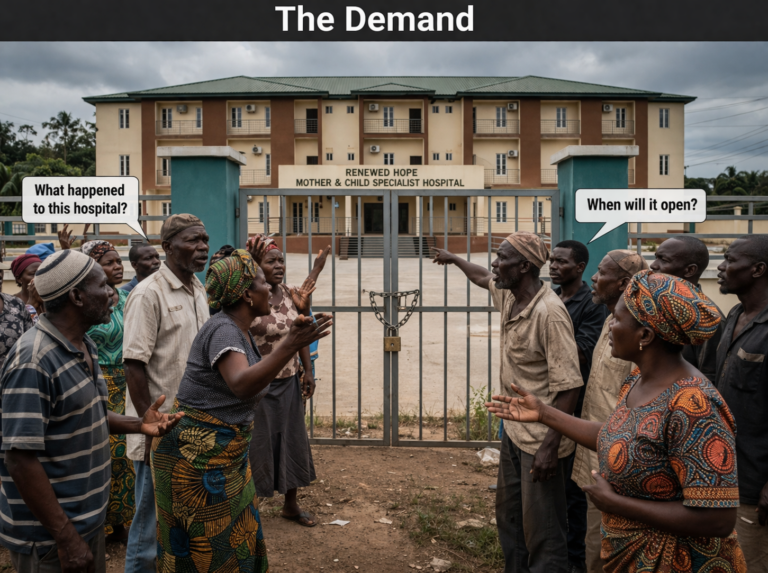
They passed the new Mother and Child Hospital, a modern facility meant for women like her, which is less than a kilometre from their home. But its gates were locked.
They went to a primary healthcare centre (PHC) in Ikot Usen, about 30 minutes away. When they got there, no health worker was on duty.
They waited almost an hour while her condition worsened. No help came.
“I had felt the signs earlier but thought it was not serious and could wait till morning,” Mrs Okon recalled.
With no choice left, her husband took her back home. They called in a traditional birth attendant (TBA) to help with the delivery.
The result was serious. Mrs Okon said she had complications and heavy bleeding that left her unable to walk properly or lift heavy things for months.
“The TBA tried her best. At the time, I had already become weak and lost a lot of blood,” she said. “If not for the intervention of the TBA, I would have died.”
It is ironic that the hospital meant to help in such emergencies was so close, yet still closed.
The Renewed Hope Mother and Child Hospital in Oko-Ita is a 100-bed facility built to serve Ibiono Ibom and nearby communities. It was commissioned months earlier but has never opened its doors.
A paved road leads into the compound. Streetlights are at the entrance. Air-conditioning units are installed on the walls. But behind the gates sit empty wards and silent corridors.
There are no patients. No staff. No activity.
“We live close to the facility; it is even within walking distance,” Mrs Okon said. “But I couldn’t go there because it was locked.”
The statistics behind the crisis
Nigeria still has some of the highest maternal and child mortality rates in the world. Tens of thousands of women die each year from pregnancy and childbirth-related problems.
The main causes are delays in getting skilled care, poor health infrastructure, and not enough trained health workers.
According to the 2024 Nigeria Demographic and Health Survey, Akwa Ibom has one of the lowest percentages (38.6 per cent) of live births in health facilities in the country. It ranks lowest among Nigeria’s 17 southern states. It also ranks lower than five of the six north-central states and three out of six north-east states.
The report also shows that Akwa Ibom has one of the lowest percentages of births attended by skilled providers (51.5 per cent) in Nigeria, the lowest among southern and North-central states except Niger.
Akwa Ibom State has a maternal mortality rate of 774 per 100,000 live births, according to District Health Information Software 2. This software is mainly used for managing and analyzing health information in Nigeria.
In response, the federal government launched the Renewed Hope Mother and Child Hospitals initiative to improve access to maternal, neonatal, and child healthcare in underserved areas.
This initiative set up specialist hospitals in several states to provide antenatal and postnatal care, safe delivery, emergency obstetric care, neonatal care, and diagnostic support.
The Senior Special Assistant to the President on Sustainable Development Goals, Adejoke Orelope-Adefulire, described the hospitals as symbols of renewed hope for women, newborns, and families across the country.
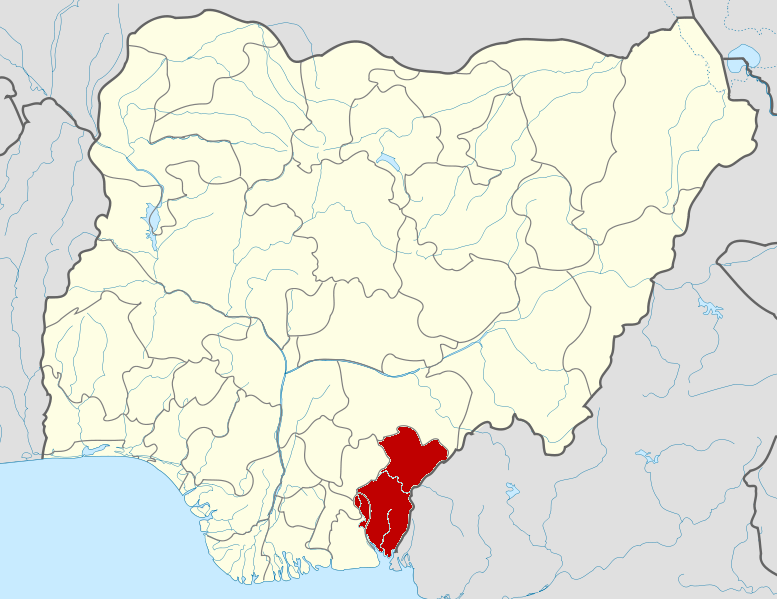
In Akwa Ibom, a 100-bed Mother and Child Hospital was commissioned in Oko Ita, Ibiono Ibom LGA, on 6 August 2025. The facility was expected to serve over 24 communities and about 30,000 residents.
Community leaders said the commissioning raised hopes. David Udofia, the head of Oko-Ita, recalled that many residents came out for the event, believing they would finally get quality maternal care close to home.
“We were thankful to the government and believed that in no distant time, the hospital would become operational and our women and children would begin to access care close to home,” he said.
Similarly, the village head of Ikot Obong, Okon Robert, said the facility quickly became a symbol of hope for women who had faced difficult and sometimes fatal childbirth experiences.
At the commissioning, Governor Umo Eno, represented by his deputy, Akon Eyakenyi, said the hospital would improve healthcare delivery in the state and increase access to affordable services, especially in rural areas.
A non-functional facility
Months after its commissioning, the Renewed Hope Mother and Child Hospital in Oko-Ita remains closed.
Visits to the facility in May and June showed a completed structure standing idle. The compound is quiet. There is no movement of patients or staff.
The gates are locked. Inside, wards and consultation rooms are empty. The equipment installed in the facility has never been used.
Two security guards at the entrance said the hospital has been closed since it was commissioned. They said no doctors, nurses, or administrative staff have been deployed to the facility.
At the reception area, a plaque still hangs on the wall. It reads: “Regular antenatal care reduces the risk of complicated pregnancy. FG/Akwa Ibom Government cares.” But there is no service delivery behind the message.
“We have not seen any doctors or nurses,” the village head of Ikot Obong, Mr Robert, said. “Our women keep checking, hoping to find someone, but there is no one to attend to them. We have tried to talk to the authorities, but nothing has changed.”
Residents say the situation has not improved since the commissioning. Women needing maternal care still travel to far health centres or depend on lower-level facilities with limited services.
Mr Robert said several women have died during childbirth because they could not get timely care. Although private hospitals exist, their fees are too high for many families.
“These deaths could have been avoided if we had a functional hospital with doctors and nurses available,” he said. “The government needs to help us. Our women are dying.”
Mfoniso Basset, the youth leader of Ikot-Obong, said they have repeatedly tried to convince the authorities to open the hospital, but nothing has changed.
“We keep going there hoping it will open one day, but nothing has changed,” he said.
A system without alternatives
Without the hospital, residents rely on distant and overcrowded facilities.
Apart from the PHC in Ikot Usen, the Ikpa PHC serves as another option. It is about 15 minutes away, and patients spend around N1,500 on transport to reach it.
The facility has about seven health workers and provides immunization, antenatal care, family planning, and nutrition services to many communities.
But its capacity is limited.
Ikaite Eneti, a nurse-midwife at the centre, said complicated cases, such as obstructed labour or severe postpartum bleeding, are referred to larger hospitals, including St Luke’s General Hospital in Anua, Uyo, about one hour away, or facilities in Ikot Ekpene, roughly 40 minutes away.
Even then, patients often face delays and overcrowding.
Health experts warn that such delays increase the risk of severe complications like bleeding, infection, organ damage, and long-term reproductive health issues.
Heavy reliance on TBAs
With limited access to skilled care, many women turn to TBAs.
“We are not happy patronising TBAs, but emergencies leave people with no choice,” said the woman leader of Oko-Ita, Alice Okon.
For some families, the results are serious.
In 2021, Uwem Okon-Urua went into labour at night and was taken to the Ikot Usen health centre, only to find it locked.
A TBA later gave her a local remedy to induce labour. The baby was delivered, but there were complications. She lost a lot of blood and suffered serious tears.
“I wouldn’t have done that under normal circumstances, but I was desperate,” she said. “I thought I would not survive. The pain was unbearable. After delivery, I was told to seek proper medical care.”

Ms Eneti, the nurse-midwife at Ikpa, confirmed that depending on TBAs is common. She recalled a case in February where a newborn was brought in for immunization with an infected umbilical cord.
“The mother said a TBA told her to use salt and toothpaste,” she said. “That caused the problem. After we treated the child, we taught her to come for proper check-ups instead of following whatever TBAs say.”
When delay becomes death
When Isaiah Udofia found out that his wife, Sarah, was pregnant with twins, he was overjoyed. In their small home in Ikot Mbuk, Idoro, another community in Ibiono Ibom LGA, they began counting down the months, already thinking of names for the babies.
But when labour started one evening in 2025, that joy turned to fear.
The Comprehensive Health Centre in Idoro, meant to be the first point of care in emergencies, had no bed and no nurse on duty. The facility was built by the community and handed over to the state government years ago.
Mr Udofia said the centre, which used to serve 27 villages, had fallen into disrepair. Part of the roof was torn off by the wind, and bushes now grow where patients once lay.
The white-tiled toilets have turned dark with neglect, and the beds have rusted after years of exposure. Reptiles now move through rooms that were once meant for care. Only one small room remains open, for immunization and antenatal services.
In that moment of need, Mr Udofia thought about the newly built Mother and Child Hospital, which was meant to provide complete care for mothers and newborns. Though finished, it had never opened.
With no working public facility nearby, he took his wife to a TBA in the community. But the attempt to deliver the twins failed due to complications, forcing another frantic search for help.
“I spent about an hour looking for a motorcycle,” Mr Udofia said, his voice heavy. “Our road is bad. From our community to the nearest PHC at Ono took us about 50 minutes.”
At the PHC in Ono, there was still no help, only another referral. They were sent to the University of Uyo Teaching Hospital in the state capital.
By the time doctors stepped in, both babies were dead. His wife, Sarah, only survived after emergency surgery to remove the lifeless twins.
“The failure to get the Mother and Child hospital open and the distance to other options killed my children,” Mr Udofia said. “Every time I remember them, I am hurt because they would have survived.”
At the Idoro Comprehensive Health Centre, the Officer-in-Charge, Anietie Natan, said pregnant women only come for routine care. She added that the lack of a functioning Mother and Child Hospital has increased pressure on the facility.
For residents like Ukeme Udom, this situation shows more than neglect.
“The failure to get the hospital open, as well as the lack of healthcare in Idoro, is no longer just neglect; it is an injustice,” he said.
Over N500 million spent, yet the hospital remains idle
An analysis of public spending records on Govspend shows that over N500 million was spent to build the Mother and Child Hospital in Oko-Ita.
Records show that on 22 May 2023, Westfield Global Construction Ltd got N145 million for construction. A further N190 million was paid to the same company on 26 March 2024, bringing the total to N336 million.
Another contractor, Taruve Nigeria Limited, received N167 million on 31 December 2025 for external work, including access roads and drainage systems. This payment was also under the same project code, 0554008001.
In total, verified construction spending on the hospital is N503.6 million.
This amount does not cover the cost of medical equipment.
According to the Office of the Senior Special Assistant to the President on Sustainable Development Goals, the hospital was supposed to have operating theatres, recovery rooms, private and general wards, consultation rooms, a lab, and equipment like ultrasound machines and fully stocked emergency carts.
Further review of the Akwa Ibom State 2026 budget shows that N350 million was also set aside for the rehabilitation of the facility and building of internal roads, even though the hospital has not started operations, and the internal road network already exists.
A staffing problem
The Akwa Ibom State Commissioner for Health, Ekem Emmanuel, did not respond to calls, WhatsApp messages, and texts sent on 25, 27, and 28 April asking for comments on this investigation.
However, the Chairman of the Akwa Ibom State House of Assembly Committee on Health, Moses Essien, said the delay in opening the hospital is mainly due to a shortage of health workers. He described this as part of a bigger workforce gap in the state.
Mr Essien said more than 2,000 medical professionals have been approved for recruitment following a health-sector emergency declaration on 12 September 2025.
According to him, the recruitment process has reached the computer-based testing stage, while oral interviews are ongoing.
“I have been following up, and I am sure that when the process is done, personnel will be sent to the facility to work,” he said. “Some doctors from the local government have also reached out to me, worried about the facility.”
He added that medical superintendents were appointed in November 2025 to oversee the facility until full staff deployment. He also noted that the recruitment process has been competitive, with about 35,000 applicants for 2,000 positions.
A staffing benchmark shows that a functional secondary or specialist hospital typically needs about five doctors, around 40 nurses and midwives, and at least four personnel each in the lab and pharmacy to provide 24-hour service.
Sources in Ibiono Ibom also said delays in deployment may be due to the lack of staff housing, as the hospital was built without quarters for staff.
While staff housing is not formally required under Nigeria’s healthcare standards, it is often considered essential for facilities expected to run all day.
Responding to this, Mr Essien said provisions have been made to tackle housing issues, adding that the main problem remains deployment, not housing.
“There are other places where infrastructure will be upgraded, and the governor is working with the contractors to address them,” he said.
“He has assured us that he will improve the health sector significantly. He has shown this by allocating 11.9 per cent of the 2026 budget, about N139 billion out of 1.38 trillion, to the sector and also making some releases.”
Expedite recruitment of health workers
Speaking with PREMIUM TIMES, the Chairman of the Nigerian Medical Association, Akwa Ibom State, Aniekan Peter, said it is crucial to speed up the recruitment of health workers. He warned that ongoing delays are putting more pressure on an already stretched health system.
Mr Peter said health should not be handled like regular civil service work, but as a critical service needing quick attention. Delays in hiring are directly affecting service delivery in the state.
While acknowledging government efforts to build and expand health facilities, he warned that improvements in infrastructure risk being wasted by staffing gaps.
He also clarified that the state did not get enough qualified applicants for the 400 doctor positions advertised, suggesting that a new recruitment call is necessary.
This explains why the reported 35,000 applicants applied for other health worker roles.
“The governor must order the Head of Service and the Civil Service Commission to do their jobs quickly. Employment should not take two months, but we have been waiting for over six months,” he said.
He added that the state faces a health worker shortage of over 10,000 personnel and emphasized that recruitment must be ongoing to meet demand.
“Health centres should have at least four doctors, but we have a situation where even general hospitals struggle with two. In other places, a comprehensive health centre has more than 10 doctors caring for patients. We need to change our approach if we are serious about healthcare. Health is life and death,” he said.
Mr Peter also suggested moving health worker recruitment out of the regular civil service system and placing it under the Ministry of Health, which he said understands the urgency of medical staffing better.
“The ministry will be quicker with recruitment, and we can also hold the health commissioner accountable for any failures,” he said. “In health matters, every second counts. Any day spent delaying recruitment, people die.”
A pattern that continues to haunt communities
Months after that night, Mrs Okon still recalls the pain of childbirth and the fact that help was so close yet unreachable.
Each time she passes the quiet gates of the Renewed Hope Mother and Child Hospital in Oko-Ita, she is reminded of what could have been different.
Around her, the pattern continues: women still travel long distances in the dark, still gamble between distance and delay, and still turn to unskilled care when time runs out.



Drop your comment
No comments yet — be the first to drop the gist 👇