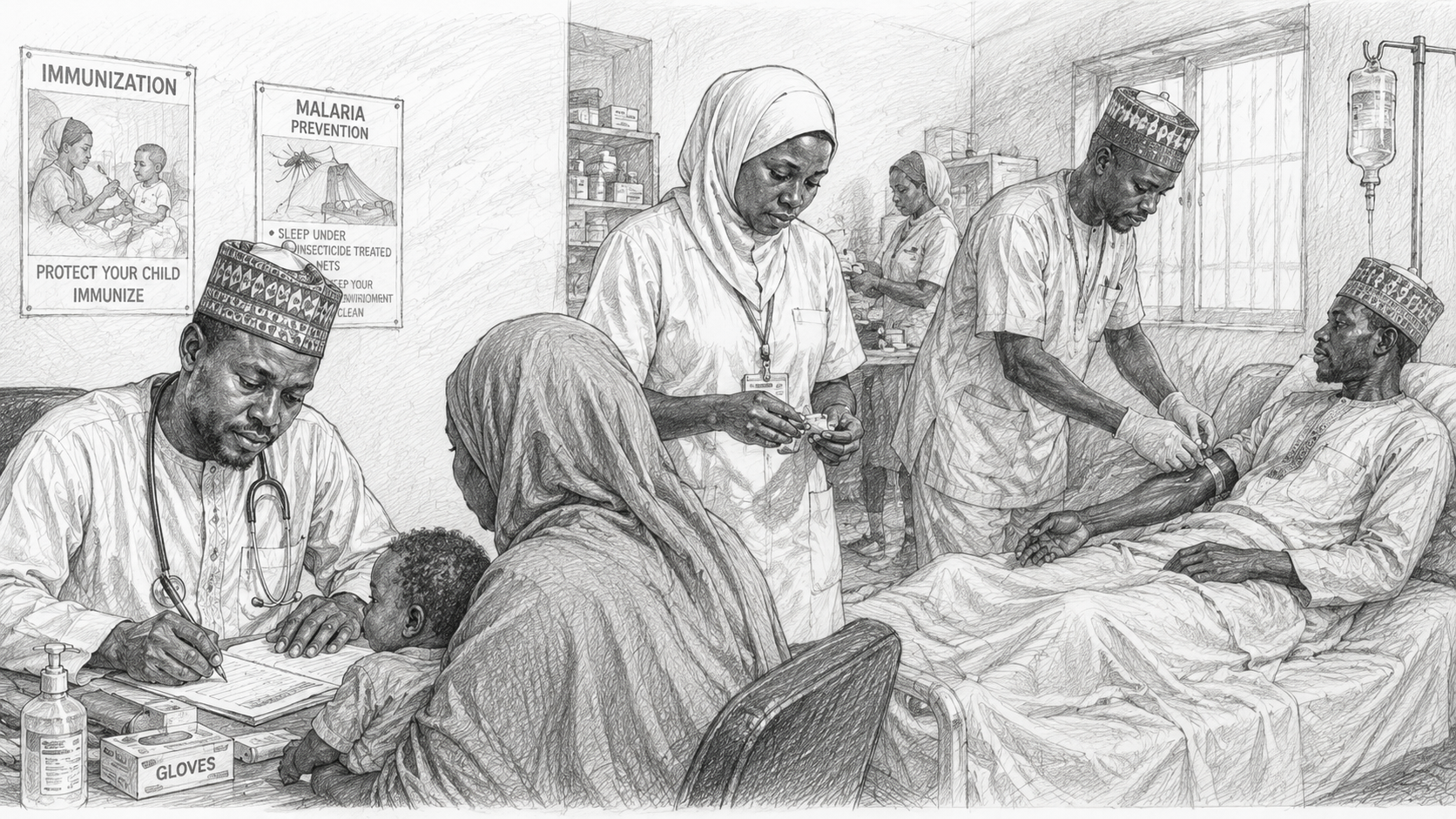
Missing medical records and high service prices are making healthcare more expensive for families in Nigeria, a new survey shows.
The Nigerian Health Continuity Survey, an online study of 1,820 adults from all six geopolitical zones and the Federal Capital Territory, found that two out of five people had to pay for a laboratory test or scan again in the past two years because they could not find an earlier result.
Among those who answered directly instead of saying they were unsure, the number went up to 52.1 percent, with nearly half paying more than once.
Conducted from November 5 to November 12, 2026, the study looks at what families lose when a patient’s medical history does not follow them.
Time is the first loss. Out of 1,480 respondents who tried to find information from a previous visit, test, or prescription, 47.3 percent said it was somewhat or very difficult, while only 18.9 percent found it very easy.
Of those who reported how long it took, 73.4 percent said that a single care trip, from leaving home to finishing the visit, took two hours or more. Meanwhile, 17.6 percent said it took a full day or longer.
On their last visit, 41.8 percent of respondents spent over N50,000 out of pocket, including transport and medicines. Also, 25.3 percent spent over N100,000.
In about two-thirds of cases (65.9 percent), the patient or their family arranged the trip themselves.
“A health facility organised 13.2 percent of them.
“Booking, transport, phone calls, payments, and follow-up all fell on the household,” the survey reported.
When asked what single change would reduce the stress of seeking care the most, 27.5 percent picked affordability. Meanwhile, 61.5 percent chose changes to the process or information, such as clearer details before a visit, shorter waiting times, easier use of health cover, better follow-up, access to their own records, and easier booking.
Even in a system that many see as expensive, patients worry more about the queue and the missing file than the bill.
“What should worry policymakers is not that care is expensive. It is that a patient can pay twice for the same test and nobody has done anything wrong.

“The hospital did its job. The laboratory did its job. The information just did not travel, and the household took the hit.
“That is a systems failure with a bill attached. Unlike most issues in the sector, this one is fixable,” said Williams Popoola, Managing Director of Medbankr.
The report links these findings to national data showing the same trend. Analysis of the 2023/24 General Household Survey found that 45.5 percent of Nigerian households face catastrophic health spending at a 10 percent budget-share threshold. Rural, female-headed, and elderly households bear the heaviest burden.
Out-of-pocket payments make up about 72 percent of Nigeria’s current health spending, which is among the highest rates in the world.
But the report notes that the sample may not represent the entire country because participants were recruited through social media and online forums.
The authors made three recommendations. First, they urged statisticians who run the national household survey to add three continuity questions to get a more representative estimate.
Second, they advised health facilities and state agencies to publish a bundled cost estimate before a visit. This way, families will know the price of the main test before paying for registration, the card, and initial checks.
Third, the report called for a minimum content and format standard for a patient-held summary. This would ensure that “your records travel with you” can be verified rather than just assumed.
“We commissioned this because an anecdote is not evidence. Then we published the findings that are not convenient for us.
“The data shows that a patient-held record solves one part of this problem, but not all of it.
“Anyone who tells you that a single product fixes continuity in Nigeria has not looked at the numbers,” Dolapo Fasakin, Product and Growth Manager of Medbankr said.



Drop your comment
No comments yet — be the first to drop the gist 👇