Any political message like that from Kabir Garba Marafa, the Zamfara State governorship candidate of the Nigeria Democratic Congress (NDC), about security issues will grab attention in Zamfara and beyond. This is especially true in the North-West, where violence has been rampant. The reasons for this are clear.
For over ten years, banditry, kidnappings, attacks on communities, and limited access to farmland have caused serious social and economic damage in Zamfara and nearby states. Families have faced displacement, lost loved ones, and lost their means of making a living. Education, agriculture, trade, and other economic activities have also been badly affected.
Marafa has highlighted these security problems in his campaign. It is concerning to see a crisis that has caused community displacement, disrupted economies, and taken lives being used for political gain. Such a serious issue should not be treated lightly or presented as a problem with a simple political fix.
Looking at the fight against insecurity in Nigeria and other countries shows that it is fueled by criminal networks, tough terrain, weak borders, lack of intelligence, limited police presence, and social issues. So, dealing with it requires more than just political promises from Marafa.
Marafa's recent declaration deserves further scrutiny. He represented Zamfara Central Senatorial District from 2011 to 2019. He boldly stated that if elected governor in 2027, he would end insecurity in Zamfara within two years and would leave office if he failed.
It is easy to see why such a promise is appealing. After years of violence, the people of Zamfara want an end to the chaos. But Marafa should clarify not just what he plans to do, but also how he will achieve this ambitious goal.
One critical issue Marafa seems to ignore is the constitutional reality. Nigeria’s 36 state governors have major responsibilities for protecting lives and property. But they do not control the military or the Nigeria Police Force. They are like Chief Security Officers without the power to lead troops.
Marafa spoke as if becoming governor would automatically give him command over the Nigerian Army, the Nigerian Air Force, or the Nigeria Police Force. This is not the case. According to the Constitution of Nigeria, the Armed Forces and the Nigeria Police Force are under the President’s authority as Commander-in-Chief. Thus, no governor, including Governor Dauda Lawal, has the power to direct military actions or decide police operations.
This distinction is crucial because a state governor can provide funding, intelligence, and logistical support within legal limits. He can work with federal security agencies but cannot just command the Army or Air Force. Any promise to end banditry in a specific time frame must be weighed against the actual powers of the office.
This point is especially important in Zamfara, where the scale of insecurity needs strong military action, police presence, intelligence coordination, and federal support. More importantly, this crisis is not only a Zamfara issue. Criminal networks work across state lines, so a coordinated regional response is vital.
This is where Marafa’s statement differs from Governor Lawal’s approach. Lawal knows Zamfara cannot tackle regional security alone. He is collaborating with other North-West governors and federal security bodies to promote intelligence sharing and coordinated operations. The North-West Governors’ Forum has adopted a 2026, 2030 Peace, Security, and Development Framework, showing that insecurity in the region needs collective efforts, not isolated state responses.
This does not mean Governor Lawal has no power. He has consistently shown determination to fight terrorism. His refusal to pay ransoms and the significant resources his administration has dedicated to security operations speak volumes. His no-negotiation stance did not start with his election. It began when his brothers were kidnapped, and he refused to pay ransom.
This background is vital because it shows his stance on ransom is not just a political tactic. It dates back to before he took office. As governor, he has kept this position as part of his government policy.
The key question is not just what Marafa promises but whether he can actually act. As governor, he would need to secure vehicles, communication tools, logistics, and other support for security agencies. He would also need to improve intelligence gathering, work with traditional rulers, build better roads for vulnerable communities, and encourage collaboration between security forces and local people. Sadly, Marafa’s record does not inspire confidence that he can handle these responsibilities.
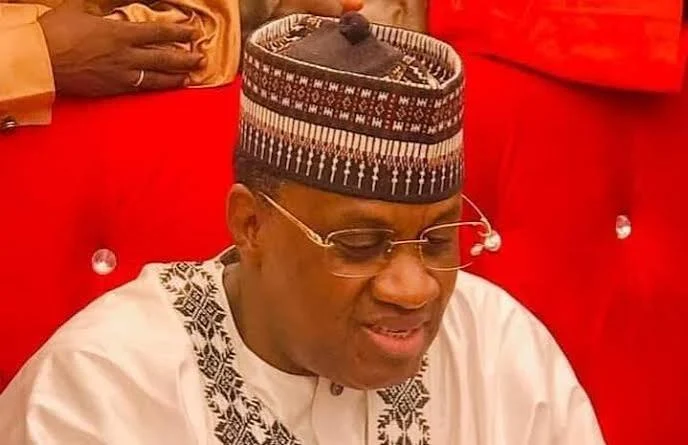
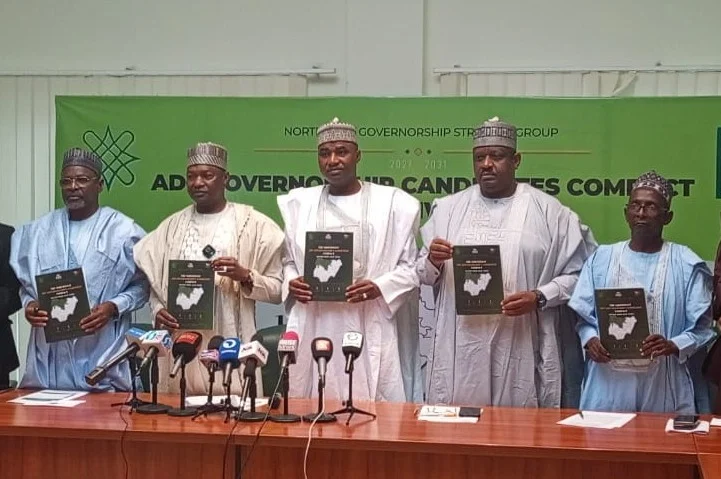
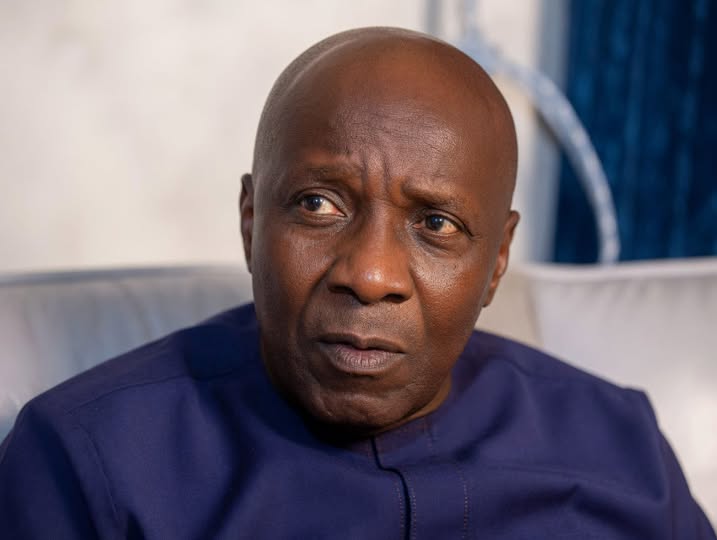
His promise alone does not provide any solutions. On the other hand, Lawal’s administration has made community-based security and support for security agencies a big part of its response to the crisis. He has shown responsibility in this area. But this does not mean he has direct control over federal forces responsible for security operations.
Lawal’s government has made security support a major part of its governance plan, supplying vehicles, logistics, communication tools, and other resources to security agencies. Whatever the voters think about these efforts, the fact remains: the governor works within a security framework where the military and police are under federal control.
So, if Marafa becomes governor (which seems unlikely), he will not gain command authority over the Nigerian Army, Nigerian Air Force, or Nigeria Police Force overnight. The state command structure of federal security agencies will not automatically become answerable to him.
This is why his two-year promise seems questionable. He is trying to appeal to the masses and emotionally sway the people. Marafa is not new to politics. He has been in the Senate for two terms and is deeply involved in Zamfara’s political scene. He is part of the political environment that Governor Lawal has worked to improve.
If Marafa believes he can end insecurity in two years, the voters deserve to know how he plans to do it. They also need to understand how he will measure his success.
These are fair questions. They are the minimum expectations for such a bold promise.
It is completely reasonable for Marafa to share his action plan with the people of Zamfara. But failing to explain how he will tackle the security crisis seems like a political trick. A promise of this nature must be backed by a solid and workable plan. Saying he will end insecurity in two years raises serious questions about his grasp of a governor’s powers, the regional nature of the problem, and the need for cooperation from federal security agencies.
If Marafa cannot explain how he will deal with these obstacles and keep such a promise, it might be better to reconsider rather than mislead the voters about what the office can realistically achieve. Political campaigns should focus on offering voters reliable action plans, not making promises that cannot be fulfilled based on the powers of the office.
The situation worsens when insecurity becomes a tool for political fighting.
This is not the first time Marafa has been linked to using security claims in political battles. During his ongoing fight with former Governor Abdulaziz Yari before the 2019 election, Marafa accused Yari and his deputy, Ibrahim Wakkala Muhammad, of backing militia groups responsible for insecurity. Once he lost his position, he became quiet until the NDC gave him the governorship ticket he had long wanted.
Marafa’s claim to completely end insecurity in a set time is an issue that impacts millions of lives. Such a statement deserves serious examination.
Voters in Zamfara deserve more than just a deadline. They need a clear strategy. They should know what Senator Marafa plans to do with the powers of a governor, how he will work with institutions outside his control, what resources he will provide, and how he will measure progress.
Insecurity is too costly to be just a campaign slogan. The people who have lost family, abandoned farms, closed businesses, or seen their communities become unsafe deserve more than a mere promise. They deserve a credible plan, a realistic assessment of what can be done, and a government willing to do the hard work needed to restore peace.
Drop your comment
No comments yet — be the first to drop the gist 👇