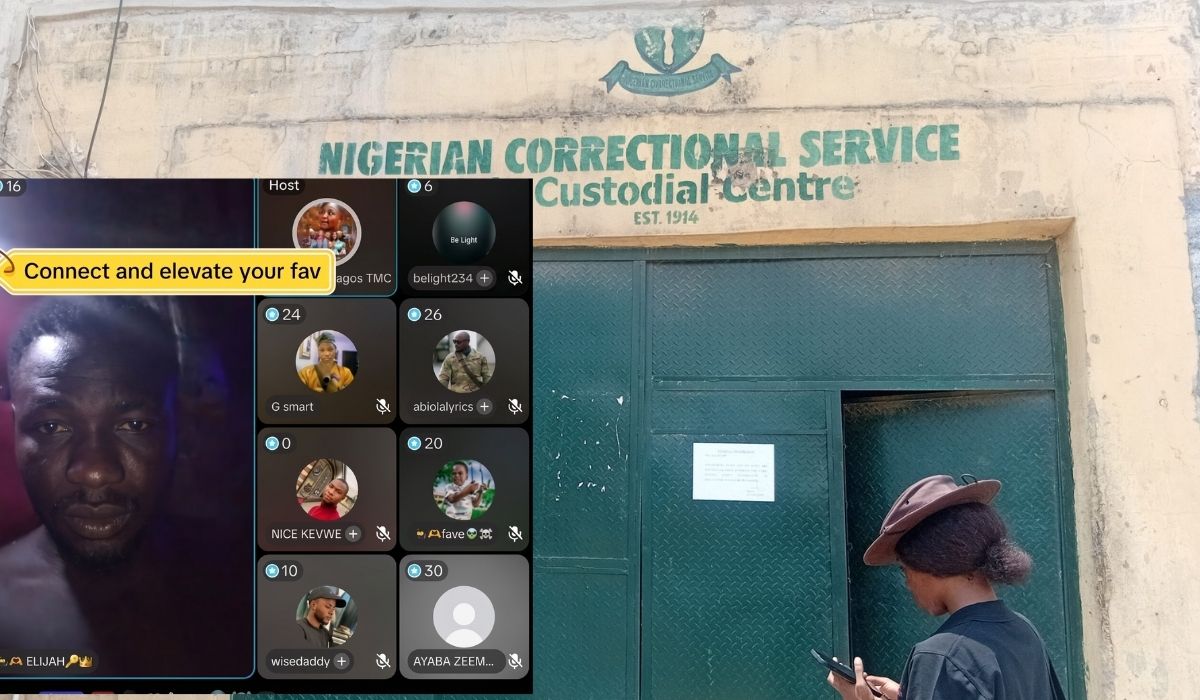
The concrete walls of Ibara prison stand tall and grey against the skyline of Abeokuta, the capital of Ogun State. Barbed wire crowns the perimeter fence as armed officers patrol the area. But one evening in early 2026, a man serving time inside these walls opened a TikTok account, tapped a screen, and went live.
His name is Elijah Oyebode.
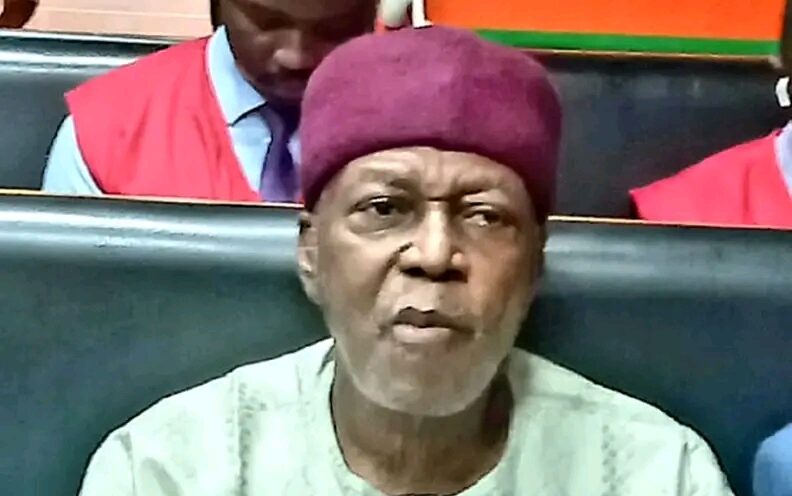
On 22 December 2016, according to court records from the Osun State High Court, Suit No. HIK/6C/2017, Mr Oyebode plotted to kill Rofiat Adebisi, a final-year student at Osun State University’s Ipetu Ijesha campus. On that day, she was waiting for a vehicle to Osogbo when Mr Oyebode picked her up and took her to a place where she was murdered for rituals.
The court records show that Mr Oyebode gave different accounts of Ms Adebisi’s death. In one statement, he said he made a sexual agreement with her for ₦2,000, drove her to his apartment, had sex with her, and then went to take a shower. When he returned, he claimed he found her lifeless on his bed and later dumped her body by the roadside.
In another statement, he said he used a charm from a herbalist, who was also on trial as the third accused, to hypnotize Ms Adebisi after picking her up. He claimed they both raped her at the herbalist’s shrine. Later, he said he was called back to help dispose of her body on a lonely road at night.
During the trial, Mr Oyebode denied both versions, claiming he was not involved in the crime. The court rejected his denial. Medical evidence showed that Ms Adebisi died from cardiac arrest due to strangulation. Justice S. O. Falola found Mr Oyebode guilty of her murder and sentenced him to death by hanging in 2019.
Digital prison life
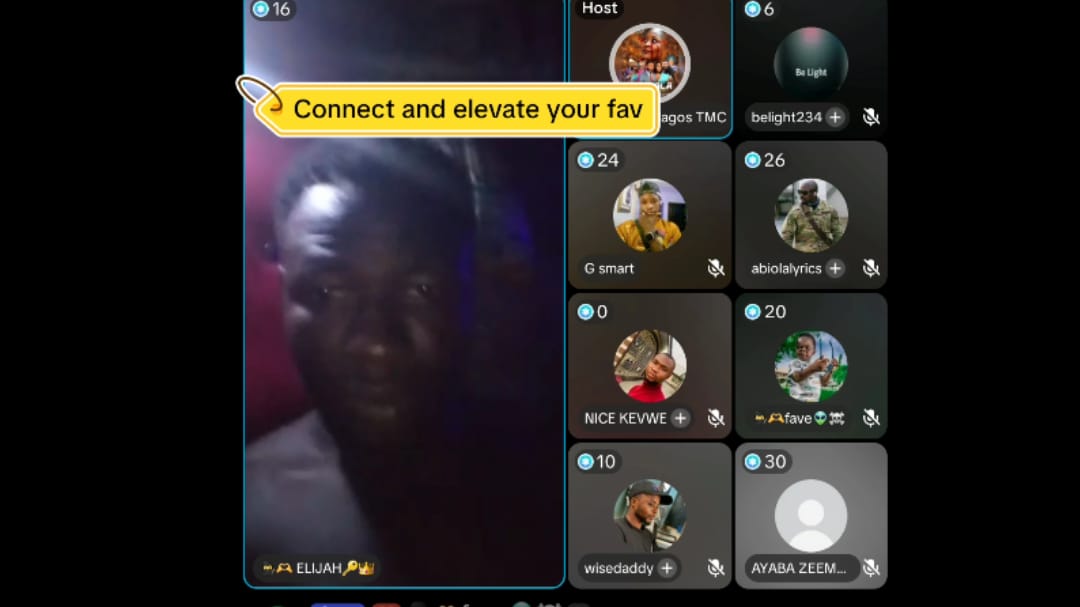
While death row is meant to be the ultimate confinement, Mr Oyebode has built a strong presence on social media, especially TikTok. He has gained followers, participated in livestreams watched by thousands, received money from supporters, and interacted freely with people outside the prison.
As of Friday, Mr Oyebode had at least two TikTok accounts. One account, under the handle @ayola.oluwafu, is still active. Through livestreams and audience gifts, this account achieved Level 20 gifting status, a milestone that requires significant financial activity and indicates spending in millions of naira.
His online activity was not hidden. He appeared on livestreams, interacted with users, and attracted an audience that often did not know they were watching a convicted murderer.
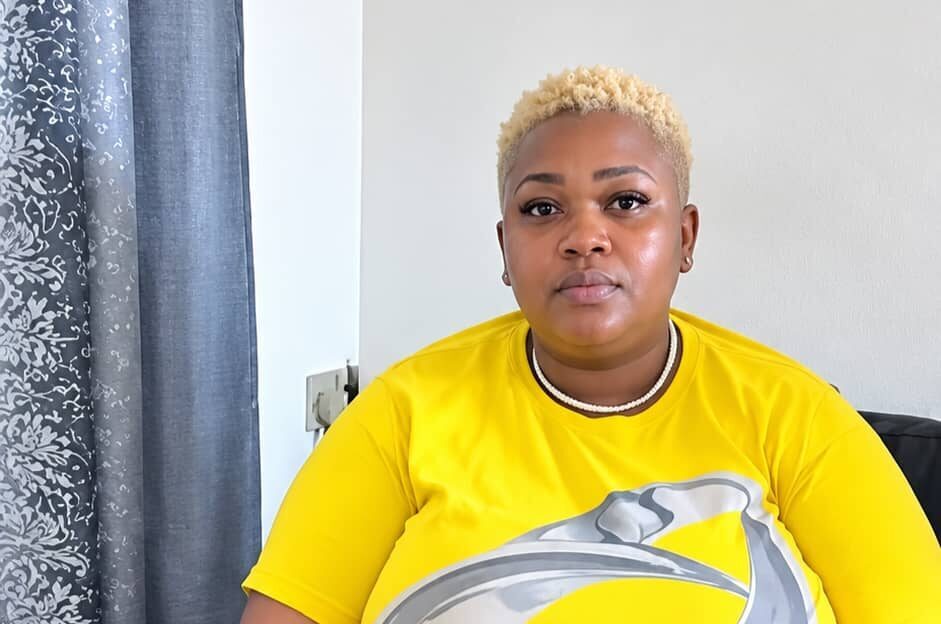
His second account was discovered through forensic analysis and witness testimony. This account pretended to be Omolola Awoyele, a popular TikTok Live host and activist. “Elijah created an account using my name and uploaded my picture, which meant he could potentially use it to scam people online,” Ms Awoyele told Saturday Tribune. After investigating, she confronted him, and he admitted to operating the fake account. “He apologised, removed my picture, and changed the account name,” she said. Analysis showed that videos from this account on 14 February matched the timing of posts from Mr Oyebode’s main account, @ayola.oluwafu.
Ms Awoyele first found out about Mr Oyebode when a friend shared his livestream, noting that he often claimed to be a prisoner asking for money. “When I joined the live, I heard someone saying he was in prison,” Ms Awoyele remembered. “I immediately wondered what a prisoner was doing on TikTok. He said social media was his only way to get food and support.”
At first, Ms Awoyele doubted him. “I asked if he had WhatsApp because I wanted to check his claims through a video call. After the call, I confirmed that he was indeed in prison.”
This digital access allowed Mr Oyebode to manipulate others to help with his legal issues. Ms Awoyele, acting as an activist, initially believed he was innocent and contacted lawyers for an appeal. It was only after she got the court's Certified True Copy and confronted him that he confessed to her on a call that he took ₦10,000 from the herbalist and helped in the victim’s death. After this admission, his appellate lawyer withdrew from the case. Ms Awoyele cut ties after Mr Oyebode began threatening her from prison using a smuggled phone.
In one of Ms Awoyele’s TikTok live sessions on 16 April 2026, Mr Oyebode joined and revealed that many inmates in Ibara prison have access to mobile phones and the internet.
“Some people may have two or three phones,” the inmate mentioned during the monitored livestream. “Facebook and TikTok are full of prisoners. They won’t disclose their location to anyone. If they do video calls and the background looks nice, no one will know where they are,” he explained.
On his earnings, he said: “I get a lot of people sending money to me online; only a few are my family. Last month, I won a bet for ₦85,000.”
While court records show that Mr Oyebode sold his victim’s iPhone in 2016, he now uses multiple smartphones inside a maximum-security prison.
Inside the prison phone business
The Nigerian Correctional Service Act 2019 holds custodial centres responsible for the safe custody and reform of offenders. But at Ibara, this responsibility seems overtaken by an internal economy that is officer-managed and connected to the outside world.
According to Mr Oyebode, the way into this economy is through the correctional officers. “The warders don’t sell phones to us,” Mr Oyebode explained during the April live session. “They bring them in for us secretly.”
This relationship leads to extortion.
“Even if a warder brings in a phone for you, if another one sees it, he will take it and demand payment before you can get it back. Since it [the phone] is our lifeline, we will pay to get it back.”
The warder acts as both a supplier and a collector, making money on both sides of the deal.
Mr Oyebode claimed the same methods are used to bring drugs into the prison. “Warders smuggle drugs in for inmates,” he said during the 16 April live session. “An inmate might pay about ₦500,000 for the drugs, and the warder might take ₦100,000 for bringing them in. After repackaging and selling, the inmates can make ₦2 million from the drugs.”
“There are some inmates here who are building hotels outside the prison and go there for supervision with the help of the warders while facing the death penalty,” he said. “The warders take them to their houses and hotels and bring them back. Some meet people, especially women, on social media and pay the warders to meet them.”
After nearly ten years inside, Mr Oyebode gave a harsh view of the facility.
“I will not lie; it is no longer a correctional centre. It is corrupting people more,” he said on the livestream.
Legal views, official response, solution
Before discussing the technological failures, these activities must be viewed through the law. The Nigerian Correctional Service Act 2019 strictly controls the actions of inmates and officers. The claims of digital access, phone use, and inmates leaving for projects show not just a weak perimeter but serious crimes under Nigerian law.
The Act sets penalties for correctional officers who work with inmates. Under Section 29(1)(c), any officer who helps inmates use communication devices faces fines up to ₦3,000,000, imprisonment for up to three years, or both. Section 29(1)(a) says smuggling drugs into the prison can lead to a year in jail and a ₦1,000,000 fine.
Also, Mr Oyebode’s claim that rich death-row inmates are escorted out for hotel projects goes against the strict custody rules in Section 12(1) of the Act. The law allows for moving a condemned inmate only in emergencies, as detailed in Sections 24 and 25. Taking an inmate to private property has no legal support and is a crime under Section 29(1)(h). If such an unauthorized release leads to an escape, Section 31(2) states that the officer involved commits a felony.
The Act also holds officers accountable for facilities that turn into unmonitored markets. Under Section 32(4)(b), an officer’s supervisor will face sanctions if unlawful actions are proven, while Section 36(1) allows for legal action against neglect of public duty.

‘Bad eggs’, disciplinary actions, and security concerns
When faced with evidence of livestreaming and monetization by inmates, the National Spokesperson for the Nigerian Correctional Service (NCS), Jane Osuji, admitted that some officers may be compromised and that smuggling contraband is a problem.
“I cannot say if it is true or not because where there are many people, there will be one or two bad ones,” the spokesperson said. “We want to work together to track this and hold both inmates and the officers enabling this accountable.”
The agency recognized the serious national security risks of unmonitored access to digital devices from inside cells, warning that inmates organizing crimes from prison puts the public in danger.
“If they can join a live social media platform for fun or money, they can also do anything from their cells,” Mr Osuji warned. “When they can organize their criminal activities from behind prison walls, then we all have a problem.”
Mr Osuji admitted that contraband exists but said it is a larger issue. “It is important to say that smuggling unauthorized gadgets into prisons is a challenge faced by correctional facilities worldwide,” he said, adding that the service has destroyed recovered items in front of the press.
Defending the agency’s policies, the spokesperson emphasized that the comptroller-general has a zero-tolerance stance on unauthorized gadgets and staff misconduct. Over 1,400 officers have been disciplined for various wrongdoings, leading to dismissals, demotions, and suspensions regardless of rank.
He added that special teams conduct surprise searches alongside routine checks, and plans are in place to install CCTV systems in custodial centres.
The NCS asked the public and social media users to stop sending money or gifts to inmates, warning that allowing unlawful online communication undermines rehabilitation and public safety.
Mr Osuji said that the comptroller-general maintains a “zero tolerance for all forms of misconduct or corruption involving staff or inmates.”
He made a direct appeal to Nigerians, urging them not to support or communicate with inmates trying to use unauthorized online platforms.
“If inmates keep receiving such help without reports to the authorities, they may leave prison worse than when they entered, defeating the purpose of correction,” he warned.
These measures are significant. They still do not explain how a death-row inmate managed to run multiple social media accounts, livestream, receive gifts online, bet on sports, and described a prison where phones outnumber inmates.
Using technology to fight tech fraud
For Tunde Olabiyisi, a cybersecurity expert, the solution is clear.
“The first thing is to block any unapproved devices within the prison,” the professor said. “I would install jammers to stop any device that isn’t approved. Only approved devices will work. If you smuggle in a phone that isn’t approved, it will not work.”
When asked if this would affect nearby civilian infrastructure, including the Central Bank near Ibara prison, Mr Olabiyisi said the technology could be set to work within a certain area.
“It is like setting a boundary,” he explained. “It will not impact areas outside where you want to use it. So, it is about setting the limits.”
According to Banzak Azeez, a senior lawyer specializing in criminal law, the Nigerian Correctional Service (NCS) Act 2019 was made for prison reforms in the country. Section 14 (1-8) of the NCS Act provides a legal way to rehabilitate and transform inmates. “In fact, it is correct to say that most sections of the Act promote inmate rehabilitation. But it seems like a cosmetic reform. The only change in the prison system has been the name change from Nigeria Prisons Service (NPS) to Nigerian Correctional Service (NCS).”
He added, “Inmates have become more hardened after leaving correctional centres. It is clear that Nigeria’s correctional centres have turned into dens disguised as correctional facilities where inmates learn to become more dangerous to society.”
While Nigerian prison authorities struggle to secure their physical limits against contraband, TikTok’s digital system effectively managed payments from these illegal streams. Mr Oyebode was not just on the platform. He was active, visible, and making money.
Through TikTok Live, viewers sent him virtual gifts that became money. The platform processed these transactions, recommended his content to new viewers, and helped him grow a following even while serving a death sentence. He was not hiding from TikTok’s detection. According to the platform’s own metrics, he was a commercially active creator.
TikTok's actions
According to TikTok’s transparency reports, over 7.5 million videos were removed across Sub-Saharan Africa in the third quarter of 2024, rising to over 8 million in the fourth quarter. TikTok has also held Africa Safer Internet Summits with regulators and government officials from Nigeria, Kenya, South Africa, and other countries.
Between the second quarter of 2023 and the fourth quarter of 2024, the company reported a 249.81 percent increase in content removals in the region. Yet none of these systems seemed to catch a convicted murderer broadcasting from death row under his real name.
A content moderator at TikTok’s Kenya moderation hub told Global Voices, an international community of digital activists, in April 2026 that moderators often had to assess videos in languages they didn’t understand. In such situations, context, identity verification, and cultural signs can easily be missed.
Nigeria is one of TikTok’s biggest markets in Africa, yet the platform operates without a strong local regulatory presence.
In March 2025, a Bill aimed at forcing major social media companies to set up physical offices in Nigeria passed its second reading in the Senate. The Bill’s sponsor, Ned Nwoko, argued that not having local offices creates a gap between platforms and Nigerian users, making it harder to address complaints and content moderation issues.
As this investigation was being prepared, TikTok started what looks like a massive cleanup of its operations in Nigeria. On 9 June, while its communications team was still asking for more time to investigate the accounts flagged by this reporter, the platform released a Community Guidelines Enforcement Report through national media.
The numbers were staggering: TikTok claimed to have removed 4.02 million videos in Nigeria and disrupted over 86,000 LIVE sessions for breaking community rules. The company highlighted its “automated detection technologies” and promised to enforce actions against creators who violate LIVE monetization rules.
TikTok’s automated tools and publicized sweeps managed to take down millions of videos, but they failed to remove the main account at the heart of this security issue.
Weeks after TikTok’s big cleanup, Mr Oyebode’s primary account, @ayola.oluwafu, is still live on the platform. Throughout this reporter’s monitoring, the account holder has repeatedly avoided scrutiny by changing digital identities, sometimes changing profile names to escape detection. It currently operates under the private name “lesson of God locate me,” with a profile picture of people in military uniforms holding guns.

Drop your comment
No comments yet — be the first to drop the gist 👇