The Nigerian Content Development and Monitoring Board (NCDMB) has shown its commitment to growing local engineering talent. They are rewarding great ideas and investing in young Nigerians ready to impact the country's industrial future.
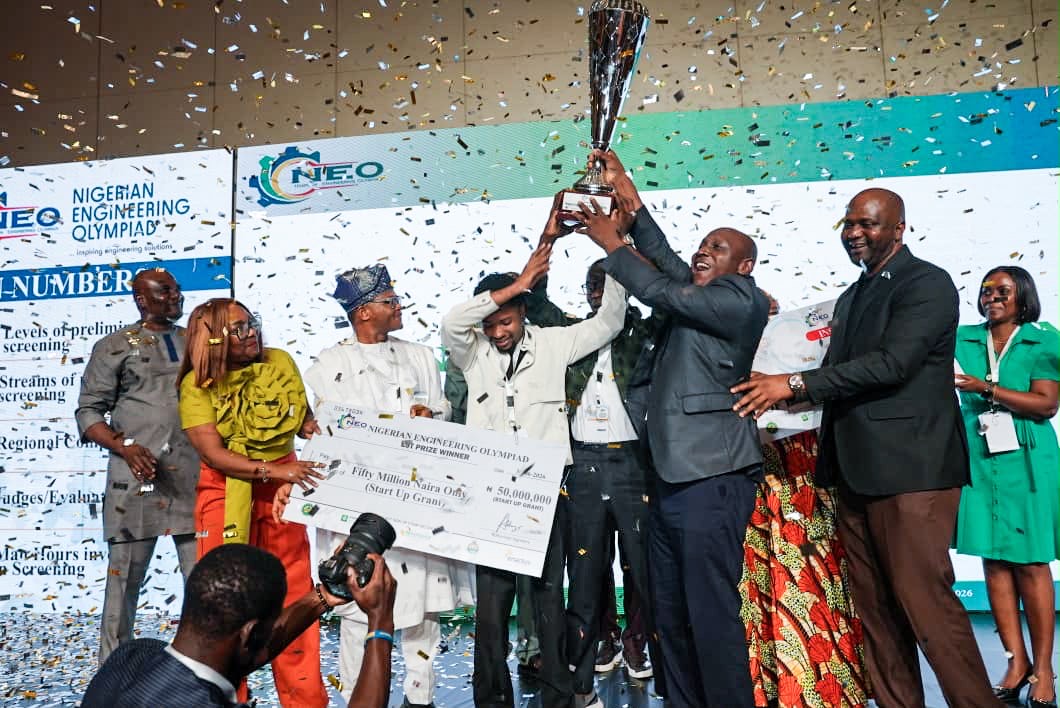
At the Grand Finale of the first Nigerian Engineering Olympiad, held on Monday and Tuesday in Lagos, Team Mavericks from Modibbo Adama University, Yola, took home the top prize. Their project, the "Sarafa Community Security Alert," is a system that helps communities alert each other and emergency services about security issues using low-cost devices.
For winning, the team received a cash prize of N50 million. Their Faculty of Engineering will also get a new Centre of Excellence Building funded by NCDMB.
The competition was supported by ENACTUS Nigeria as technical partners. NCDMB sponsored the event, along with funding partners Renaissance Africa Energy Company and First Exploration & Petroleum Development Company (First E&P).
The Olympiad featured engineering solutions from students of various colleges in Nigeria. These projects aimed to tackle national problems using technology and local solutions.
Team Aurora from the University of Ibadan came in as first runners-up with their "Aurora Birth Health Tech Suite," which aims to reduce newborn deaths from birth-related issues in low-resource settings. They received N30 million and engineering equipment worth N75 million.
Taking third place was Team Fortizo from the University of Jos with their "FarmAnchor," a solar-powered device that helps farmers identify crop pests, diseases, and soil problems. They received N20 million and engineering equipment worth N50 million. Team Flameless from the University of Nigeria, Nsukka, secured fourth place with their "Flameless" power solution, which captures flare gas to provide electricity. They won N10 million.
On behalf of the Executive Secretary of NCDMB, Felix Omatsola Ogbe, the Director of Planning, Research and Statistics, Mr. Omomehin Ajimijaye, expressed the Board's steady dedication to developing skills and creating opportunities for young Nigerians. He congratulated all participants and thanked NCDMB's partners for making the event successful. He called the event more than just a final competition; it was a celebration of talent and the potential of Nigerian youth to address real challenges.
Ajimijaye added that NCDMB's mission is to create opportunities that empower young people and build local capacity. He stated, "Our mandate is clear. It is to build human and institutional capacity that enables Nigerians to compete successfully not only within the oil and gas industry but across the wider economy. For us, youth development is not an afterthought; it is a strategic investment in Nigeria’s future."
Mr Ogbe revealed that NCDMB is involved in other ongoing projects. He mentioned that another panel is judging entries for the NCDMB Technology Innovation Challenge in Yenagoa, Bayelsa State. He also said NCDMB has launched the Young Researchers Programme to promote research and innovation among Nigerian youth, with over 500 undergraduate students already enrolled.
"These are deliberate investments aimed at developing researchers, entrepreneurs, and future industry leaders," he said. "Together with our stakeholders, we are building a strong pipeline of engineers who will develop local solutions and enhance Nigeria’s global competitiveness in science and technology."
During the event, Mr. Michael Ajayi, Country Director of ENACTUS Nigeria, shared that the journey to the first Nigerian Engineering Olympiad started over two years ago. He said, "Today may appear to be the finish line, but it is actually the beginning of a much bigger journey that will ensure every engineering student in Nigeria develops ideas capable of transforming the nation."

Ajayi noted that the competition drew 375 applications from 984 students across 80 schools, including universities and polytechnics. The entries went through a strict assessment process with 202 judges and evaluators, taking over 852 hours of evaluation and involving six regional competitions.
After the first screening, the top 30 innovations were selected, with five from each geopolitical zone. Each of these teams received N3 million grants to develop their ideas into prototypes over eight weeks. The competition moved to regional contests, leading to the top 12 finalists. To help finalists with business plans, a two-week boot camp was held.
Ajayi praised NCDMB and its partners for their support. He emphasized that national development comes from strong collaboration between the government, private sector, and development organizations.
John Alani, General Manager of First Exploration & Petroleum Development Company Limited, said the company is proud to support this initiative. He noted, "Nigeria is not suffering from a shortage of talents but rather from a shortage of structured opportunities." He added that the Olympiad can turn great ideas into real solutions. He pointed to a survey showing only five percent of engineering graduates in Nigeria are ready for the industry, describing this as concerning. He believes the Olympiad is a step toward closing that gap.
Mr. Igo Weli, Vice President of Renaissance Africa Energy Company, called the initiative a reflection of their aim to support innovation. He stated that Nigeria's main challenge is not talent but the lack of environments for innovation to thrive. He also promised to work with sponsors to increase the N3 million grants for the teams.
Margaret Oguntala, the immediate past President of the Nigerian Society of Engineers (NSE), praised NCDMB and its partners for turning an idea into a national movement for engineering innovation. She said the Nigerian Engineering Olympiad is a key platform for identifying and developing engineering talent and turning ideas into solutions for national growth. She commended the students for showing that Nigeria is rich in innovative potential.
Among the top 12 finalists were Team Protonics from the University of Port Harcourt with "Keytric," a smart door lock that helps save energy. Team Vhorde from the University of Benin created AI-powered smart glasses to aid visually impaired individuals. Team Oil Alchemist from Imo State University developed a system that turns waste engine oil into fuel. Team Health Guardian from the University of Lagos designed a detector for early pregnancy issues.
Other finalists included Team Tri-Catalyst from the University of Abuja with a local catalyst for better gasoline, Team Goodnews from the Nigerian Army University, Biu, with an AI pipeline surveillance tool, Team Adustech from Aliko Dangote University with a solar agricultural dryer, and Team Agritherm Solutions from Ahmadu Bello University with a solar cold storage system.
The event had many senior officials from NCDMB and other stakeholders. The General Manager of Nigerian Content Development, Mr. Olarenwaju Olawuyi, opened the event, alongside other General Managers and representatives from various sectors.
For NCDMB, the Olympiad shows their belief that developing skilled Nigerians is key to a sustainable future. This event aims to find and reward outstanding engineering talents while connecting them with industry leaders and potential employers. It also supports Nigeria's goals for self-reliance and innovation in technology.
The partnership with ENACTUS Nigeria highlights NCDMB's commitment to working together for sustainable development. ENACTUS is well-known for helping students tackle societal issues through entrepreneurial action, making it a great platform for nurturing future innovators.
Drop your comment
No comments yet — be the first to drop the gist 👇