
On Tuesday, 25 August, something special happened in Delta State.
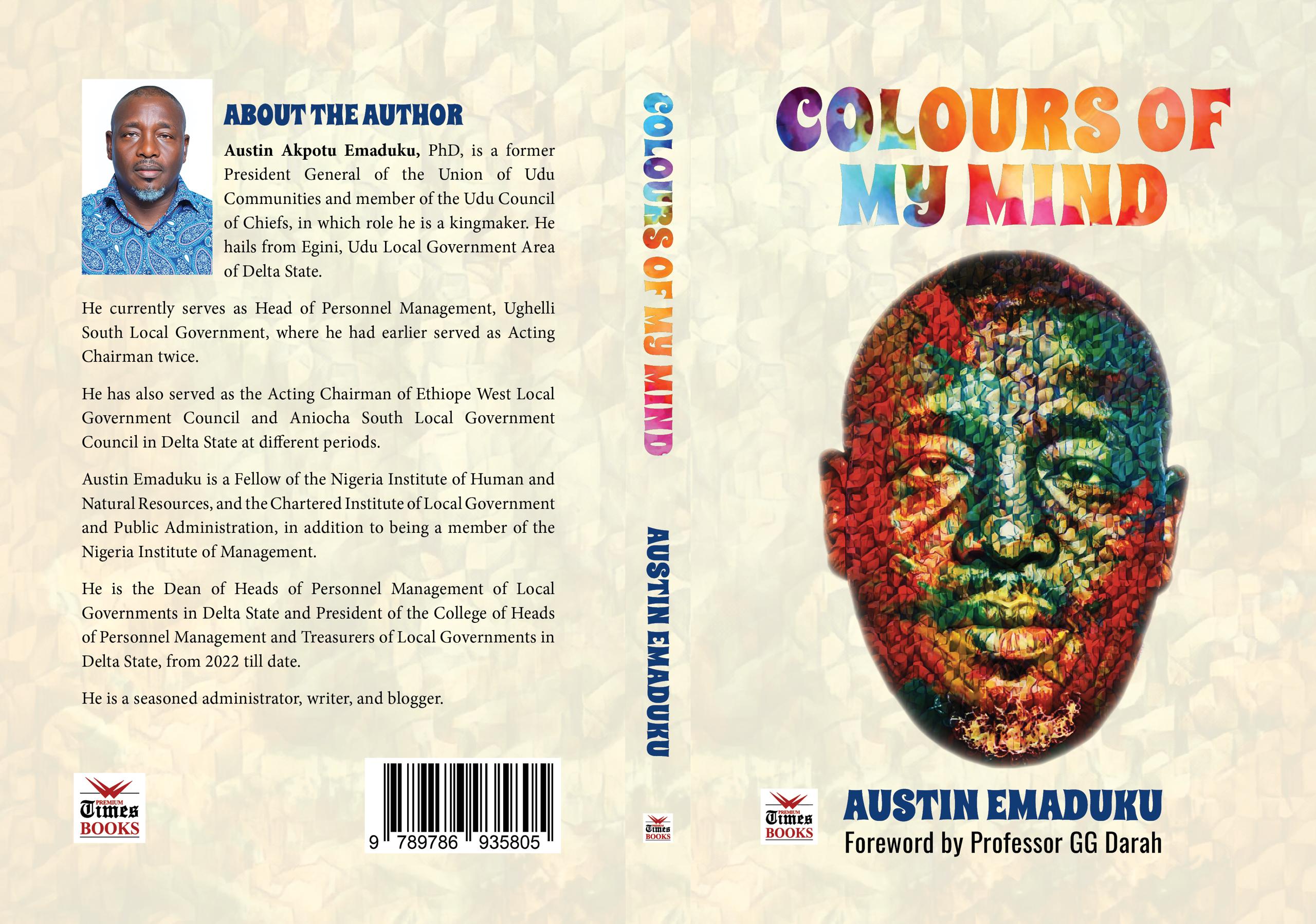
While the world remembered Dolly Parton, the famous American country singer, Egini in Udu Local Government Area opened a new chapter. Parton is known for her song “Coat of Many Colors,” inspired by her childhood poverty. On the same day, Dr Austin Emaduku presented his book, Colours of My Mind, at the Egini Community Town Hall and opened the Egini Community Public Library, a gift he donated to the public for his birthday.
There is no proof that these events are linked. But the coincidence gives a chance to think about how poverty, education, and those who can help are connected.
Dolly Parton’s “Coat of Many Colors” came from her experience of poverty. Her mother made her a coat from leftover pieces of fabric. To outsiders, it might have seemed like a sign of lack. But to young Dolly, it was a sign of her mother's love and dignity.
Years later, that same child who had little would create the Imagination Library, which gives free books to children. Her father's struggles with reading shaped her view on literacy and the chances books can offer.
The journey from “Coat of Many Colors” to the Imagination Library teaches an important lesson. Poverty can limit what a child has, but it should never limit what they can learn or dream.
This lesson connects with what Emaduku has done in Egini. His book, Colours of My Mind, is a record of his engagement with society. Published by Premium Times Books, it contains 69 articles discussing issues affecting Udu, the Urhobo people, the Niger Delta, and Nigeria. Topics include politics, culture, human rights, and local challenges.
Professor GG Darah, a respected scholar in Nigeria, called Colours of My Mind a literary masterpiece. He urged Emaduku to keep writing about important issues that spark intellectual discussion.
Mr Emmanuel Ogheneochuko Arodovwe from Delta State University reviewed the book and said its language is clear and simple. He also noted the depth of the ideas. He portrayed Emaduku as a social commentator who engages deeply with his surroundings.
But what stands out about Colours of My Mind is not just the content. It is what Emaduku decided to create around it.
He donated a library to the community. In his opening speech, Emaduku said the library was the most important part of the event.
He shared that his journey to establish the library started in 2023 when he was President-General of Udu Kingdom. He arranged a room in the Egini Community Town Hall with bookshelves and seating, filling it with books. He thanked the community leaders and his friends for their support, and also remembered his late brother.
Emaduku's goal is clear. He wants to encourage reading among the youth and adults in Egini and other Udu communities while helping those who cannot afford reading materials.
The library is stocked with 600 books and has a 4.2 KVA solar inverter for 24-hour power, along with air conditioning. Emaduku sees the library as a place to escape distractions and create a good environment for reading and research.
He called the library a “mustard seed,” hoping it will eventually put Egini and Udu on the global map.
This vision deserves attention. A library alone cannot end poverty, but it can help break down barriers by giving children and young people access to books and knowledge.
The Egini project is more than a gift. It aims to create a lasting institution for the community even after the ceremony is over.
This is where the link between Dolly Parton’s “Coat of Many Colors” and Emaduku’s Colours of My Mind becomes significant.
Dolly’s coat was made from scraps, yet it stood for love and dignity. Colours of My Mind is a collection of thoughts shaped by years of observation and activism. The Egini library now provides a space where these ideas and those of other writers can meet new minds.
One story is about a child's coat. The other is about an adult's mind. Both remind us that what seems ordinary can hold deep meaning.
Emaduku shared that the book reflects his life and views on national issues from 2015 to 2023. He described it as a mix of his thoughts, social commentary, and fictional pieces based on community life.
He thanked several people who supported the book's journey. He especially mentioned Dr Chido Onumah for helping gather his writings and introducing him to the publisher. He also thanked Professor Godwin Darah for his encouragement and for agreeing to chair the event.
The library and the book come from the same belief: that ideas should be saved, shared, and available for future generations.
The good news is that Colours of My Mind is already reaching beyond Egini. Nigerian-American writer EC Osondu, a well-known author and professor, bought and donated 10 copies to secondary schools in Urhobo land. The books will be sent to the schools through the Chairman of the Association of Local Governments of Nigeria.
This act supports the library's idea: books should be shared. They should be in classrooms, libraries, and homes. Students should read them, agree or disagree with the author, or find ideas that inspire their own writing.
A book's journey should not end at launch. It begins when someone opens it.


Emaduku has also gone further with the literacy project by starting the Salor and Mabel Emaduku Annual Literary Awards, known as the SAME Annual Literary Awards.
The first event will be an essay-writing competition for secondary schools in Udu and Ughievwen Kingdoms. The first prize will be ₦100,000, the second prize ₦60,000, and the third prize ₦40,000.
The grand finale will take place during the anniversary of the Egini Community Library. This is why Chief Inspectors of Education from Udu and Ughelli South were invited to the event. The competition aims to create an annual platform that connects schools in both kingdoms through writing and learning.
Emaduku plans regular literary and debate competitions among schools in Udu and Ughievwen under the SAME Annual Literary Awards and the library.
This is a vital step because a library should not just be a place with books. It should be where young people read, write, debate, and express their ideas confidently.
A Book Reading Breakfast could gather children, teachers, parents, writers, and community leaders around selected books. Spelling bee contests could help younger pupils improve their vocabulary. Quiz competitions could encourage wider reading in many subjects. Storytelling sessions, poetry readings, young writers’ clubs, debates, holiday reading programs, career talks, digital literacy classes, and meetings with Nigerian authors could enhance the library's role.
The SAME Annual Literary Awards could support many of these activities.
Emaduku's long-term goal is even bigger. He hopes to raise prizes to ₦1 million, $2,000, and beyond.
He wants people from all over to have a reason to visit Egini when that happens. This may seem ambitious, but big institutions often start with small beginnings.
The 600 books on the shelves today can grow to thousands. The ₦200,000 essay prize can increase. A school competition can become a regional literary event. A community library can turn into a center for learning and research. That is how institutions grow.
This is what other philanthropists can learn from Emaduku. Nigeria does not need every wealthy person to build monuments with their name. Communities need institutions that can keep serving people long after the donor is gone.
If those who benefited from education set up or supported libraries in their communities, the impact could be large. One community could have a library. Another could have a reading center. Another could fix up a closed library. Another could provide books. Another could support internet access and computers. Another could sponsor reading competitions and scholarships.
The result would be a network of community-based educational resources next to government schools and public places.
So, the donation of a library is just the start. The bigger contribution is in building a culture around it.
Encourage children to read. Let schools compete. Discover young writers. Bring debates back to schools. Celebrate intellectual achievements as much as sporting ones.
Let philanthropists realize that a good library can be one of the most lasting gifts they leave behind.
On 25 August, while Dolly Parton’s death was reported worldwide, Egini was opening a library. There is no known connection between the two events. But this coincidence lets us compare the two stories.
One started with a poor child in a “Coat of Many Colors” made from scraps. The other is represented by Colours of My Mind, a book born from years of thought and a library meant to make knowledge available.
Dolly Parton’s story shows what can happen when poverty leads to a lifelong commitment to literacy. Emaduku’s story shows that philanthropy can go beyond giving money and create institutions that expand opportunity.
The two stories meet in one simple idea. Give people access to books and you let them reach worlds beyond their situation.
That is why Emaduku’s work deserves more than praise. It should inspire others. Let philanthropists build libraries in their communities. Let writers donate books to schools. Let businesses support reading programs. Let traditional institutions encourage reading. Let local governments help community libraries. Let schools use them. And let initiatives like the SAME Annual Literary Awards give young readers and writers the chance to shine.
Dolly Parton changed a poor child’s “Coat of Many Colors” into a story of dignity. In Egini, Austin Emaduku has given Colours of My Mind another meaning by making books accessible to the community and creating chances for young people to engage with literature.
One story began with a coat made from scraps. The other starts with shelves filled with knowledge. Both carry a message that should reach far beyond Tennessee and Egini: circumstances may shape where a child begins, but education can help decide where that child ends up.
If the Egini Community Public Library, the SAME Annual Literary Awards, and the first school essay competition inspire others in Nigeria to make similar efforts, then the most important chapter of Colours of My Mind might not be the one already written. It could be the chapters that young readers and writers will create.




Drop your comment
No comments yet — be the first to drop the gist 👇