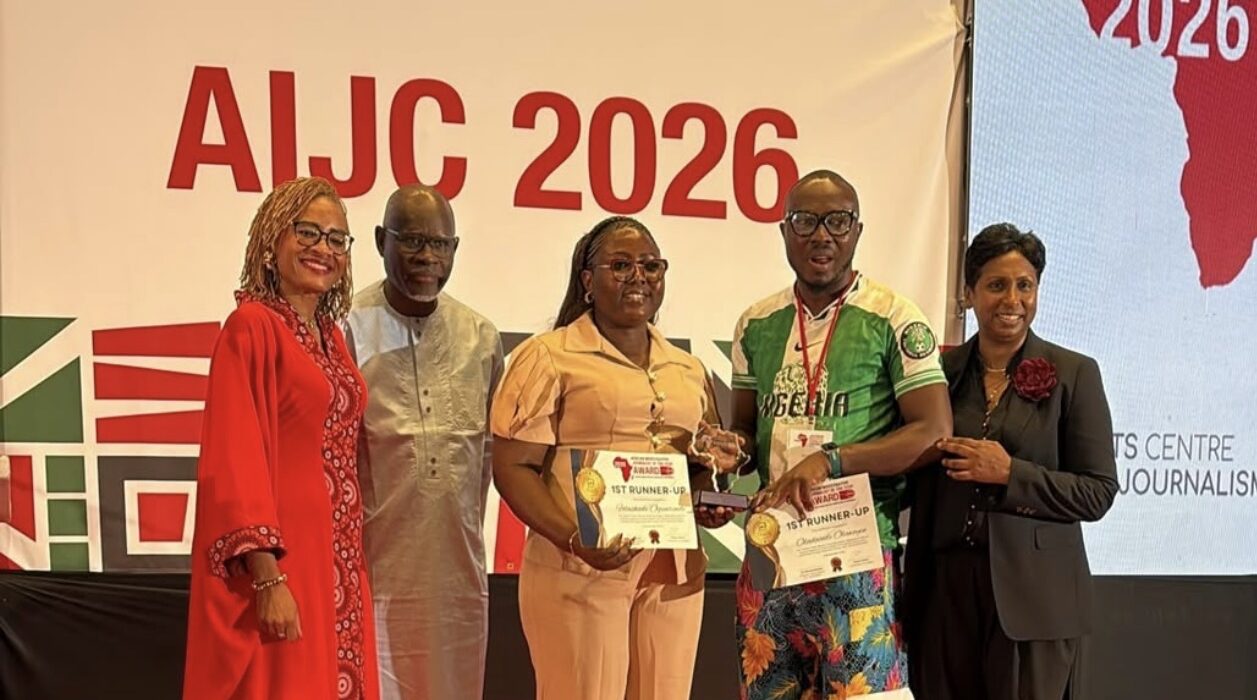
PREMIUM TIMES journalists Oladeinde Olawoyin and Folashade Ogunrinde made headlines on Wednesday at the 2026 African Investigative Journalist of the Year Award. They were honoured for their investigation into lead poisoning caused by battery recycling in Nigeria.
The journalists took home the first runners-up spot at the awards gala in Nairobi, Kenya. This event took place during the 2026 African Investigative Journalism Conference (AIJC).
The award is organised by the Wits Centre for Journalism and supported by Absa Africa. It highlights exceptional investigative journalism across Africa. The focus is on reporting that uncovers wrongdoing, encourages accountability, and benefits the public.
This recognition is a big win for Nigerian journalism. Olawoyin and Ogunrinde are the first Nigerian journalists to be in the top three for the African Investigative Journalist of the Year Award. Their runners-up position also marks Nigeria's first podium finish in this competition, which has been running for four years.
Their investigation is titled ‘Lead in Their Blood: Poor oversight, regulatory failure expose Nigerians to slow death from battery recycling,’ and it is the second part of a two-part series produced with The Examination.
The first part, called ‘Lead In Their Blood: How Battery Recyclers Are Poisoning Nigerians,’ looked into how residents and workers in Ogijo, a community on the Lagos-Ogun border, are exposed to lead pollution from battery recycling factories.
The two reports highlighted the health and environmental dangers of lead-acid batteries for residents and workers. They showed the serious health risks, including high blood-lead levels among children, women, and factory workers. The investigation pointed out that regulatory bodies failed to protect the community properly.



To understand the level of contamination, the journalists carried out independent blood-lead tests on 70 residents. They also took soil and air samples near the factories. The results showed that 50 of the 70 tested had blood-lead levels above the safe limit of five micrograms per decilitre.
All 14 factory workers tested also had high lead levels. More than half of the children checked showed worrying levels of exposure. Soil samples around the factories showed severe contamination, with some exceeding safe lead levels.
The reports traced the supply chain of recycled lead from Nigerian factories to international markets and the global car industry. They also highlighted regulatory failures that let the factories operate despite the health threats to nearby communities. The investigation looked into the roles of environmental agencies and foreign buyers of recycled lead.
After the reports were published, the National Environmental Standards and Regulations Enforcement Agency (NESREA) closed battery recycling plants in Ogijo due to environmental issues. The Ogun State Government also announced plans to tackle the pollution, including blood-lead testing for residents.
Following this, the House of Representatives called for an investigation into the lead-poisoning issues and asked for an urgent response.

Drop your comment
No comments yet — be the first to drop the gist 👇