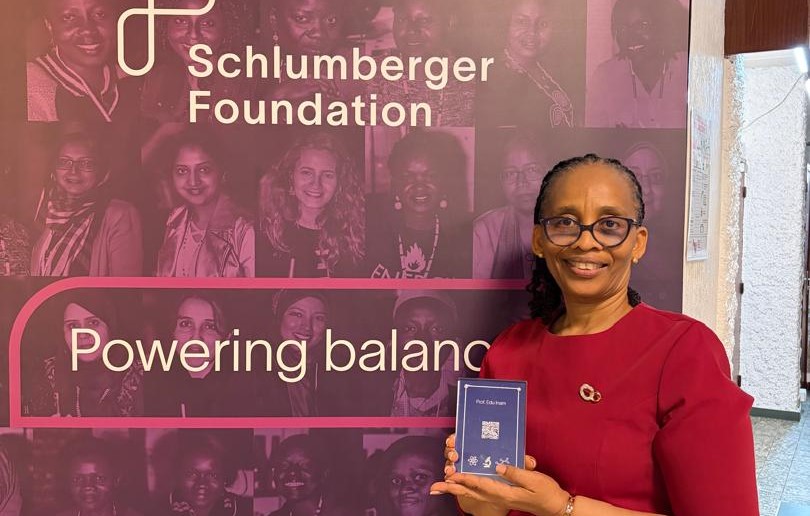
Edu Inam, a Nigerian scientist and professor of chemistry at the University of Uyo in Akwa Ibom State, has won the 2026 Faculty for the Future Impact Prize from the Schlumberger Foundation.
Ms Inam was one of nine women scientists and engineers chosen from 156 applications across 61 countries for this first-ever prize, according to a statement from the Schlumberger Foundation.
The Foundation announced the winners on its website in July.
She was recognized for her project, "Scaling a Research Equipment Database for Equitable Access in Nigeria," which aims to help researchers find scientific equipment and research facilities in the country.
Ms Inam, a former head of the Department of Chemistry at the University of Uyo, also directs the International Centre for Energy and Environmental Sustainability Research at the university.

From Personal Frustration to National Project
Describing what inspired her initiative, Ms Inam said her experience in analytical chemistry revealed a common issue: researchers often struggle to find functional scientific equipment and how to access it.
"My personal challenge has been knowing where functional equipment are located and how to access them in Nigeria’s higher institutions system," she told PREMIUM TIMES.
She explained that while equipment may exist in Nigerian institutions, researchers often do not know where it is, if it works, who manages it, or how to get access.
This situation is especially tough for students needing specialized equipment to finish their research projects for graduation.
To tackle the issue, she created LabEquipment.ng, a searchable platform that gives details on available research equipment, their locations, and contacts for access.
The platform was publicly launched in 2021.
By the end of 2025, it had connected 22 institutions, listed more than 200 pieces of equipment, recorded over 3,000 searches and interactions, and attracted more than 550 users, according to the professor.
What the Prize Will Support
The analytical chemist said the prize will help improve the platform, allowing mobile access, onboarding more institutions, and creating clearer processes for researchers seeking equipment and lab services.
"The goal is not simply a larger database. It is a more connected research ecosystem, one in which a student’s experiment is less likely to end at the door of a laboratory with a broken machine," she said.
She added that the initiative could also help universities, government bodies, funding organizations, and development partners make better investment decisions in research facilities.
According to her, having a clearer view of existing research capabilities can help institutions avoid wasting money on unnecessary equipment while pinpointing areas where more investment is needed.
She also mentioned that tracking information about equipment functionality, maintenance, and lifecycle can help institutions see research equipment as long-term assets rather than just items bought for labs.
Beyond an Equipment Catalogue
Ms Inam believes the database could grow into a platform that connects researchers, technical experts, institutions, and industry around available scientific capabilities.

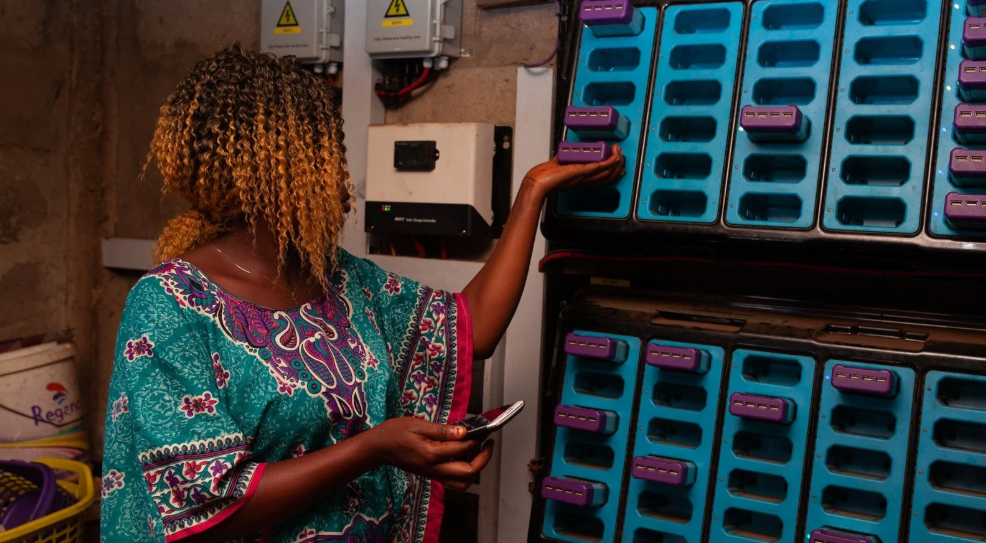

She pointed out that improved visibility, shared access, reduced duplication, better maintenance, and informed investment decisions could help address Nigeria’s research infrastructure challenges.
For her, success won’t just be about how many pieces of equipment are listed on the platform.
"In three to five years, I would like to see a substantial proportion of major research institutions with verified equipment records," she said.
She also wants researchers to discover critical equipment and analytical capabilities beyond their own institutions, promoting the use of shared facilities and inter-institutional access.
Her other goals include reliable information on equipment functionality and maintenance, smart funding decisions based on existing capacity, fewer unnecessary purchases, stronger research networks, and better use of costly research infrastructure.
Ultimately, she aims for more research projects to be completed in Nigeria because researchers can find and access the tools they need.
"The long-term vision is to change the question from ‘Does my university own this equipment?’ to ‘Where in Nigeria is this capability available, and how can I access it?’" she said.
Other Winners
Other recipients of the 2026 Faculty for the Future Impact Prize include Dr Darshana Joshi for her work on STEM access for women and rural communities in India; Dr Angela Tabiri for the Mathsqueen National STEAM Circuit; Dr Novalia Pishesha for the Future Southeast Asian Scientist initiative; and Dr Chao Mbogo for mentorship infrastructure for holistic technologists.
The nine initiatives were recognized in three areas: educational outreach, technology innovation, and social impact.
Capella Festa, president of the Schlumberger Foundation, said the Faculty for the Future program has grown from supporting the education of women scientists and engineers to seeing its fellows apply their skills to solve community problems.
"The Impact Prize allows us to recognize this leadership, connect it across the fellowship, and help it travel further," Ms Festa said.
Global Recognition
The International Centre for Energy and Environmental Sustainability Research, where Ms Inam serves as director, congratulated her on this achievement.
The center described her initiative as a sign of commitment to improving research infrastructure and expanding access to scientific equipment for researchers in Nigeria.
It also praised her contributions to research excellence, collaboration, and building scientific capacity.
The Faculty for the Future program started in 2004 to support women scientists and engineers from emerging economies pursuing PhD and postdoctoral research in STEM fields at leading institutions worldwide.
The Schlumberger Foundation noted that the program hit a milestone by funding 1,000 fellows globally in 2026.
The foundation is an independent nonprofit organization founded by Schlumberger in 1954 to support education and promote excellence in STEM research.




Drop your comment
No comments yet — be the first to drop the gist 👇