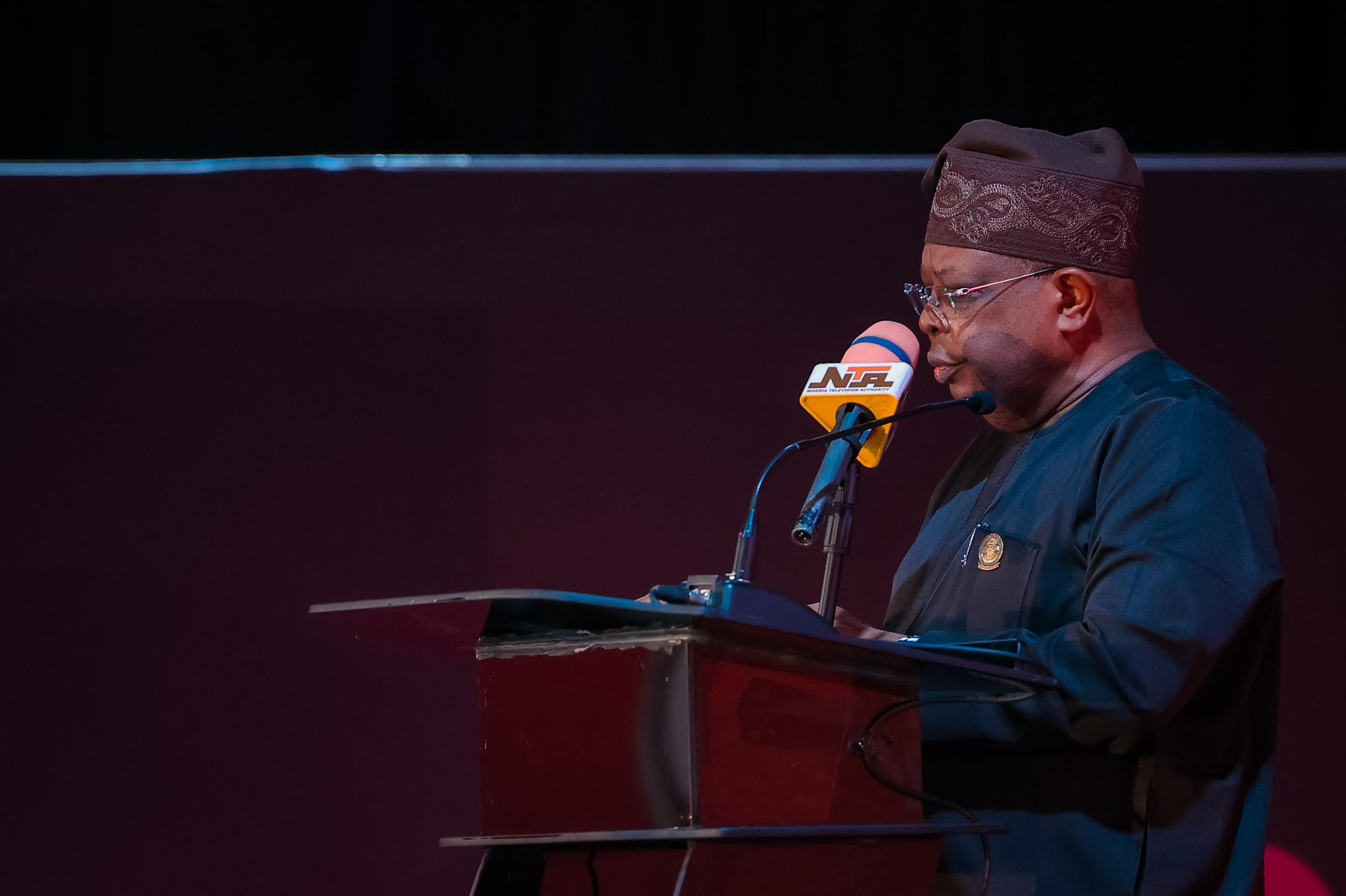
The Minister of Power, Joseph Tegbe, has said Nigerians might have to wait three to five years for better electricity supply. He blamed this on years of bad infrastructure, poor investment choices, and lack of funds that have caused ongoing problems in the sector.
Mr Tegbe shared this information during an interview on Arise Television’s The Morning Show on Monday.
He recognized the challenges Nigerians face because of unreliable electricity. But he noted that the issues in the power sector have built up over decades and cannot be fixed quickly.
The minister mentioned that the government found that the problems in the power sector were bigger than they first thought. There are issues across generation, transmission, and distribution.
He said while the government is working to improve electricity supply, Nigerians should expect more meaningful changes in the next three to five years.
"The truth is that some of the reasons why we haven’t reached where we are is that those of us in the sector have realised that the deficiencies in infrastructure are much more than what we estimated. That’s the truth, and I’m telling you today, we are on course, by God’s grace. In the next three to five years, we’ll see much improvement," he said.
"If it’s going to take five years, I will tell you it’s going to take five years," the minister added. He emphasized his commitment to being open and honest about managing the sector.
Mr Tegbe, however, ruled out raising electricity tariffs. He said the government’s main focus is to ensure Nigerians have stable electricity without adding more financial stress on consumers.
He stated that President Bola Tinubu has instructed the ministry to look at all possible options to improve electricity access. This includes reviewing current policies, commercial agreements, and financial models in the sector.
"There’s no plan to increase tariffs. I even have, to be honest with you, the most important thing for me is how do I get electricity to Nigerians?" he said.
Years of neglect in infrastructure
To explain the ongoing electricity problems, Mr Tegbe highlighted that during his Senate screening, he said technical issues made up only 20 percent of the crisis. The remaining 80 percent comes from human and institutional factors.
He said his time in office has confirmed his earlier view. He pointed out that poor coordination, weak commercial deals, lack of funds, and governance issues are major challenges.
The minister noted that some electricity infrastructure still has the logo of the old Electricity Corporation of Nigeria (ECN). This shows just how much the sector has been neglected.
"Some of these towers still bear the ECN logo. Those things have not been replaced," he said.
He also criticized past governments for starting projects without thinking about the necessary infrastructure to make them work. He gave an example of installing transformers in communities without proper transmission lines.
"Everybody wants a transformer in their village. Even where transformers are being installed, there are no transmission lines getting there," he said.
Mr Tegbe said his ministry is looking at ongoing projects to find those that need urgent attention. They want to make sure public funds are used in ways that can improve electricity supply.
He added that infrastructure planning should focus on economic needs instead of political interests.
Government renegotiates debt from ₦6 trillion to ₦3.3 trillion
The minister pointed out that unpaid debts to power generation companies (GenCos), especially for gas supplied to power plants, are another big issue.
He mentioned that the federal government’s debts were initially estimated at ₦6 trillion but have been renegotiated down to ₦3.3 trillion. So far, ₦1.23 trillion has been paid.

He expects the government to clear the remaining debt by 2027. The minister also said the government is looking for ways to balance some debts against royalties and corporate taxes that the companies owe.
They are also talking to relevant institutions to find ways to lower the cost of gas for power plants.
In defending the debt renegotiation, he said the government must balance its financial duties to the power sector with other needs like education, healthcare, and agriculture.
"I will not even support Mr President taking all the money we have only on one sector. We have challenges in education. We have challenges in health. We have challenges in agriculture," he said.
Metering issues and tariff shortfalls worsen crisis
Mr Tegbe said problems with metering and poor revenue collection have made the financial situation in the electricity market worse.
He explained that some customers do not pay for the electricity they use, and relying on estimated billing makes it hard for distribution companies to collect accurate revenue.
"The DisCos give power to Nigerians. Some of the Nigerians don’t pay," he said, adding that the lack of proper metering makes revenue collection even tougher.
He mentioned that the government has introduced about 2.8 million new digital meters and aims to install seven million within three years.
The minister insisted that the government is reviewing the basis for electricity tariffs but confirmed that no increase is being planned.
He said the immediate goal is to improve electricity access and fix the financial problems in the sector.
Electricity Act and Siemens project
The minister highlighted the Electricity Act 2023 as a significant step towards decentralizing the electricity market. This law allows states to take a more active role in generating, transmitting, and distributing electricity.
He also clarified that the Presidential Power Initiative, known as the Siemens project, mainly focuses on improving transmission infrastructure, not generating electricity.
According to him, substations are being built in about five locations in the first phase of the project.
"Siemens deal has nothing to do with generation. Siemens deal is about transmission and largely about substations and transmission lines," he said.
He argued that increasing generation without enough transmission infrastructure will not solve the electricity crisis.
Mr Tegbe also supported President Bola Tinubu’s promise to improve electricity supply. He said the President has asked the ministry to explore all options for providing reliable power.
He reminded everyone that Mr Tinubu promised Nigerians during his campaign that they would have access to electricity and would stop paying estimated bills.
The minister promised to be open about the challenges in the sector. He said Nigerians should judge him based on his willingness to share the truth about the sector rather than making unrealistic promises.
Drop your comment
No comments yet — be the first to drop the gist 👇