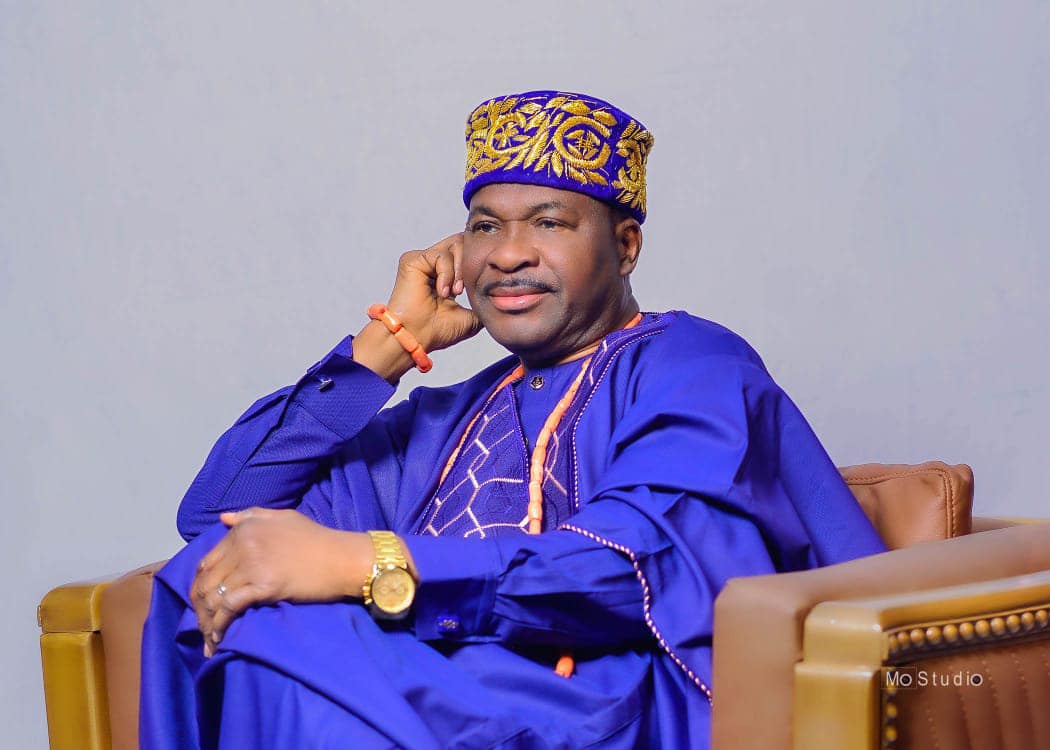
Lawyers defending Mike Ozekhome and his co-defendant on Monday questioned a Code of Conduct Bureau (CCB) official about how well he investigated a London property owned by the late General Jeremiah Useni.
Samuel Sibiri, a Senior Advocate of Nigeria (SAN), asked Raaji Babatunde about his qualifications and experience. He also questioned Babatunde's investigation into Mr Useni’s military years.
The defence team raised concerns about the witness’s understanding of how mortgages work in the United Kingdom (UK). They also asked about the late general’s asset declaration process regarding the property in question.
The London property has been under false ownership for many years. It is central to the forgery case against Mr Ozekhome and Ponfa Useni, the late general’s son.
The Economic and Financial Crimes Commission (EFCC) brought the charges after a London property tribunal ruling revealed issues with the property.
In February, the Attorney-General of the Federation took over the case.
Ozekhome and Ponfa Useni face charges of impersonation and forgery. They allegedly presented a Nigerian passport to a London tribunal to support Ozekhome’s unsuccessful claim to the property.
The late Useni bought the property at No. 79, Randall Avenue, London NW2, in 1992 using the name Tali Shani.
He was a military officer at the time and had held various political positions, including Minister of the Federal Capital Territory (FCT).
His supposed attempt to transfer the property to Ozekhome led to documents being presented that the London tribunal found to be forged.
Ozekhome and Ponfa Useni are facing 12 counts of forgery and impersonation.
According to the charges, the defendants worked with the late Useni in 2020 to create a fake Nigerian passport with the name Tali Shani and number A07535463. They claimed the Nigeria Immigration Service issued it to help in their claim to the UK property.
The prosecution also accused them of using this false passport to support their property claim. They further claimed that Ozekhome assisted Ponfa Useni in impersonating Tali Shani in 2020.
The two reportedly created a fake “Irrevocable Power of Attorney” to aid Ozekhome’s claim to the property.
Both Ozekhome and Useni denied all the charges.
Mr Babatunde, the third prosecution witness called by the Attorney-General, told the FCT High Court that he had worked at the CCB for 13 years across five departments. He is currently an investigation assistant to the bureau’s chairperson.
He mentioned the departments as state and local government, federal public services, proceeds of crime, recovery and management, and financial investigation and forensic accounting.
But the witness admitted that he did not know how property is acquired in the UK.
Babatunde said he was familiar with the mortgage system and noted that the late Useni retired as a lieutenant general.
He stated that he investigated Mr Useni’s military years but did not look into his retirement years.
Yet, he could not say how much Mr Useni earned as a lieutenant general or what he received as a pension.
On 18 November, Mr Babatunde told the court that while Mr Useni said he bought the property for £79,000, a London property tribunal ruling set the purchase price at £200,000.
He pointed out the difference between the amount Mr Useni declared and the figure given in the UK tribunal’s ruling, which was delivered last year in a property ownership dispute.
According to the witness, Mr Useni “put the figure for the acquisition of the property at £79,000 in 1993,” while the tribunal judgement listed the purchase price for that year as £200,000.
The CCB official, who processed Mr Useni’s asset declaration when he became a senator in 2015, also testified that the late general had assets worth more than his earnings as a public officer.
During the proceedings on Monday, Mr Babatunde directed the court to a specific paragraph in the tribunal’s judgement.
That paragraph included a witness's testimony asking Mr Useni how he could afford a £200,000 property at just 20 years old.
Mr Sibiri asked if that testimony was enough to conclude the property cost £200,000. The witness answered that since a witness had stated the figure, “it is sufficient to say that it is the actual amount for which he (Mr Useni) purchased the property.”
He acknowledged that Mr Useni did not directly provide the £200,000 figure. Still, Mr Babatunde insisted he asked the late general for proof of the property purchase, which he did not provide.
He included this in his report to his superiors, though that report was not shown in court.
Reading from a financial analysis report presented by the prosecution on 18 November, Mr Babatunde stated Mr Useni’s total annual entitlement in 1993 was £92,121.41.
The witness also confirmed that Mr Useni was never charged with illegally acquiring the property or convicted for giving false information in his asset declaration.
Since Mr Babatunde had earlier testified that he personally attended to Mr Useni when he visited the CCB, Mr Sibiri asked him to describe the late general.
The witness described him as dark-skinned, gap-toothed, and clean-shaven.
During cross-examination by Ponfa Useni’s lawyer, the witness said he was unaware of England’s strict rules against buying property with money from crime and the checks involved in such deals.
He mentioned knowing about the mutual legal assistance system between Nigeria and England for cross-border crime investigations but did not know if the CCB could be contacted if a public officer illegally acquired property in England.
The witness also stated he was not aware of any request to the CCB to investigate Mr Useni’s property purchase. However, he maintained that a London tribunal ruling showed the property was illegally acquired.
After his response, Mr Onoja asked him to point out where the tribunal made that finding.
After looking at the judgement for a while, the witness directed the court to paragraphs 193 and 194 on page 45.
Those paragraphs discussed Mr Useni’s use of fake names when buying the property.
Mr Onoja then asked him to read paragraphs 214 and 215 on page 48.
These said that the late Mr Useni was the real owner of the property. However, since he had died, the property would go to “such persons as obtained in a grant of probate administration…”
Despite reading those parts, Mr Babatunde insisted he could not agree that the property belonged to Mr Useni. He argued that the judgement showed the late general bought it under a false name.
The witness was later excused, and the trial judge, Chizoba Oji, adjourned the case until 1 February 2027.

Drop your comment
No comments yet — be the first to drop the gist 👇