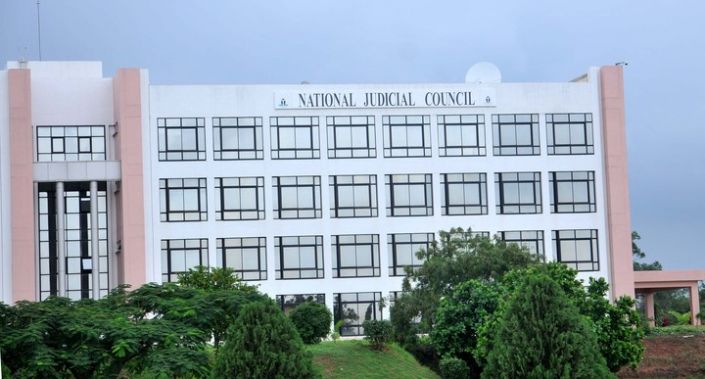
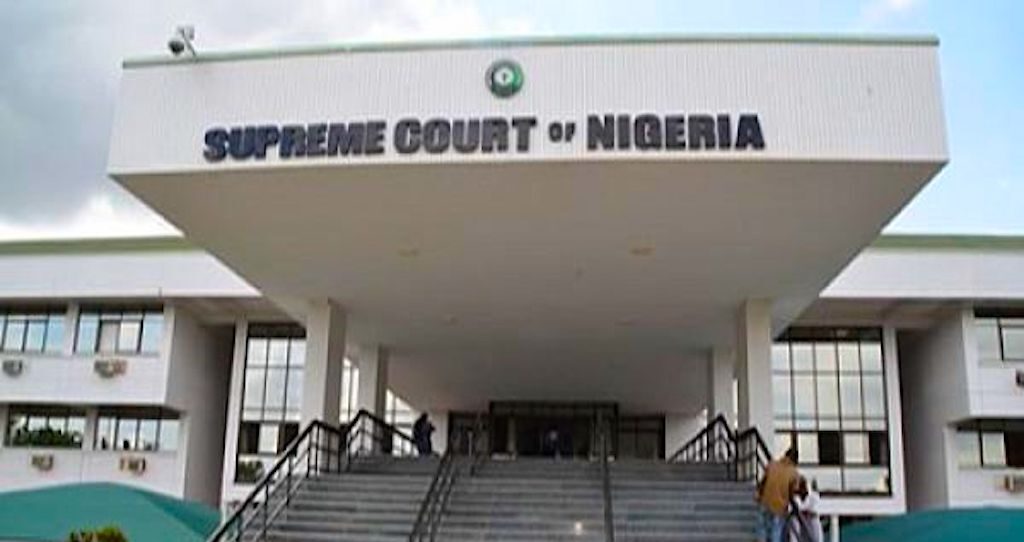
The National Judicial Council has put 256 judges under scrutiny for misconduct. This was a major point during its 111th meeting in Abuja. During the same meeting, two judges were suspended for a year without pay. The Council also dismissed 73 other petitions regarding judicial issues.
Other actions included calling the Chief Judge of the Federal High Court and the Chief Judge of the Kano State High Court to discuss conflicting orders. The NJC also sent warning letters to three judges and stopped their promotions for a while. Additionally, two judges were placed on a watch list for two years.
The huge number of judges facing allegations shows serious problems within the judiciary. Many people are familiar with this issue, as it has been talked about publicly. It is morally troubling.
During the meeting led by Chief Justice of Nigeria (CJN) Kudirat Kekere-Ekun, no details were given about the cases of misconduct. This has left the public guessing. Since taking office, the CJN has stressed the need for discipline, integrity, and professionalism among judges to rebuild trust in the system. But it looks like her message is not being taken seriously.
When judges face accusations, people often think about them selling justice. Many former justices and senior lawyers have confirmed this. Such actions lead to forum shopping, conflicting judgments, improper orders, and delays in case handling.
The Chairman of the Economic and Financial Crimes Commission (EFCC), Ola Olukoyede, recently said that restraining orders have blocked the commission from operating in 15 states.
The NJC issues queries to judges every year as part of its duties. But the rising number of cases shows that its approach to discipline is not working well. With more judges acting wrongly, the NJC needs to rethink its methods. Many believe that its punishments are just light reprimands.
Being a judge is a respected position, valued for its power to deliver justice. In places where the rule of law is strong, efforts are made to protect judges' integrity.
In the US, for example, “Corruption in a judge’s seat does not go unpunished,” according to Richard Pilger, a US prosecutor. He spoke during the case of Thomas Spargo, a New York State Supreme Court Justice involved in extortion. Spargo was imprisoned for 27 months in 2009.

In contrast, the NJC only retired a Justice of the Court of Appeal who asked for a bribe of ₦200 million for a judgment in 2016. The NJC's report said, “During deliberations, the council found as follows: that there was evidence that the petitioner met with Honourable Justice… thrice, in his residence in Sokoto, Gwarimpa, Abuja and Owerri, where on each occasion, he demanded from him the sum of ₦200 million to influence the Court of Appeal in Owerri or risk losing the case.”
The best practice worldwide would be to prosecute and jail such a judge. But that has not happened here. There are no known cases of judges jailed for misconduct in Nigeria. Some prosecutions were dropped due to support from fellow judges.
For this reason, PREMIUM TIMES calls for a stronger approach. Judges who commit serious crimes must face the law. This is the only way to bring back discipline and integrity to the judiciary.
If this happens, late Justice Kayode Esho, who raised concerns about “billionaire judges,” and Justice Ayo Salami, who lost his position for opposing a former CJN on an election case, would not have tried in vain to clean up the justice system.
Reports from the National Bureau of Statistics and UNODC show that the judiciary is one of the most corrupt sectors in Nigeria. A leading Senior Advocate of Nigeria (SAN) remarked that there are two types of lawyers: those who know the law and those who know the judges. Sadly, this has been proven true many times.
For every instance of judicial misconduct in Nigeria, there seems to be a senior lawyer involved. This is why the EFCC chairman mentioned that at least 100 SANs are facing prosecution for money laundering and misappropriating clients' funds.
Justice Muhammed Shuaibu, the Presiding Judge of the Court of Appeal, Sokoto division, admitted years ago at a conference that “Part of the problem in the fight against graft in the country are judges.” Justice Musa Dattijo also noted that “It has been in the public space that court officials and judges are easily bribed by litigants,” during his farewell speech in 2023.
In 2014, former Chief Justice of Nigeria, Mariam Aloma-Muhktar, warned about the “rising culture” of lobbying and godfatherism in judicial appointments by the NJC. This shows the deep-rooted issues in the judicial system. If the NJC does not ensure that corrupt judges face justice, it may be digging a deeper hole in its quest for integrity on the Bench.
Drop your comment
No comments yet — be the first to drop the gist 👇