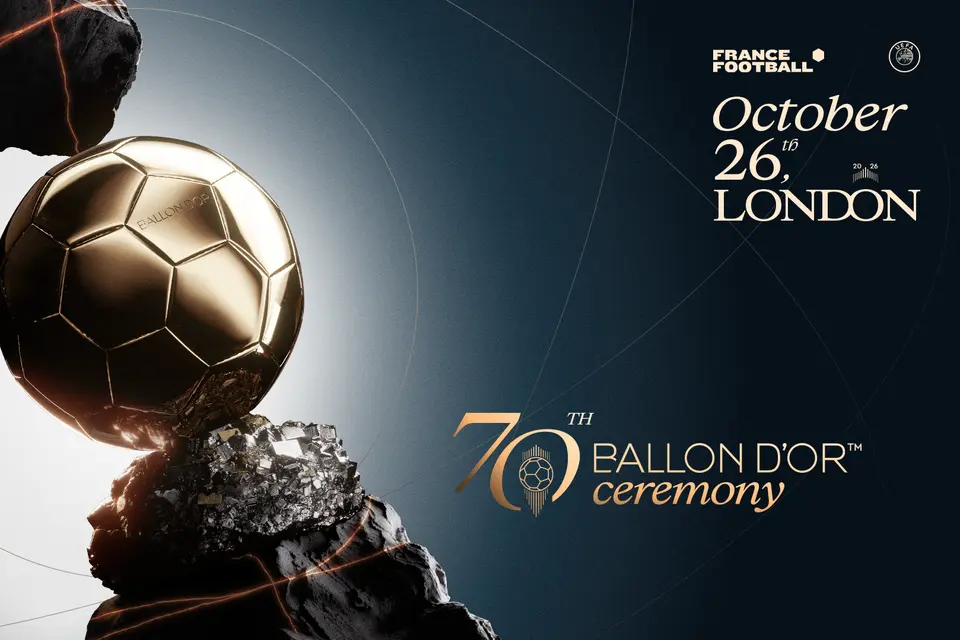
For the first time since Victor Osimhen made waves at the Ballon d’Or in 2023, Nigeria will not have a nominee for the prestigious football awards. The 2026 edition is set to take place in London on Monday.
The 70th Ballon d’Or gala will happen at the London Palladium, starting at 8pm local time, which is 9pm in Nigeria. Hosted by Kate Scott and French football legend Thierry Henry, this event is significant as it marks the first time the awards will be held in London, moving from its usual Paris venue to celebrate its 70th anniversary.
For Nigerian football, this event feels different. There will be no Super Eagles player on the men’s list, no Super Falcons player among the women’s nominees, and no Nigerian candidate in any other categories.
This is disappointing for a nation that recently had a moment in the global awards spotlight, thanks to the rise of Osimhen, Ademola Lookman, and the Super Falcons' achievements.
The absence raises a big question: how can Nigerian players perform excellently, shine in Africa, and attract attention in Europe, yet fail to be recognized among the world’s top footballers?
Osimhen and Lookman: From Recognition to Omission
The most noticeable absences are Osimhen and Lookman, two players who have been key in Nigeria’s attack over the past seasons.
Osimhen became a global figure in 2023 after leading Napoli to their first Serie A title in 33 years. His goals and strong presence made him a feared forward in Europe, earning him eighth place in the Ballon d’Or voting.
That ranking was more than just personal recognition. It placed a Nigerian among the world’s elite, as the country sought a new generation of stars to continue its proud football legacy.
In 2024, Lookman continued the momentum. His hat-trick for Atalanta in the UEFA Europa League final against Bayer Leverkusen secured the club’s first major European trophy. He became a key figure in that campaign.
Lookman also shone for Nigeria at the 2025 Africa Cup of Nations, while Osimhen was a central part of the Super Eagles’ attack. Their performances led many to believe that Nigeria had players ready to compete for the highest honors.
Lookman ended 14th in the 2024 Ballon d’Or ranking, continuing Nigeria’s representation after Osimhen’s eighth-place finish the year before.
Yet this progress did not lead to nominations in 2026.
Both players kept contributing at club and country levels, but it was not enough for a spot on this year’s list. Osimhen finished the 2025/26 season with 30 goal contributions, while Lookman had 12 goals and six assists.
Their omission shows just how tough the Ballon d’Or race is. Strong stats and good performances are important, but recognition also depends on the bigger picture, including individual impact and team success.
The World Cup Factor and Nigeria’s Missed Chance
One major issue for Nigerian players this awards cycle was the Super Eagles not qualifying for the 2026 FIFA World Cup.
The Ballon d’Or assessment period ran from 3 August 2025 to 19 July 2026, covering the European club season and key international competitions. The World Cup was a big part of this period.
For players from nations that reached the tournament’s final stages, the World Cup was a chance to showcase their skills against top teams.
Nigeria did not have that chance. The Super Eagles’ failure to qualify meant Osimhen, Lookman, and their teammates missed out on using the World Cup to boost their individual profiles. While club performances mattered, they had to compete with players whose seasons included success on the biggest international stage.
This distinction is crucial in an award that looks at both individual talent and team achievements.
Nigeria's absence does not mean its top players lack quality. Instead, it highlights how international football can shape a player's narrative, especially when the biggest tournament is in the voting period.
For Osimhen and Lookman, this missed chance is significant because both have proven they can influence important matches. The question is whether their next seasons can combine individual talent with team success to stay in the running for global recognition.
Super Falcons Offer Nigeria Another Route to Recognition
While the men’s game brought Nigeria’s top nominees in 2023 and 2024, the women’s game kept Nigeria represented in 2025.
Super Falcons coach Justine Madugu and goalkeeper Chiamaka Nnadozie received nominations after Nigeria won the 2025 Women’s Africa Cup of Nations in Morocco.
The Super Falcons beat the hosts 3-2 in the final, achieving their record-extending 10th continental title and reinforcing their position as Africa’s top women’s national team.
Madugu’s work earned him a nomination for the Women’s Johan Cruyff Trophy, while Nnadozie was up for the Yashin Trophy for best goalkeeper. Both finished fourth in their categories at the Paris event.
Their nominations were significant as they showed Nigeria's influence in global football was not just about male players in Europe.
The Super Falcons’ continental success, alongside Nnadozie’s performances and Madugu’s leadership, kept Nigeria in the awards conversation through women’s football.
But neither has received a nomination for 2026.


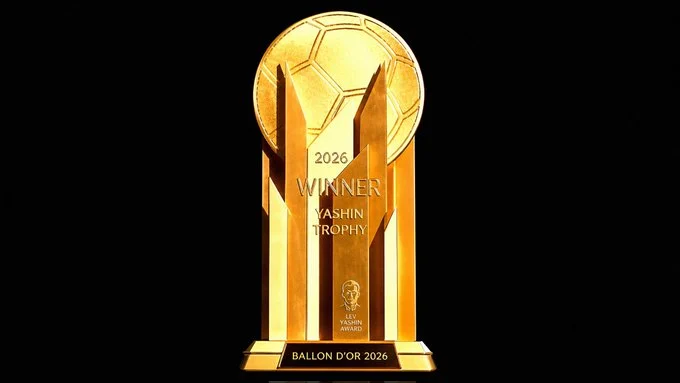
This omission comes despite Nigeria’s rich history in women’s football and the country’s continued production of players in major leagues abroad. It also reminds us that national-team success does not automatically lead to individual recognition in future awards.
For Nigerian women’s football, the challenge is to turn the Super Falcons’ history and players' achievements into lasting recognition among the world’s best.
Africa Still Present, But Nigeria is Missing
Even though Nigeria has no nominees this year, African football will not be entirely absent from the ceremony.
Senegal’s Sadio Mané and Morocco’s Achraf Hakimi are among the 30 candidates for the men’s Ballon d’Or. Zambia’s Barbra Banda is also nominated for the women’s award, while other African players appear in different categories.
Their presence shows the talent coming from the continent and African footballers’ growing ability to compete for individual awards worldwide.
Hakimi’s nomination is especially important for Morocco, whose national and club achievements have boosted the profile of its top players. Mané, on the other hand, remains one of Africa’s most recognized football figures after years of success.
For Nigeria, seeing its African rivals among the nominees brings both hope and challenge.
Nigeria has produced Ballon d’Or contenders before. Osimhen’s eighth-place finish and Lookman’s 14th place showed that Nigerian players can make it into the conversation when their performances attract international attention.
The focus now should be on building on those achievements instead of letting them become isolated moments.
Kane, Yamal, and Mbappé Lead the Nominees
With no Nigerian player in the running, all eyes are on the top candidates for the men’s award.
Harry Kane, Lamine Yamal, and Kylian Mbappé are among the top names in a shortlist filled with players who have combined outstanding individual performances with major club or international success.
Kane has had a great season with Bayern Munich and England. If he wins, he will be the first Englishman to take the men’s Ballon d’Or since Michael Owen in 2001.
Yamal is also making a name for himself among the world’s exciting young talents. The Barcelona forward’s performances have put him in the running for both the main award and the Kopa Trophy, which honors the best young player.
Mbappé is another strong contender after a successful season with Real Madrid, with his scoring feats keeping him in the spotlight despite not winning major trophies.
Defending champion Ousmane Dembélé is also nominated, along with several Paris Saint-Germain teammates, while Lionel Messi returns to the shortlist as an eight-time winner.
The award is decided by an international jury of specialist journalists. For the men’s prize, a journalist represents each of the top 100 nations in FIFA rankings, with voters ranking their top 10 candidates.
The criteria focus on individual performances and impact, then team success and trophies, and lastly class and fair play.
These criteria show why the race is about more than just goals and assists. Players are evaluated on their influence throughout a season, the importance of their performances, and the success they help their teams achieve.
Nigeria Must Turn Individual Brilliance Into Sustained Recognition
For Nigerian fans, Monday’s ceremony will be a time to watch the best footballers celebrate their achievements without a local nominee to cheer for.
This absence is disappointing, but it should also encourage a broader reflection on what Nigeria needs to do to stay among football’s top nations.
Osimhen and Lookman have shown that Nigerian players can reach the highest levels of recognition. Nnadozie and Madugu proved last year that women’s football can also lead to global awards.
These successes are proof of what is possible, not a guarantee of ongoing presence.
Nigeria needs its top players to keep performing well at club level, while national teams must deliver results that allow individual stars to shine on major international stages. Consistent performances, winning trophies, and crucial contributions in important matches will always be key.
The Super Eagles’ failure to qualify for the 2026 World Cup deprived their top players of the chance to enhance their profiles during the Ballon d’Or assessment period. It also highlighted the link between the national team’s fortunes and the global visibility of its stars.
As Kane, Yamal, Mbappé, and the other nominees prepare for the spotlight in London, Nigeria is left to reflect on a recent time when its players were close to football’s highest individual honor.
The immediate disappointment is that no Nigerian will be recognized this year. The bigger challenge is to ensure that Osimhen’s and Lookman’s achievements do not become isolated moments and that the next generation of Super Eagles and Super Falcons stars can build a consistent presence on football’s biggest awards stage.
For a country like Nigeria, with its rich football history and talent pool, the goal should be more than just returning to the Ballon d’Or shortlist. It should be to create a lasting presence there and, one day in the near future, win the gold ball.

Drop your comment
No comments yet — be the first to drop the gist 👇