
A group of lawyers and stakeholders from Ilaje communities in Ondo State has urged the Federal Government to bring back the Lagos-Calabar Coastal Highway to its original coastal path through the state. They believe the current route has skipped many coastal communities and moved the project inland through Edo State.
Dr Benson Enikuomehin, an Attorney-at-Law, spoke for the group at a press conference in Ebute-Metta, Lagos, on Thursday. He asked the Federal Ministry of Works to stick to what he called the original coastal alignment of the project.
This demand came after Afenifere raised concerns in August about the neglect of parts of the Ondo coastal communities. In response, Minister of Works David Umahi said the government wanted to build the road along the coast but noted that engineering issues could change the alignment.
Umahi said, "The coastal highway, we know, our preference is to go along the coast. But engineering is very dynamic. When we designed the coastal highway within this section, yes, we designed it to go through the coast, just about two kilometres off the shoreline."
But Enikuomehin claimed on Thursday that the current route has strayed far from the original plans, especially in Ondo State. He stated the highway runs along the coast through Lagos and only goes about 2-3 km inland in Ogun State to fit certain developments planned by the state government.
He added that the disagreement between Ogun and Ondo states over Eba Island did not change the status of Irokun community, which he said is firmly in Ondo State. He said, "It is a known fact that of all the coastal states in Nigeria, Ondo State unarguably has the longest coastline of about 80-100 km. It is, therefore, reasonable that the Coastal Highway will pass through the coastline communities of Ondo State before getting to Delta State and on through the other states to Calabar."
Enikuomehin was surprised that the Ministry of Works has changed the concept of the Coastal Highway. He stated that over 60 percent of the coastal communities in Ilaje Local Government Area of Ondo State have now been bypassed and neglected.
He said the highway has effectively become an inland road in Ondo, moving through Oke-Upare to communities in Ovia North and Ovia West Local Government Areas of Edo State. "Available records and data reveal that the coastal road has now assumed a new name as ‘Inland Highway Road’ when it comes to the Ondo State communities. This is courtesy of the Minister of Works and his Ministry," he alleged.
He pointed out that the route now goes from Oke-Upare in Ondo State to connect with communities in Ovia North and Ovia West in Edo State, including Gelegele, which he said is about 10-20km from the coast. Enikuomehin further claimed that many Ilaje communities included in the original plans have been left out of the project.
He named the affected communities as Ugbonla, Ilowo, Ilepete, Obe-Enikanoselu, Obe-Rewoye, Ikorigho, Jinrinwo, Awoye, and Igho. He said, "The injustice and the orchestrated marginalisation against the Ilaje people began when an additional 100km was added to the initial 700km, bringing the distance to 800km, to accommodate Edo State at all costs in the Coastal Highway. All the initial drawings and mappings of the road have been jettisoned."
Enikuomehin argued that the project was meant to be a coastal highway and should not be rerouted to places that do not lie along the coast. He said, "The highway from Lagos to Calabar is meant for the coast. It is not a Niger Delta Affairs project; it is a Coastal Road. Any state that does not fall within the coast in Nigeria will not be considered."
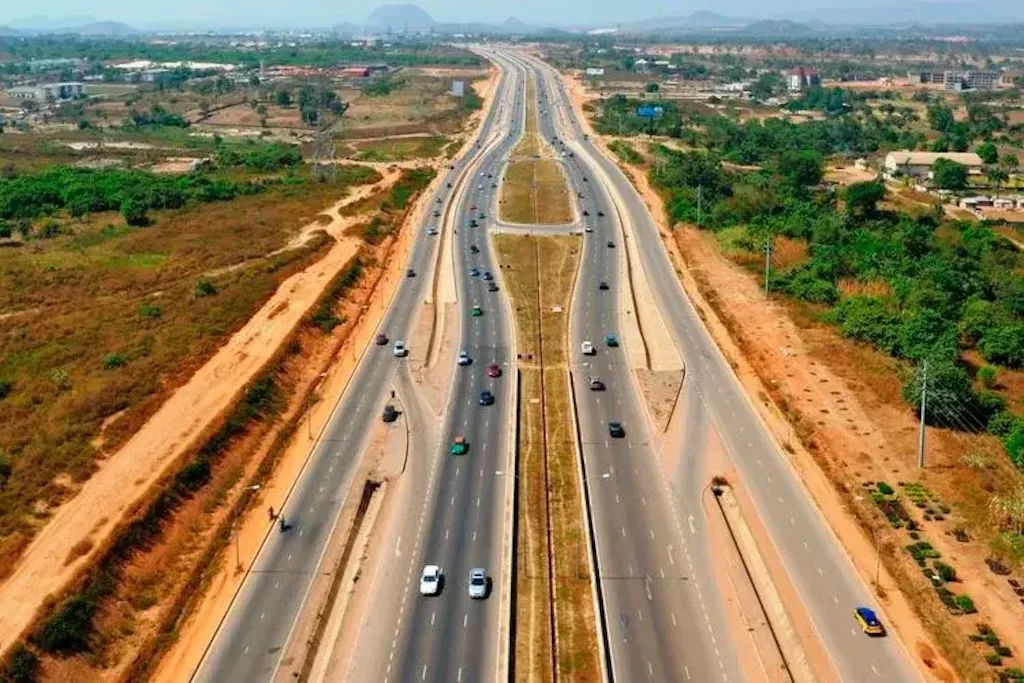
He also disputed the claim from the Federal Ministry of Works that building the road through Ilaje communities would cost more because of the tough terrain. He said a direct route from Ugbonla in Ondo State to Escravos in Delta State would cover about 60-75km. In contrast, the inland detour through Ebute-Ipare, Ovia North, Ovia West, and Gelegele in Edo State to Warri would stretch about 130-150km.
He mentioned that the estimated cost of the coastal route would also be lower than the inland route. "While the cost of building 1km of road on the axis of Ugbonla through the coastal communities to Escravos will cost N4bn to N7.5bn per km, that of constructing the same in severe swampy terrain with massive bridges through Oke-Upare to Gelegele in Edo to Warri will cost N7.5bn to N12bn per km," he said.
According to him, the estimated cost of the route through Ugbonla was between N240bn and N450bn, while the detour through Edo State could cost between N970bn and N1.5tn. Enikuomehin argued that the longer inland route goes against the purpose of the project.
He said, "While the alignment from Ugbonla in Ondo to Escravos in Delta is straightforward and aligns with the concept of ‘Coastal Highway’, the detour to Edo State is volatile, eroding immediate shoreline and rendering the concept of coastline a mirage." He pointed to the Ugbo-Oghoye Road Phase 1 as proof that roads can be built in the difficult terrain of the Ilaje area.
"It is on record that in 2010 the Niger Delta Development Commission awarded the construction of Ugbo-Oghoye Road Phase 1 spanning 40km. The cost then was N19.4bn. The Bureau of Public Procurement, in its certificate dated August 13, 2010, referenced BPP/S.1/Vol.VI/O9/222, gave a certificate of no objection for the award of the project," he said.
Enikuomehin asked why the Federal Government could not build the coastal highway through the Ilaje communities. He said the group is not against Edo State benefiting from the project but insisted that the highway should keep its coastal path through Ondo State.
"Diverting the road therefore to Edo State is a calculated attempt to marginalise and victimise the coastal communities of Ondo State. While we are not opposed to Edo State benefiting from this project, we strongly maintain that the road must remain coastal through Ondo State, passing through Ilaje communities on the coast," he said.
He also claimed that the diversion is unfair to the Ilaje people, citing Section 42 of the 1999 Constitution, as amended. He said, "It is our view that the action embarked upon by the minister is contrary to Section 42 of the 1999 Constitution of Nigeria (as amended), which forbids the discrimination of a people in respect of their ethnic group, place of origin, etc. We perceive that the Ilaje communities are being discriminated against to satisfy a particular ethnic group in Edo State."
Enikuomehin called on President Bola Tinubu to step in and look into the highway alignment in Ondo State. He said, "We plead with Mr President passionately to look into the plight of our people in the Ilaje coastal communities of Ondo State and redress this monumental injustice."
The Lagos-Calabar Coastal Highway has faced many issues since construction started. Concerns include legislative approval, environmental impact assessment reports, and reports of destruction of houses and businesses along parts of the Lagos shoreline.


Drop your comment
No comments yet — be the first to drop the gist 👇