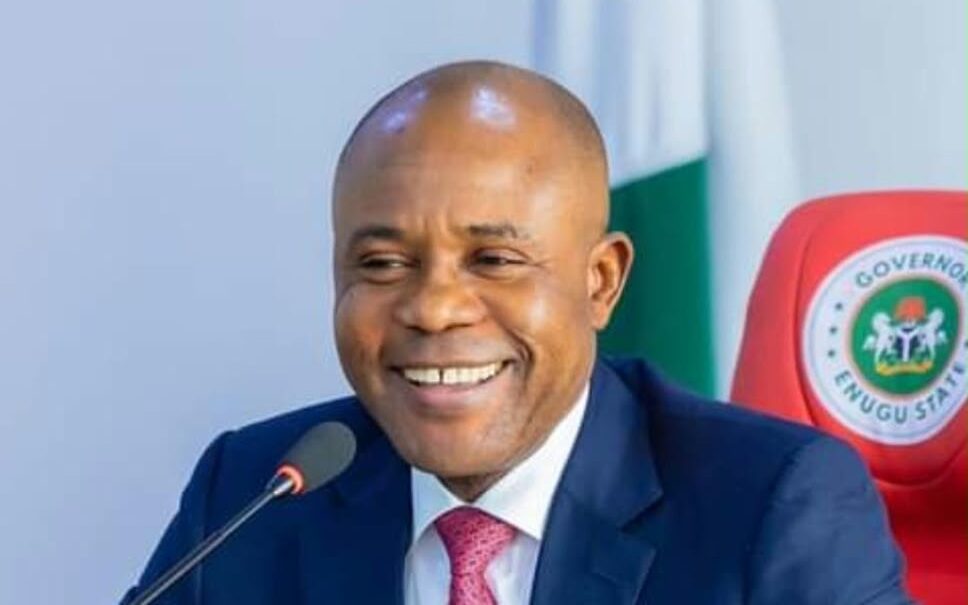
First, I want to thank the Management and Staff of Godfrey Okoye University and everyone who helped make this forum happen. It is a great chance for us to have an important conversation.
My dear people of Enugu State, let’s take a moment to reflect.
Remember May 2023 when we took office? Think about how our state was then, the challenges we faced, and the hopes we had let go of over time.
We need to be honest about that time, because if we don’t remember where we started, we may not see how far we have come.
There was a time when Mondays were no longer just regular working days in Enugu. Shops were closed. Roads were empty. Parents were scared to send their kids to school. People who relied on daily earnings lost a whole day’s income because some decided everyone should stay indoors.
Think about what that meant for a woman selling food at the market. Her customers were stuck at home, her food was going bad, and she could not make the money she needed to feed her family.
Or the young man who borrowed money to start a business but suddenly lost one working day every week.
Our kids missed a whole school year because their important exam fell on a Monday. That was the reality we inherited.
Our roads were bad. Public services were failing. Many schools struggled to give our children the quality education they deserved. Our healthcare facilities needed a lot of investment.
Enugu, once a central hub for business, politics, and culture in the region, was slowly losing that status. Businesses were looking elsewhere. Big events moved to other cities. Our airport had only two flights coming in daily. The worst part was that we might start to accept these awful conditions as normal. When people face the same challenges for too long, their hopes change. They stop asking what is possible and focus only on surviving each day. I knew we could do better.
I spent a lot of my working life building businesses, solving problems, and planning for the future. I knew Enugu had great resources, but those resources would mean little without the right environment for people to use them.
Our biggest asset was already here: the people of Enugu. What we needed was a clear plan, the will to follow it, and a government ready to take responsibility for the results.
When I shared my initial Statement of Purpose, I set a goal that some thought was too ambitious. We aimed to grow Enugu’s economy from about $4.4 billion to at least $30 billion within eight years, making our state one of Nigeria’s top three economies.
We also promised to work towards eliminating poverty. Those were huge goals, I knew that. But I wanted us to see the scale of change needed.
An economy cannot grow significantly if businesses cannot operate safely, if power supply is weak, if roads are not passable, or if young people leave school without the necessary skills.
These issues are all connected. We had to tackle them together. So, we started by identifying what makes a state function well: security, education, healthcare, good roads, strong industries, and institutions that can deliver results.
We made some tough choices. We invested a large portion of our resources in education because we understood that the future of Enugu depends on the skills of its children.
We worked to restore security and normal economic activities. We invested in roads, improved transport, worked on healthcare, and sought to attract businesses and industries that would create jobs.
I also recognized that the government itself needed to change. For too long, announcing projects was seen as an achievement. A project could be celebrated at the start and then disappear from public view.
I wanted a different standard.
If we promise a school, people should see it built. If we announce a road, they should be able to use it. If we say public services are improving, citizens should be able to tell us if that is true.
This is why accountability, measurable results, and public involvement were included in our original Statement of Purpose. We asked the people of Enugu to trust us with a plan for significant change. We had to show them that their trust was well-placed.
Today, I can stand before you and highlight the changes that have occurred across our state.
One of the first and most important changes was restoring normal activity on Mondays. I remember how deeply the sit-at-home rules affected people's lives. The fear was real, and the economic impact was huge.
Now, people are able to go about their business with a freedom they had lost for too long. A trader can plan a full workweek. Kids can attend school. Businesses can serve customers, move goods, and keep their staff employed.
It may sound odd to celebrate something as simple as being able to work on a Monday. But anyone who lived through those times understands its significance.
Security gave us a solid base for other changes to take place.
Next, we focused on fixing our roads and how people move around the state.
Road construction is often discussed in numbers and contract amounts. But most people feel it differently. They remember the road that used to ruin their vehicles, the long journeys, or the trouble of getting produce from farms to markets.
These are the experiences that truly matter. We have started significant road development and are setting up a better transport system, including new buses and terminals.
Our goal is to make travel around Enugu safer, more comfortable, and more reliable, while linking communities to the new opportunities being created in the state.
The same mindset guides our efforts in aviation. When we took over, Enugu had only two flights coming in daily. In our recent review, we counted over fifteen.
That change shows renewed interest in our state. Through Enugu Air and our broader aviation plans, we aim to strengthen ties between Enugu, the rest of Nigeria, and international markets.
A businessperson should be able to reach customers and partners without hassle. Investors should find it easy to visit our state. People who live elsewhere should find it easier to come back, visit family, and take part in our economy.
Of course, better air travel alone will not change the life of someone in a rural area. But a growing economy needs these connections, and we must ensure that the benefits reach far and wide.
This brings me to education. I have always believed that the best investment we can make is in our children's potential.
Think about what the future looks like for a child starting school today. Technology is already changing how we work. Some jobs will vanish, others will change, and new industries will pop up. That child needs an education that prepares them to think independently, solve problems, communicate well, and adapt to situations we cannot yet foresee. This is the idea behind our 260 Smart Green Schools, designed to raise the standard of education in every ward in Enugu State. We want children in rural areas to have access to the same quality of education that parents once thought only privileged schools offered.
Imagine what that means for a family whose children are the first to get such an education. A daughter might learn how to run a modern agricultural business. A son might become an engineer, a software developer, or a skilled technician. Another child might become a teacher or a healthcare worker and return to serve their community.
We cannot predict what each child will become. But we can give them a stronger foundation to choose from. That is why education is central to our development program. We must also ensure that the economy grows alongside it. Educating talented young people is pointless if they have no chance to use their skills.
Our plans for agriculture, industry, technology, energy, and commerce aim to create those chances.
Take agriculture: Enugu has rich soil, skilled farmers, and communities with years of knowledge about food production.
Yet many farmers still face challenges like poor access to equipment, storage, processing facilities, and markets. They work hard, take risks, and often get too little of what they produce.
We want to build an agricultural economy where more value stays here. Picture a farmer growing cassava. If the crop can be processed locally, it creates jobs beyond the farm. Someone runs the equipment. Someone maintains it. Someone packages the finished product. Others transport and sell it.
The income generated can support families and create more businesses in the community. Now imagine similar chances developing around other crops and agricultural products across Enugu. That is the real meaning of agricultural industrialization.
Our plans for energy and industrial growth follow the same idea. Reliable electricity can boost small businesses. A tailor can work better. A food processor can keep their goods fresh. A manufacturer can run their machines without relying on costly alternative power.
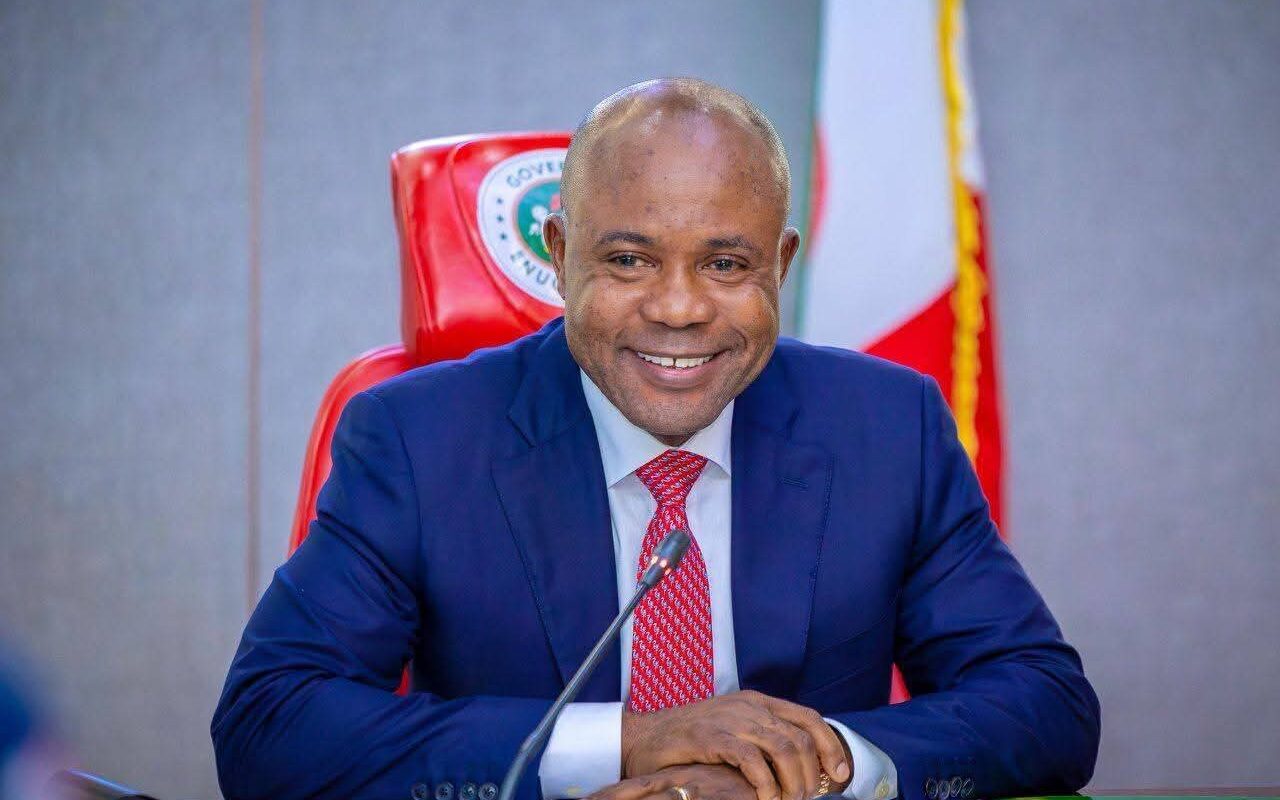
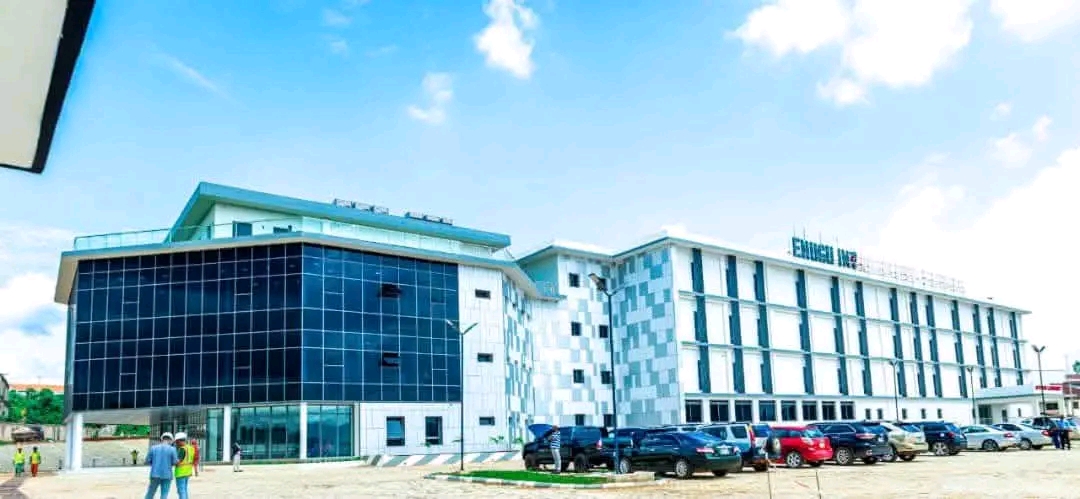
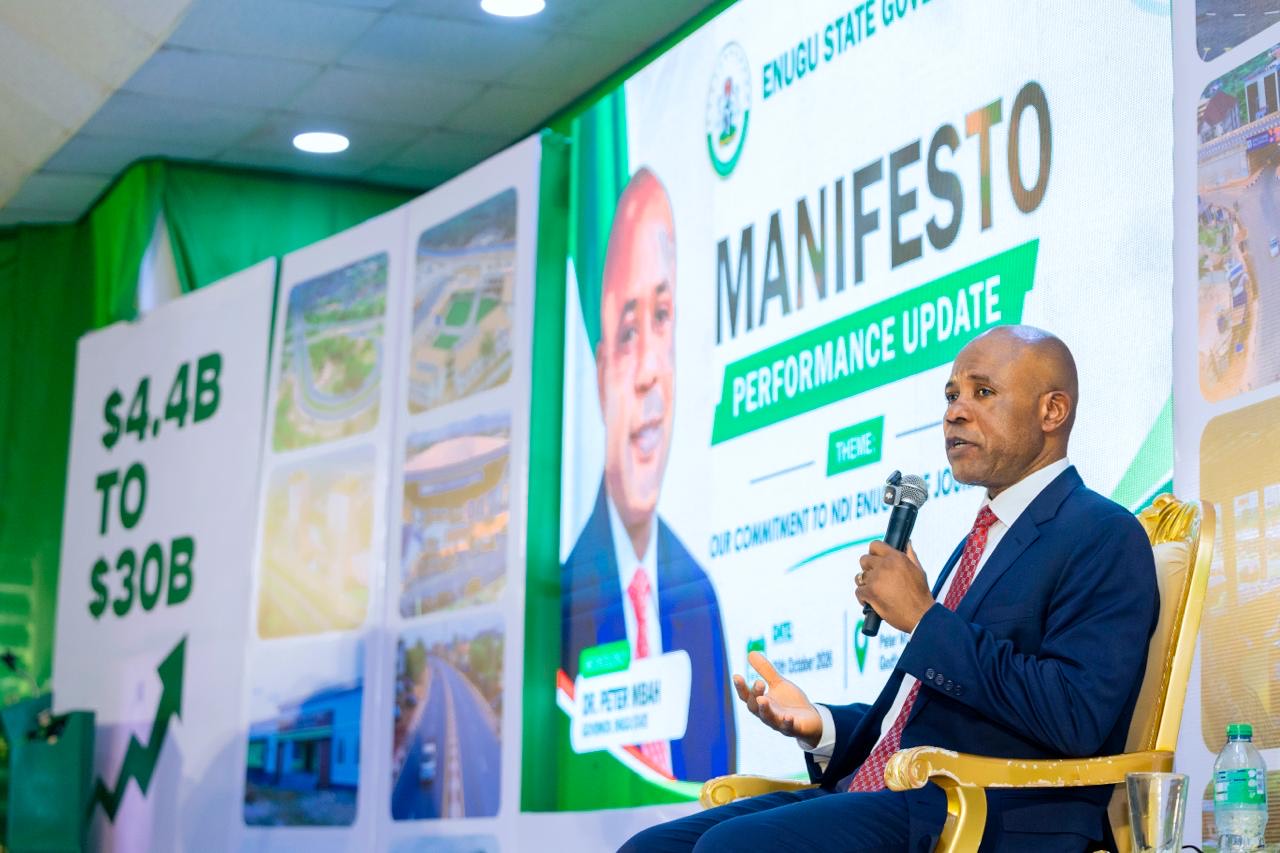
We have set ambitious goals for increasing electricity generation and attracting industrial investment because they are vital for the economy we want to create. Some of these efforts will take time. Their benefits will come over several years, and we must be realistic about the work involved. But we cannot delay them.
I also want to discuss healthcare. For a parent with a sick child, the key question is whether good medical care is available when needed.
For a pregnant woman, it’s whether she can receive proper care during her pregnancy and childbirth.
For an elderly person, it’s whether they can get treatment without traveling far or placing a heavy burden on their family.
These are the standards by which our healthcare investments should be measured.
We have been working to improve primary healthcare facilities and strengthen services throughout the state. We are also investing in the broader systems needed to make healthcare effective.
There is still more to do, especially in ensuring that improvements reach every community. I want to acknowledge that openly. I know some people are already experiencing the benefits of the changes we have made. Others are still waiting for a road to be finished, a facility to be fully operational, or a new job opportunity to arrive in their community.
I understand that frustration. A government must be judged by how all its citizens experience its work, including those who have not yet seen the full benefits. That is why our program must continue, and we must remain open to listening and making adjustments.
Now, let’s look at the larger investments we are pursuing. We are working to expand Enugu’s aviation connections, develop tourism spots, attract major hospitality investments, improve electricity supply, and create new areas for business and housing.
Some may understandably ask how these projects relate to their daily lives. It is a fair question. A new hotel can attract visitors and create demand for food, transport, maintenance, laundry, construction, and many other services. A tourism site can support local businesses. Better electricity can make manufacturing more appealing.
But the government must do more than hope that these benefits spread. We must help our people gain the skills, access the finance, and build the businesses that enable them to take part. A big project should create opportunities for many smaller businesses. That is how economic growth begins to reach homes and communities.
We have made significant progress in restoring Enugu’s status as a place where people want to live, work, invest, and visit.
The changes are visible, and our ambitious goals are becoming clearer. We should be proud of what we have achieved, while also recognizing how much work is still ahead.
My fellow citizens, there is a reason I have spent time today reflecting on our starting point and the progress we have made.
I want us to see the opportunity that lies ahead. We are in a time of great change. Technology is transforming industries globally. The way food is produced, goods are made, businesses are run, and knowledge is shared is changing faster than ever before. The opportunities from these changes are huge, but they will not be shared equally. Places that invest in education, infrastructure, skills, and productive businesses will be better positioned to benefit. Those that do not prepare may fall further behind. This is crucial for Enugu.
We have a young population, talented individuals, valuable resources, and a long history of enterprise. We also have a new generation of children growing up in a time when their opportunities might be greater than those of their parents.
But those opportunities depend on the choices we make now. A young person who wants to start a business needs more than support. They need access to skills, customers, finance, and reliable infrastructure.
A farmer who wants to increase production needs practical help and a market where their extra effort pays off. A community that wants better healthcare or education needs functional institutions and a government that listens to its needs. These are the connections we must strengthen in the years to come.
Our Statement of Purpose was centered on creating a productive economy and improving the lives of our people. That remains our focus. The next phase must deepen the work we have started, complete projects, and extend their benefits to communities still waiting. We must also create more opportunities for our youth to engage in future industries.
The growth of technology, modern agriculture, manufacturing, tourism, and other productive sectors will require a workforce with new skills. Our schools, training centers, businesses, and government must collaborate to develop this workforce.
This work is urgent because time is of the essence. A child who receives a poor education today cannot simply recover those lost years later. A business that shuts down due to operational issues may never reopen. A talented young person who leaves in search of better opportunities may build their future elsewhere.
We cannot afford to lose another generation of potential. This is why the moment we are in is so critical. The foundations we have laid give us a chance to move faster and achieve more. The choices we make in the coming years will determine how widely the benefits of this transformation are shared and how firmly they become established.
I believe Enugu can become one of the great centers of economic and social progress in Nigeria. But that future will rely on the ongoing efforts of the government, the trust of investors, the initiative of our businesses, and the involvement of our people.
This brings me to the most important invitation I want to extend today.
My dear people of Enugu, when we started this journey, I asked you to believe that our state could become something greater. Today, I am asking you to engage more deeply in making that future a reality. The government can create the environment for progress, but the energy that keeps it going comes from the people. It comes from the teacher who cares for her students, the business owner who trains young workers, the farmer who adopts better farming methods, and the community that unites to solve problems.
It also comes from citizens who ask tough questions, demand accountability, and share their ideas on decisions that impact them. I want that bond between government and citizens to grow stronger.
Our original Statement of Purpose committed us to transparent governance, measurable results, and public engagement. These commitments matter because people are more likely to take ownership of something when they understand it and have a meaningful voice in shaping it.
When a new school opens in your community, I want you to see its success as a shared responsibility. The government must provide the facilities, teachers, and resources. Parents and community leaders also play an important role in supporting the children who attend.
When a new road connects your community to a market, I want us to think about the businesses and opportunities that connection could support.
When an investment creates job possibilities, I want our youth to be ready with the skills and determination to seize them.
And when the government falls short, I want citizens to speak up and help us identify what needs to improve. That is how a stronger relationship between the people and their institutions is built. I am especially aware of the responsibility we have towards the next generation. Our children will inherit the state we leave behind. They will live with the outcomes of our choices, our investments, and the opportunities we either created or failed to see.
I believe that when they look back on this time in Enugu’s history, they should be able to say that something significant happened here. That a generation of people recognized the state’s condition, believed it could do better, and began the hard work of changing its future. That progress continued because people across Enugu chose to get involved.
We have seen what can happen when a state starts to regain its confidence. People return to their businesses. Investments begin to grow. New institutions emerge. Young people see possibilities that were once hard to imagine.
There is a growing feeling that Enugu is moving forward again. But the biggest part of this journey is still ahead. I mentioned earlier about the dawn. In May 2023, we stood at the start of a new day. There was uncertainty about what was next, but we knew it was time to change course.
Today, the first light has turned into morning. We can see the work taking shape around us, and we can start to appreciate the scale of what is possible. We are now in the heat of the morning, when the real work must be done. I want every citizen of Enugu to recognize how important this moment is.
Because history sometimes gives a people a chance to change the course of their future. Such chances do not stay open forever.
The world is moving quickly, and we must be ready to move with it.
This is a moment in Enugu's long history. This is a moment of great opportunity for our people. I believe this is the moment we must grasp. The work we have begun requires the commitment of all of us.
I ask you to bring your ideas, skills, initiative, and experience into the life of our state. Take an interest in what is happening in your community. Help us identify problems and develop practical solutions. Encourage our young people to learn, create, and build their futures here.
We have the chance to leave something meaningful for those who come after us: A state with stronger institutions, a more productive economy, better opportunities for its children, and communities whose people can take pride in what they have achieved together.
That is the Enugu I want us to build. And I believe we have reached a point in our history where we can start to make that ambition a reality.
My fellow citizens, the morning has come. There is much work to do, and I am ready to continue that work with you.
Ndi Enugu, Tomorrow Is Here.
Thank you.
Drop your comment
No comments yet — be the first to drop the gist 👇