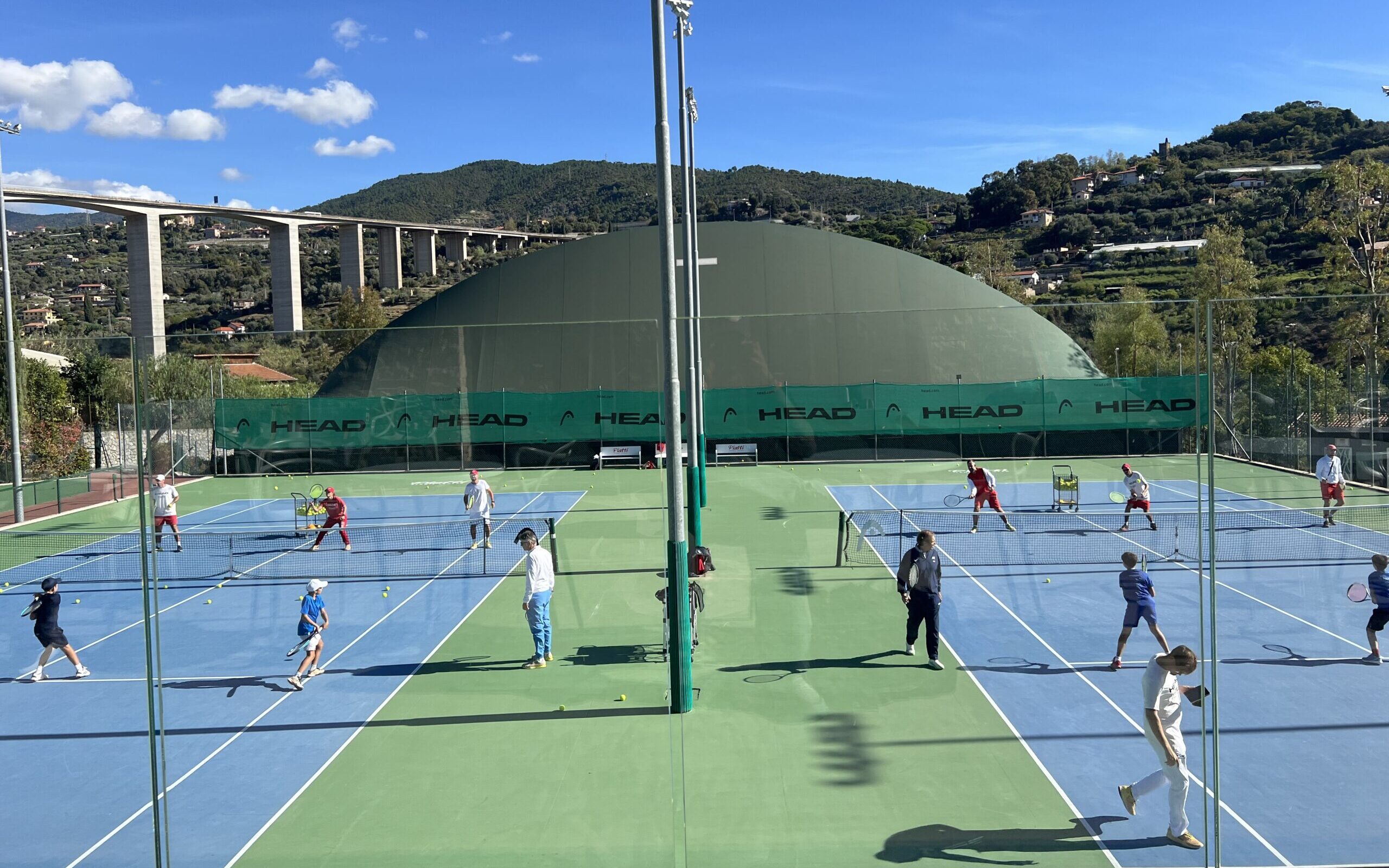
A short distance from the French border, in the hills of Bordighera, Italy, is the Piatti Tennis Centre, a well-known tennis academy with a fascinating story.
Even with just four hard courts, two outdoors and two indoors, the centre has gained a reputation that goes beyond its simple facilities.
Riccardo Piatti, a famous Italian coach, founded the centre. The real strength comes from the people around those four courts. Nearly 60 team members work there, including tennis coaches, fitness trainers, physiotherapists, and mental coaching specialists.
At Piatti Tennis Centre, developing players is more than just hitting balls for hours. They use video analysis and special software to help players and coaches study matches, spot weaknesses, and create game plans. They combine physical conditioning, recovery, technical development, and mental preparation in training. This way, every player gets attention on all the aspects of professional tennis.
The centre also has access to three extra clay courts through its partnership with the Bordighera Lawn Tennis Club. This club is Italy’s oldest, founded in 1878.
One of the most famous players connected to Piatti Tennis Centre is Jannik Sinner. Before becoming one of the top tennis players in the world, Sinner trained under Piatti in Bordighera. Today, his calmness, discipline, and strong mental skills show in his matches against the best players. From Abuja, Nigeria, it’s clear how valuable these traits are.
So, what can Nigeria learn from this?


Many people judge a tennis academy based on how many courts it has. While having good facilities is important, Piatti shows that more courts do not always mean better players.
The key questions are: Who trains the players? How do they analyze performances? What kind of support is there for fitness, injury prevention, recovery, and mental training? Is there a clear plan to take players from training to international competitions?
An academy might have 15 or 20 courts but still lack the skills and systems needed to develop professional players. On the other hand, a smaller centre can achieve great results when it organizes its resources around a clear development plan.
For Nigerian tennis, the lesson from Piatti Tennis Centre is clear: we need to invest not just in building more courts but also in developing the people, skills, technology, and systems that will make those courts effective.
The true measure of a top tennis academy may not be the number of courts but the quality of the training and development happening on them.




Drop your comment
No comments yet — be the first to drop the gist 👇