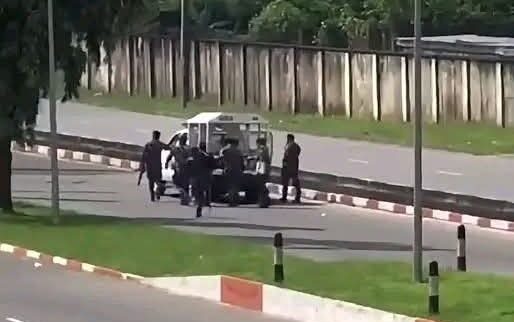
The Nigeria Police Force in Akwa Ibom State arrested Elijah Noah, the coordinator of the Obi-Kwankwaso (OK) Movement, after officers moved to stop an Independence Day march in Uyo on Thursday.
The OK Movement is a political group supporting the presidential ambition of the Nigeria Democratic Congress (NDC) candidate, Peter Obi, and his running mate, Rabiu Kwankwaso.
The arrest came after the police issued a last-minute order cancelling all approved political rallies, meetings, and processions set for 1 October. The police cited information suggesting that such gatherings could lead to disturbances.
This incident raises questions about how the police handle security while respecting citizens’ right to peaceful assembly, especially as political activities ramp up ahead of the 2027 elections.
Mr Noah was part of a group of supporters for the OK Movement who gathered for the planned march in Uyo on Thursday.
A video reviewed by PREMIUM TIMES shows armed police officers surrounding Mr Noah, dragging him towards a police vehicle and forcing him inside.
Witnesses told PREMIUM TIMES that tear gas was used as police tried to break up the gathering on Edet Akpan Avenue, where the march was happening.
However, the police denied using tear gas and stated that no firearms were discharged during the operation.
Police: Eight arrested
In a statement after the incident, the police said they arrested eight people for allegedly causing a breach of public peace and ignoring lawful security orders.
The police mentioned that the suspects were helping with investigations and would face prosecution if found guilty. They rejected claims that there was shooting during the operation.
"No shooting incident was recorded in connection with the incident," said police spokesperson Timfon John, an assistant superintendent of police.
"Police officers discharged no firearm during the operation," Ms John added, emphasizing that there were no reported gunshot injuries.
Why police stopped the march
Commissioner of Police Baba Azare told PREMIUM TIMES via phone that the decision to stop the march was based on security worries and the potential for conflict between political groups.
He explained that the police received a request from the Peoples Democratic Party (PDP) on 9 September to hold political events from 1 to 3 October, which they approved.
According to him, the OK Movement submitted a request on 28 September for a two-million-man march on 1 October, covering some of the same areas listed in the PDP’s earlier request.
The commissioner said the police invited the organizers to meet and advised them to choose another date to avoid clashes.
After a security meeting, the police decided that even the PDP should reschedule its approved activities due to security concerns.
Mr Azare stated that the OK Movement, including Mr Noah, attended the meeting at the police headquarters where they agreed to change the date for the march.
He noted that the police were surprised when Mr Noah and others went ahead with the march on Thursday.
"When they came out, they were arrested and brought for investigation," the commissioner said.
Mr Azare did not share the specific information that led to the police decision, stating it was related to intelligence.


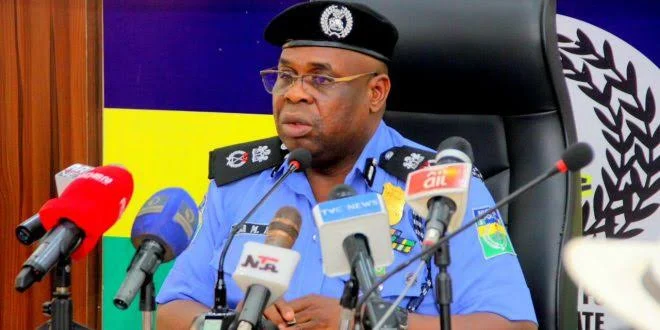
He said the police would prosecute anyone found to have violated the directive.
"We must charge them to court so that in future, what will happen will not be disastrous," he said.
The police’s explanation aligns with what they told organizers before stopping the march. The Obidient Movement’s state director, Benjamin Smith, earlier said the police mentioned lack of personnel and the risk of a clash with the PDP rally.
‘Police should provide security cover’
The police action has faced criticism from those who argue that security concerns should not lead to blocking peaceful political expression.
Michael Enyong, the NDC governorship candidate in Akwa Ibom, told PREMIUM TIMES that the police response was too harsh and called for the immediate release of Mr Noah and the other detainees.
"I condemn this heavy-handed approach by the police. This is a direct assault on Nigerian democracy and an infraction of the fundamental right to peaceful assembly," Mr Enyong said.
He stated that citizens should be free to express their political preferences peacefully, especially during Independence Day.
Mr Enyong acknowledged that some NDC members agreed to reschedule their activities with the police. Still, he argued that this did not apply to people outside the NDC who took part in the OK Movement march.
He urged political leaders in Akwa Ibom to allow different political views to thrive ahead of the 2027 elections.
Legal expert Ekemini Udim also told PREMIUM TIMES that security needs and the right to peaceful assembly should be balanced.
"Normally, the police do not have the right to stop a peaceful march. Instead, they have a duty to protect citizens who peacefully assemble and express themselves," Mr Udim said.
He noted that while the police must protect lives and property, this should not eliminate the right to demonstrate peacefully.
"As we approach the 2027 elections, the police need to be more civil in their interactions with citizens," he said.
N20m mobilisation
The confrontation followed complaints from the Obidient Movement that the police order caused significant financial losses to the march organizers.
The movement said it spent over N20 million to mobilize supporters across all 31 local government areas in Akwa Ibom.
According to the movement, its organizers met with Mr Azare on 29 September, when he raised concerns about providing security for the two-million-man march, as the PDP had an approved rally on the same date and in the same locations.
The police claimed that their directive was non-partisan and aimed at preventing law and order breakdown.
The command urged political parties and groups affected by the order to suggest new dates.
Despite this, the central question remains: did the police's security concerns justify stopping a political march entirely, or could they have managed the risks by providing security for a peaceful assembly?


Drop your comment
No comments yet — be the first to drop the gist 👇