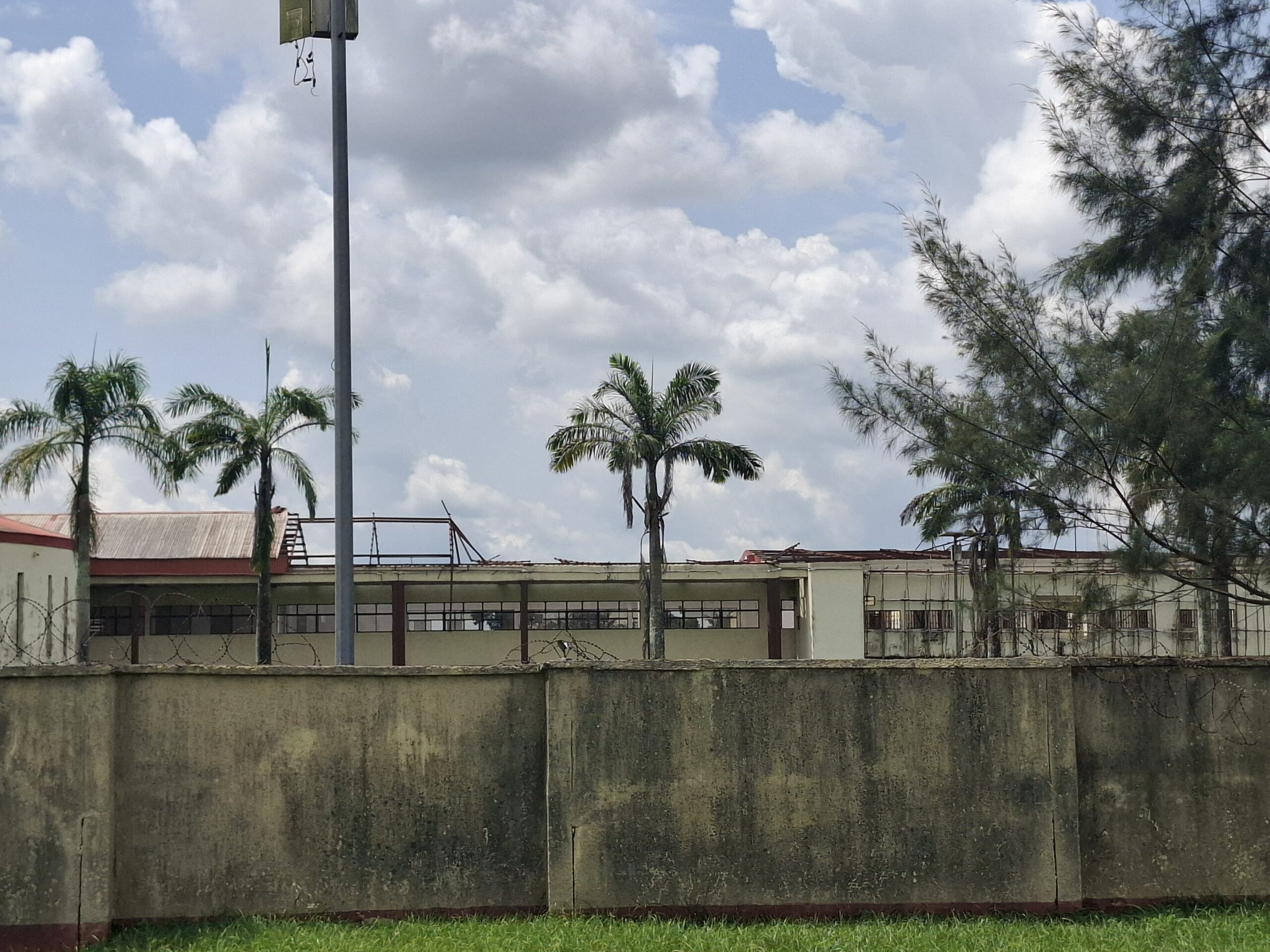
On a sunny Thursday afternoon in June in Uyo, the Akwa Ibom State House of Assembly complex was surprisingly quiet. This should have been a busy site as it is under rehabilitation.
This legislative house, located in one of Nigeria’s richest oil-producing states, should be full of activity. Akwa Ibom State made N2.53 trillion in 32 months. But instead of engineers and construction workers, only eight security personnel were seen.
There were no labourers, masons, welders, or carpenters around. The sounds of construction were missing.
At the entrance, a notice informed visitors that both the Akwa Ibom State House of Assembly and the Akwa Ibom House of Assembly Service Commission had temporarily moved their offices to Luton Park Hotel, Uyo. This hotel is owned by a former state lawmaker, and the move is until the rehabilitation works are finished.
This sign reminded everyone that for over seven months, the state’s lawmakers and their staff have been working away from their main offices.
What stood before PREMIUM TIMES at the assembly complex was a quiet place in the middle of a multi-billion-naira rehabilitation project. This project has displaced lawmakers from their chambers, caused political issues, and raised new questions about transparency and procurement.
Documents seen by PREMIUM TIMES show that between 2025 and 2026, the Akwa Ibom State Government approved N15.47 billion for the rehabilitation and remodelling of the assembly complex. Yet over seven months after moving out for the project, the complex is still not finished.
Governor’s promise, growing budget
The rehabilitation project became a hot topic after Governor Umo Eno visited the assembly complex on 1 July 2024. He expressed worry about its state and promised to ensure it gets fixed.
In the revised budget for 2025, N2.95 billion was set aside for architectural design, building a multi-purpose hall, reroofing, replacing ceilings, tiling, and painting the assembly complex.
By 2026, the plans changed. Budget documents show money allocated for reroofing, ceiling replacements, extensive tiling, painting, structural changes, new office buildings, and even an electric security fence. The total for these works came to N12.52 billion.
When you add the 2025 budget, the total for this project reached N15.47 billion in two years.
Embarrassing security standoff
For months, lawmakers have been holding sessions at a facility within the Government House, Uyo. This temporary arrangement led to some problems recently when lawmakers and security personnel had a clash over access.
PREMIUM TIMES reported that this disagreement disrupted legislative work and forced the assembly to stop sitting on 2 June.
The current state of the project differs from the initial promises made before work began. A circular dated 24 October 2025 told lawmakers and staff to leave the complex for rehabilitation starting on 27 October.
Before the move, the Akwa Ibom House of Assembly Services Committee met with the contractor to discuss plans. According to reports from that meeting, the contractor’s representative, Ochemba Lee, said the project would completely overhaul the Assembly complex. He told lawmakers that the contractor had started work and equipment was on-site, promising a six-month completion.
That timeline was supposed to end in April 2026, but lawmakers are still out of their offices.
More than seven months after the order to relocate, a notice at the assembly gate still directs visitors to temporary offices at Luton Park Hotel. This highlights how long the lawmakers and assembly staff have been away from the complex.
The extended stay away from the assembly raises questions about costs to taxpayers. Government officials have not shared details about payments to the hotel. The ongoing use of this hotel as a temporary office is likely to cost the public.
PREMIUM TIMES asked for details about this arrangement but got no response before this report was published.
What PREMIUM TIMES found
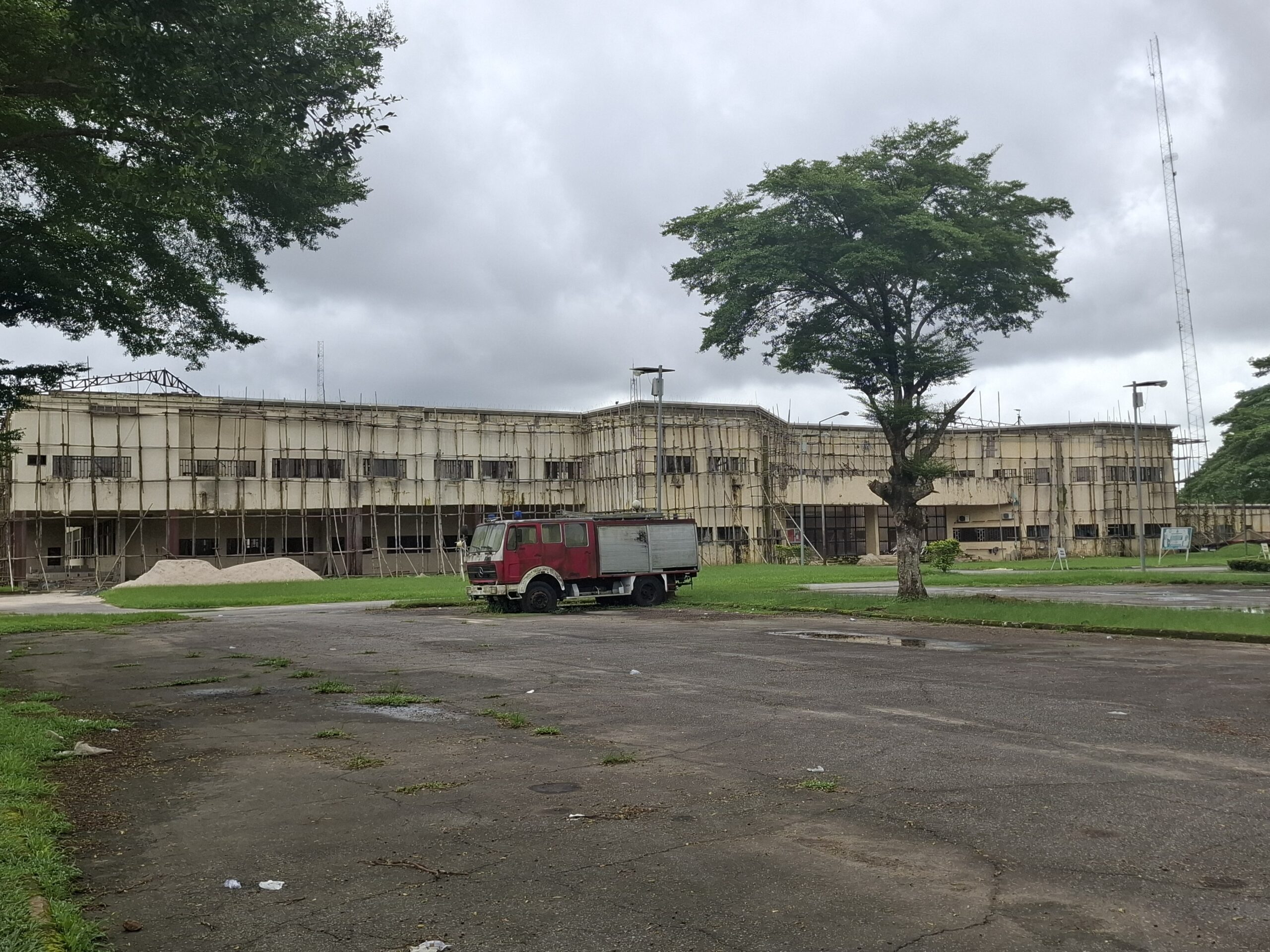
A visit to the assembly complex on 4 June showed little sign of progress. A large part of the roof was gone.
The assembly’s chambers looked untouched. The only visible work was on a roof structure at the entrance.
The only equipment seen was a mobile crane and a concrete mixer. No work was happening during the visit.
Security personnel at the site told PREMIUM TIMES that contractors had not been working there for over three months. Residents and business people nearby shared similar stories.
One resident who wanted to stay anonymous said workers were last consistently seen at the site between February and March. "The workers only came to remove the roof. They brought a concrete mixer and worked on the parapet for about four days before leaving. They complained that funding was the problem, which is why work was not steady," the resident said.
PREMIUM TIMES could not confirm that statement.
Contractor shrouded in uncertainty
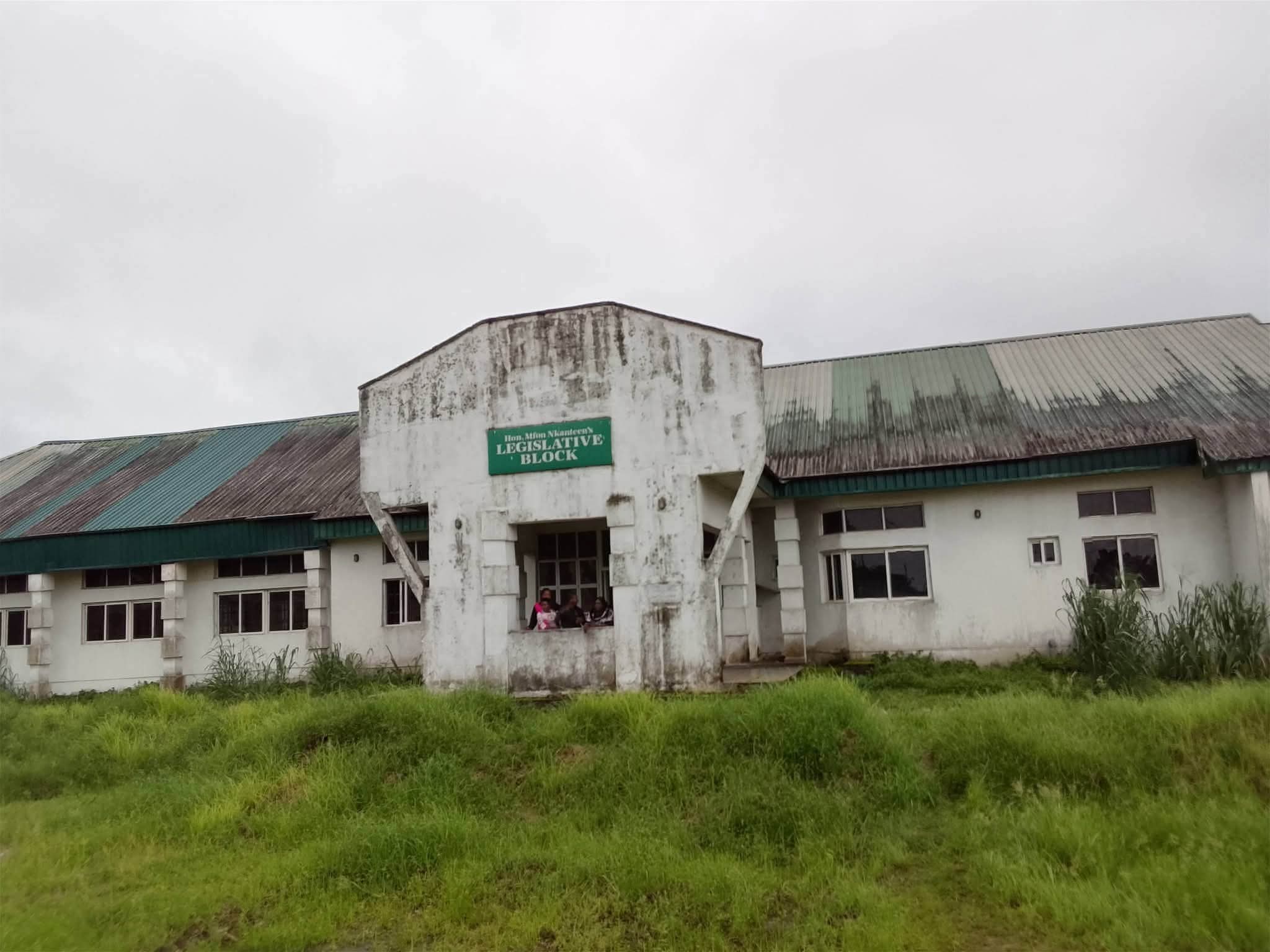
The identity of the contractor has also created confusion. The relocation circular from October 2025 named the contractor as JDP Construction Nigeria Limited. However, the project sign at the assembly complex lists CLAD Construction Nigeria Limited as the contractor. CLAD’s representatives also spoke to lawmakers about the project.
This difference is concerning because the state’s procurement law demands more transparency. The Akwa Ibom State Public Procurement Law says the Bureau of Public Procurement must publish procurement information online regularly.
A search by PREMIUM TIMES could not find any information about the assembly rehabilitation project on the procurement portal.
Governor Umo Eno’s administration seldom shares details of major contracts, including costs and timelines. Searches for records on JDP Construction Nigeria Limited found nothing, but CLAD Construction Nigeria Limited had records.
Documents show this company was registered on 7 December 2024 for civil engineering work. This means it was less than a year old when it was given this major public project.
PREMIUM TIMES could not find records of significant projects completed by this company before the assembly contract. The address listed for the company raised more questions.
The project sign says its Uyo office is No. 84 Atiku Abubakar Way. A check found buildings numbered from 80 to 90, but No. 84 was missing. Many residents and business people said they did not know the company.
PREMIUM TIMES traced both CLAD and JDP Construction to a project awarded to both in Degema Local Government Area of Rivers State around April 2026. It remains unclear if one company replaced the other, if both are working together, or if any formal changes occurred.
Missing answers, missing records
On 4 June, PREMIUM TIMES reached out to Morgan Ekanem, the Head of Operations of the Direct Labour Committee. The paper sought clarification on the contractor, procurement processes, contract value, and project delay reasons.
The inquiries were acknowledged, but no response was received by the time this report was filed. The State Commissioner for Information, Aniekan Umanah, also did not reply to requests for comments.
One major question remains: how much of the N15.47 billion approved for the project has been released or spent? Neither the Direct Labour Committee nor any government official provided payment records or information about the project’s financial status.
Without these records, it is impossible to tell how much public money has been used compared to the work on site. This silence raises more questions because the state’s procurement law guarantees public access to procurement records.
This law demands that procurement records include contractor names, contract values, award dates, and other facts needed for public accountability.
Assembly leaders defend project
When reached for comment, the Chairman of the House Services Committee, Lawrence Udoide, dismissed worries about delays. "There is no issue. Work is ongoing," he told PREMIUM TIMES.
When asked about the six-month completion promise made to lawmakers, Mr Udoide said it was just a projection. "Even road construction, you can project six months or one year. When rain comes, the projection may not be realized. But as we speak, work is ongoing," he said.
He asked the newspaper to call back later for details about completed work and challenges but was unreachable after that. He also did not reply to a follow-up inquiry.
The Chairman of the House Committee on Information, Jerry Otu, initially refused to comment. "Construction is not part of my business," he stated.
"If they want to finish tomorrow, fine and good. I cannot say exactly when we will return to the House. The project falls under the executive," he added.
When told that the project is funded through the assembly’s budget, Mr Otu disagreed. He later defended Governor Eno, saying, "The governor has tried. It might not be 100 percent because he is not God. The governor has done his best."
Beyond the building
The issues around the assembly rehabilitation project are not just about fixing a roof or offices; they are about how public funds are spent. PREMIUM TIMES’ investigation shows that transparency has decreased under Mr Eno’s leadership. It questions if the administration’s procurement actions follow the laws set by the state and if the independent legislature can manage projects funded from its own budget.
Over N15 billion has been approved for this project, but many questions remain. Who got the contract? How much has been paid? What procurement process was used? What percentage of the project is done? Why is a project supposed to finish in April 2026 still not done months later?
Neither the Direct Labour Committee, the state government, nor the House of Assembly answered these questions before this report was filed.
At the assembly complex, signs of delay are clear: missing roofing sheets, unfinished work, idle equipment, and security personnel watching over a site with no active construction.
The delay affects more than just the building. As lawmakers and assembly officials continue to work from temporary places, questions about the public cost of maintaining these offices arise while the rehabilitation project is still not finished. The government has not shared details on how much is being paid for using these temporary facilities.
Until these questions are answered, the Akwa Ibom State House of Assembly complex will be seen not just as a construction site but as a sign of the growing gap between public spending and accountability.
Drop your comment
No comments yet — be the first to drop the gist 👇