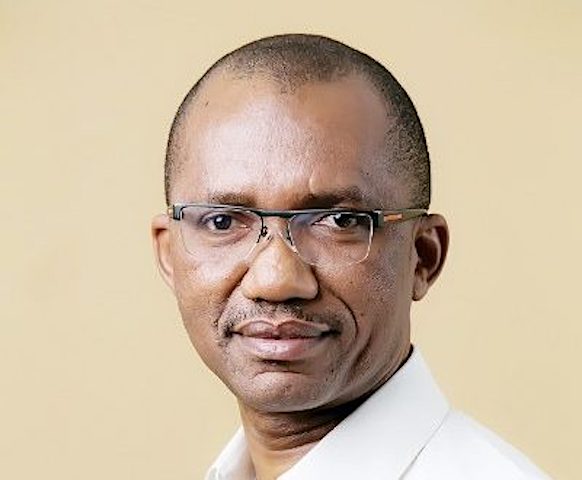
Martins Oloja, a columnist and former Managing Director/Editor-In-Chief of The Guardian, wrote an upset piece titled “Why Should We Celebrate Daily Times @ 100, FRCN @ 75?” published on 5 September. Oloja has solid reasons to be upset.
Daily Times, Nigeria's newspaper of record, turned 100 years old on 1 June. The Federal Radio Corporation of Nigeria (FRCN), which came after the Nigerian Broadcasting Service (NBS), celebrated its 75th anniversary in April. These anniversaries brought mixed feelings, especially regret, because they have not become what their founders hoped.
Oloja described how Daily Times went from being a newspaper that produced some of Nigeria’s best journalists, and was a strong, professional, and commercial powerhouse, to a shadow of its former self, struggling to survive.
Among its many valuable assets was a 60 percent equity interest in Naira Properties Limited, which was the main shareholder in the Nigerian Stock Exchange house. It also owned many other valuable properties in Nigeria and London, and had a collection of content that was a treasure trove of Nigeria’s history. Its training center, the Times Journalism Institute, was one of its eight subsidiaries.
Yet today, the creation of Richard Barrow, Adeyemo Alakija, and VR Osborne could use some serious help. It is more of a cautionary tale than the proud monument it used to be.
The journey of the FRCN has not been very different. Oloja’s sadness and frustration about what could have been flowed into his article like a strong wave of nostalgia.
But nostalgia does not help in facing the future. Most people would agree that the transfer of Daily Times was filled with issues, from arguments over the purchase price and property portfolio to financing, share ownership, and post-sale management.
But looking back will not help us move forward. The idea that Daily Times should be taken back from Folio Communications 22 years after the sale and given to a group of skilled media managers is like chasing a train long after it has left the station. It will only lead to more disappointment.
Regret is not useful. To me, it does not really matter who bought Daily Times, whether it was sold to a group of journalists or to some fishermen at Ekeremo waterside. We have seen journalists run media houses successfully and others fail badly. We have also seen non-journalists revive struggling media houses, like the Chairman Emeritus of The PUNCH, Chief Ajibola Ogunshola.
We have seen this before. After President Olusegun Obasanjo’s government sold the Port Harcourt and Kaduna Refineries to Bluestar in 2007, his successor, Umaru Musa Yar’Adua, reversed the sale due to pressure from labor and other groups who didn’t want “our national heritage” sold so easily.
Of course, that was a convenient trick that has now cost the country billions of dollars in unfulfilled promises to fix the refineries. Ajaokuta Steel and the Aluminium Smelter Company of Nigeria (ALSCON) have similar stories of government repossession that ended in deeper troubles for everyone involved, except the greedy.
Taking back what has been privatized is rarely easy. Once a private company has gone through debts, receivership, asset sales, and different owners, “taking it back” is not just reversing the original sale. It can lead to long court battles without restoring the company’s original ability to produce.
There are many examples of privatizations that worked, like Eleme Petrochemicals, Ashaka Cement, and the Nigerian Aviation Handling Company. Some have partly succeeded, while others have failed badly. The reasons for success or failure can vary from technical skills to the availability of new capital after acquisition, and from pricing freedom to the regulatory environment. There is no one-size-fits-all solution.
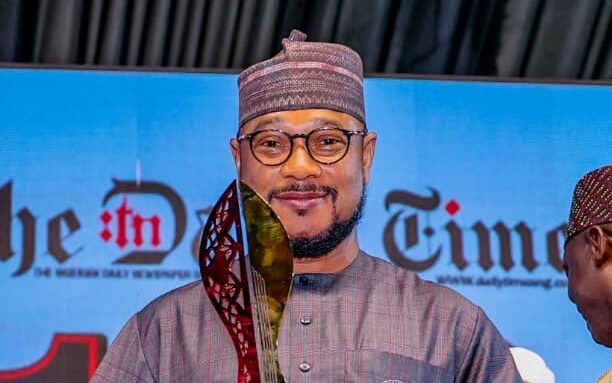


Regret is not useful. To me, it does not really matter who bought Daily Times, whether it was sold to a group of journalists or to some fishermen at Ekeremo waterside. We have seen journalists run media houses successfully and others fail badly. We have also seen non-journalists revive struggling media houses, like the Chairman Emeritus of The PUNCH, Chief Ajibola Ogunshola.
From a business perspective, the question is not whether the company has become what one thinks the founders wanted, but how it is innovating, adapting, and creating value over time. We may romanticize the past, but no business lasts forever, as we have seen with Blackberry and Kodak. In a free market, death is not necessarily bad; from a poorly run business may come another that offers better value.
And it does not matter if those businesses are a passed-down legacy, a contested sale, or a start-up. This applies to Daily Times just like it does to over 314 news platforms in Nigeria’s tough media landscape today. Nature does not like a void.
Oloja might be right. Daily Times’ influence attracted many changes, starting with the Murtala/Obasanjo government. If the takeover and later privatization had not happened, maybe Daily Times would have been everything we hoped for and more. But that’s just speculation. It could also have been worse had the sale not gone through.
Let’s talk about FRCN. Oloja’s comparison of FRCN with public broadcasters like the BBC and the SABC may not be entirely fair. There are fundamental differences between state-owned broadcasters, like FRCN, and public broadcasters, like the BBC or the SABC, whose histories Oloja mentioned.
While all three, FRCN, the BBC, and the SABC, are publicly owned, there are real differences in appointments, funding, editorial control, and rules.
The legal bases of each, their ownership style, and their freedom to decide what to air affect the quality of their content and programs.
It’s hard to imagine the kind of fragmentation that Oloja talked about in Radio Nigeria happening in the BBC or SABC. What the Nigerian government cannot change in its businesses does not exist.
Yet, in a world where even established services like the BBC are losing audiences due to people avoiding license fees, as more households use on-demand channels and with fewer public funds available, all broadcasters need to innovate or risk being left behind. No one needs to wait long for failing businesses. The ever-changing consumer market will do that job well.
Oloja might be right. Daily Times’ influence attracted many changes, starting with the Murtala/Obasanjo government. If the takeover and later privatization had not happened, maybe Daily Times would have been everything we hoped for and more. But that’s just speculation. It could also have been worse had the sale not gone through.
Or has the New Nigerian, the regional equivalent of Daily Times and a remnant of the 19 Northern state governments, done significantly better?
The best way to honor Daily Times and Radio Nigeria is not to recover their past. It is to bring back the standards they represented and build institutions capable of achieving them in the future.


Drop your comment
No comments yet — be the first to drop the gist 👇