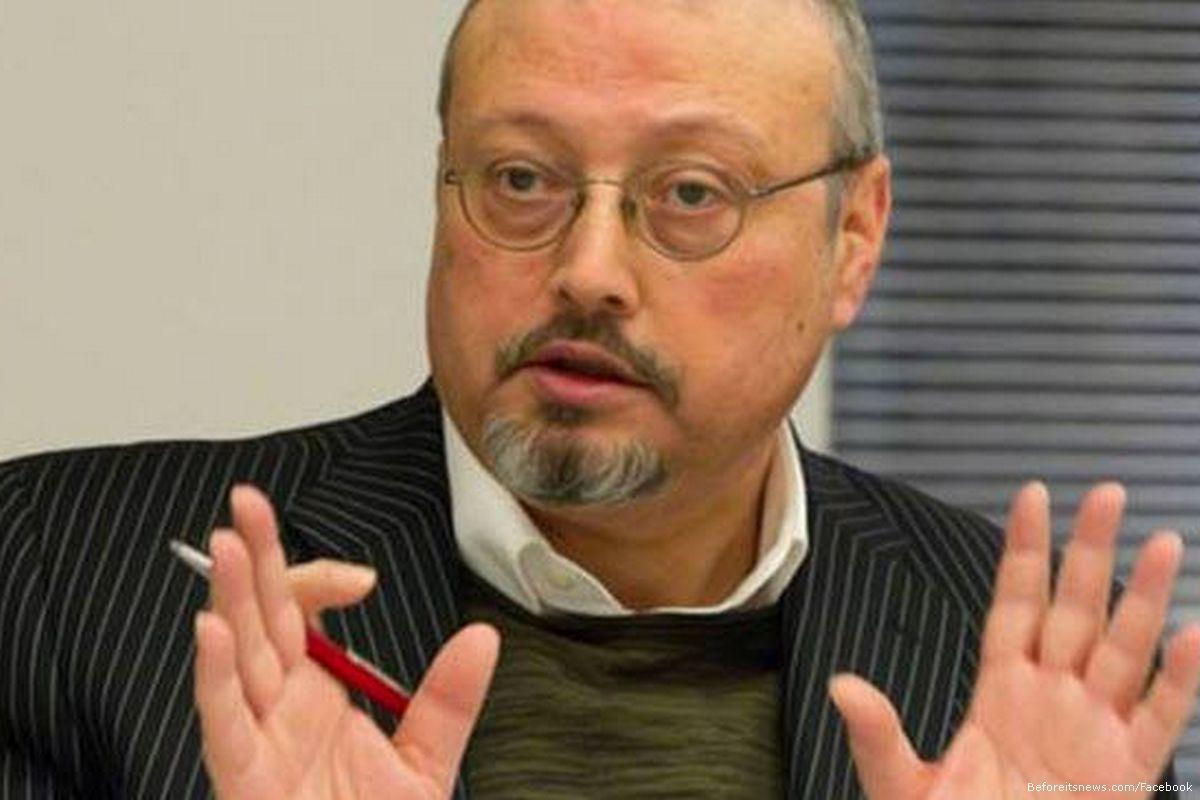
Eight years after Washington Post writer Jamal Khashoggi was killed by Saudi agents in Istanbul, the International Press Institute (IPI) is demanding justice once more. IPI insists that the international community must work to improve systems for investigating crimes against journalists. This is crucial to ensure that when governments fail to act, those who commit such crimes are still held accountable.
On October 2, 2018, Khashoggi, a Saudi national and critic of the government, went into the Saudi consulate in Istanbul to pick up a document for his marriage. His fiancée waited outside for over 10 hours. He never came out.
Investigations later showed that the Saudi government planned and carried out Khashoggi's murder inside the consulate. A team of 15 agents injected him with a drug, killed him, and then cut up his body with a bone saw. His remains have never been found.
In an October 2019 report, Agnès Callamard, the U.N. Special Rapporteur on extrajudicial executions, said that Khashoggi's murder was "overseen, planned and endorsed by high-level officials." She found credible proof that the killing was premeditated.
In December 2019, eight unnamed Saudi individuals were convicted for their roles in Khashoggi's murder after a secret trial in Saudi Arabia. Human rights groups criticized the trial, saying it let senior officials escape punishment. Callamard's report pointed out serious issues with the trial process.
Callamard also suggested setting up an international team to investigate crimes against journalists and human rights advocates. She called for a system within the UN to support and conduct these investigations.
In 2020, Turkey charged and began a trial for 20 Saudi nationals linked to Khashoggi's death after Saudi Arabia refused to extradite them. In 2022, Turkey stopped the trial and moved it to Saudi Arabia, which effectively ended the case.
A 2021 assessment by U.S. intelligence found that Saudi Crown Prince Mohammed bin Salman approved the plan to "capture or kill" Khashoggi, who lived in the U.S.

So far, Bin Salman and his senior officials have not faced any consequences.
Amy Brouillette, IPI's Director of Advocacy, said, “The lack of real accountability for Jamal Khashoggi’s killing has become emblematic of the troubling pattern of impunity for crimes against journalists globally. This pattern has been enabled by the failure of states to properly investigate and prosecute when crimes occur and by the international community’s inability or unwillingness to hold states accountable for these obligations. This case also highlights the urgent need to strengthen existing mechanisms for addressing crimes against journalists, including by establishing an international task force to investigate such crimes.”
In 2021, then-U.S. President Joe Biden announced sanctions and visa bans on Saudi citizens, but not on the crown prince himself. The next year, the U.S. State Department said he had immunity from a lawsuit filed by Khashoggi’s fiancée and a non-profit group.
Former U.S. President Donald Trump called Khashoggi's murder the “worst cover-up in history” just weeks after it happened, but he has often avoided blaming the crown prince.
In May 2026, France’s National Anti-Terrorism Prosecutor’s Office announced that an investigating judge would look into Khashoggi’s murder after considering a complaint from a group of civil society organizations.
A 2024 UNESCO report stated that the worldwide rate of impunity for journalist killings is 85%. This figure has not changed for over ten years.
Drop your comment
No comments yet — be the first to drop the gist 👇