Leadership should create lasting change, not just memories. It should give people better chances, stronger communities, and a real belief in progress. Discussions about leaders should be fair and based on truth. They should focus on development and self-reflection without being cruel. Leadership is heavy with emotional, moral, and personal burdens. It often comes with loneliness, tough choices, and constant pressure.
Meeting Different People
Some leaders are known through loud comments. Others are seen in quieter settings, like interviews or casual chats. These quieter moments can balance out the noise of politics.
For this article, I spoke with a Permanent Secretary from Eastern Nigeria. He is a smart medical professional, kind and honest. He holds an important position in one of Nigeria's ministries. He prefers to stay out of the spotlight. He is not from Senator Francis Adenigba Fadahunsi's ethnic background. His take on the senator was simple yet striking. He called him Baba and said, "Baba Adenigba is down-to-earth, kind, and animating." This was not a political endorsement but a personal view from someone outside the senator's cultural circle.
I also talked to Omor Bazuaye, a well-known journalist from Arise TV, who previously worked at AIT. Omor is a good man with a strong ability to see authenticity. I know him well as he learned corporate communications under my guidance. He now covers the National Assembly. I asked him about Senator Adenigba. Omor shared that he interviewed the senator at home twice. He saw a relaxed side of him away from the formalities of his office. Omor described the senator as "a liberal, kind, accommodating, and straightforward personality... He is not someone who tells you it is still dark out there when indeed the day already broke." He added, "I have interviewed him in his house like twice before. He is a genuinely good man who loves people." It's worth noting that Omor is from Edo State, far from Osun East where the senator serves.
Then, I spoke with the senator’s Special Assistant, Yusuf Sikiru. When I thanked him and said I hoped to keep in touch, he responded warmly. He described the senator as "exceptional." Yusuf is a respectful and friendly aide from Kogi State.
Different Views
These three perspectives show different views: a senior public servant from outside the senator's community, a journalist who knows him well, and an aide who works closely with him. These views are personal stories, not official character references. They can't answer all questions about a public figure. But they encourage a deeper look than what fast political judgments allow.
That is the key point. There is a difference between holding leaders accountable and writing them off completely. Acknowledging someone’s flaws is not the same as ignoring their positive contributions. We should not focus so much on people's faults that we forget to see their good sides.
A democracy needs a free press, even when the questions asked are tough.
To understand Senator Fadahunsi’s public record, it helps to start with a position he took in 2019. In December of that year, Vanguard reported that Senator Fadahunsi opposed the Hate Speech Bill. He believed it could harm quality journalism. He described vibrant journalism as essential for Nigeria’s democracy. He urged media practitioners to resist laws that could threaten their ability to scrutinize public authority. This stance is significant. A democracy needs more than elections. It relies on citizens having access to information and a press that asks tough questions, investigates public institutions, and exposes failures. Journalism must be accurate and fair, but rules meant to control harmful speech should not silence genuine criticism.
There is an important link here. A representative who helps develop their constituency meets the real needs of the people. A representative who values a free and responsible press also understands that citizens need to question how power is used. Both aspects show a healthy relationship between the government and the people. This was one of Senator Fadahunsi’s strong moments when he spoke up at a critical time for media freedom in Nigeria.
The Nature of Political Seasons
Political seasons come with their own emotions. Campaigns turn complicated national feelings into slogans and rallies. Supporters get excited while opponents become wary. Public statements are shared quickly, and political language can become more aggressive than usual.
This isn't just a Nigerian issue. During the 2024 U.S. presidential campaign, Donald Trump used harsh language. Reuters noted his comments about opponents as "vermin" and his claim that migrants were "poisoning the blood" of the nation. His campaign explained that the latter referred to the auto industry, but critics saw a more disturbing political message. His remarks drew criticism and concern about democratic values. Yet Trump still won the election with 312 Electoral College votes. This result should not suggest that voters agreed with everything he said. It shows that voters consider many factors, not just one controversy.
France provides another example. In January 2022, President Emmanuel Macron made a controversial statement about making life difficult for people who refused COVID-19 vaccinations. His comment sparked criticism and debate about presidential language. Three months later, Macron was re-elected with 58.55 percent of valid votes. Again, this result does not indicate that voters approved his remark. It shows that voters evaluate candidates on various issues.
These examples are not to excuse harsh language or to suggest public officials should speak carelessly. They remind us that political life is assessed on more than one moment. A controversial remark can be serious and deserving of scrutiny without defining a public figure’s entire record.
Research on the U.S. election supports this idea. Pew Research Center found that 81 percent of registered voters considered the economy very important to their 2024 presidential vote. Voters also considered immigration, healthcare, crime, abortion, and democracy. People do not walk into the polling booth with only one thought in mind.
At the end of the day, the cost of food, job availability, ability to pay school fees, access to healthcare, and reliable electricity are vital for survival. These daily issues shape how people view leadership. That is why real empowerment and development matter. They are not substitutes for accountability but part of how representation is judged.
Examining the Controversy
The controversy about Senator Fadahunsi needs careful examination. It surfaced in August 2026 when a viral political video showed remarks critics interpreted as encouraging violence against Accord Party members. This incident led to backlash and calls for investigation, with reports stating he was questioned by police. Senator Fadahunsi disagreed with the interpretation of the video, saying his comments were about winning votes against a rival party.
I admit that political leaders must communicate carefully, especially when tensions can lead to intimidation or violence. Public figures need to think about not just what they say but also how their words can be understood and acted upon.
But controversy should not be the only way to judge a public figure. Leaders are human and capable of making mistakes. This does not excuse harmful speech. It calls for balance: when a mistake happens, it should lead to explanation, accountability, and correction. It should not wipe out years of public service.
A fair assessment can hold two views: the language of a public official may need political scrutiny, and that official may also have a history of actions, relationships, and positions that deserve attention. Accountability loses its value when it is selective; public recognition loses its value when it is uncritical.
The Development Question
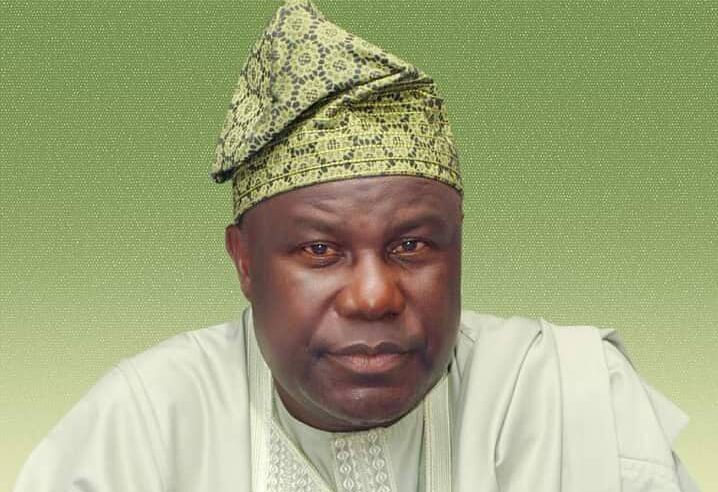
Senator Fadahunsi is a former Assistant Comptroller-General of Customs and chairs the Senate Committee on Industries. His work involves industrial development, manufacturing, enterprise financing, and boosting Nigeria’s productive capacity. In an October 2026 interview, he expressed a wish to be remembered for transforming lives, giving young people jobs, and helping women start businesses. This focus on livelihoods is key to examining his work in the constituency.
In December 2021, Vanguard reported that 115 young people from Osun East took part in a five-day ICT and solar energy installation training. Participants were selected from local government areas and received tools to help them practice their new skills. In a country where power supply is often unreliable, solar installation can provide a way for young people to earn a living while addressing energy needs for homes and businesses.
Agriculture is also part of his reported efforts. In September 2023, Tribune reported that 400 constituents received training in shrimp and catfish farming, post-harvest management, and marketing. The training was done with the Nigerian Institute for Oceanography and Marine Research and included ₦20 million in cash grants for start-up support. Another poultry management program reportedly reached 350 beneficiaries with training and materials.
In June 2025, Senator Fadahunsi launched a ₦70 million revolving-loan scheme for 700 small-business owners in Osun East. This was done in partnership with the Osun State Ministry of Cooperatives and Empowerment. A revolving loan scheme can be important: repayments help replenish the fund and allow new beneficiaries access to working capital. This depends on good management, fair terms, and clear updates on how many businesses are still active.
These programs show different responses to economic challenges: skills development, equipment, agricultural projects, and working capital. Their true value should be measured not only by the number of participants but by business success, income growth, and job creation.
Infrastructure and Accountability
Senator Fadahunsi’s constituency work also includes roads, classroom construction, water projects, and community facilities. In October 2026, The PUNCH reported that he donated and energized a 500KVA transformer for Peace Highland Community in Arimoro, Ilesa West Local Government Area.
A transformer is not electricity; a borehole doesn't guarantee clean water; and a classroom does not ensure quality education. Public infrastructure must be judged by how well it works, how accessible it is, and its overall impact on daily life. Constituents deserve to know where the funding comes from, who is in charge of each project, and the status of ongoing work. This is a reasonable request and the basis of public accountability.
A Global Look at Local Development
The idea of elected officials helping with local development is not just a Nigerian thing. Countries like Kenya and India provide good examples of how local projects can connect with national goals.
Kenya’s National Government Constituencies Development Fund, started in 2003, directs money to community projects. Official records show it has created 3,087 schools, helping over 882,000 students. It also supports bursaries for needy students and community infrastructure. These investments benefit not just individuals but improve educational access and stimulate local economies. Kenya’s experience highlights the need for oversight, community involvement, and transparent project selection.
India’s Members of Parliament Local Area Development Scheme is another example of local public investment. It allows parliamentarians to recommend projects in areas like education, healthcare, and roads. This comparison shows that while a Nigerian senator's programs may not match the scale of national schemes, focusing on local development is a proven approach in other democracies. Its success relies on clear selection, implementation, and maintenance.
These examples do not prove that every project in Osun East has worked. They highlight why grassroots development must be taken seriously, supported by public reporting and evaluation. Success should be measured by what happens after training, grants, loans, or commissioning ceremonies.
Osun's Political Responsibility
Another important point in this discussion is the need for reconciliation in Osun State. Political competition is necessary in a democracy. But when rivalry overshadows the people's interests, representation loses its purpose.
Political actors in Osun, regardless of party, should work to lower tensions, rebuild communication, and remember that communities still need roads, jobs, schools, and healthcare, even when they disagree. Reconciliation does not mean abandoning principles or ignoring wrongdoing. It requires prioritizing the public good over political fights.
For Senator Fadahunsi and other leaders in the state, the aim should be to channel political energy into practical results: stronger local businesses, effective infrastructure, youth opportunities, and cooperation. The people should not suffer in the quest for political gain. Politics should serve the public, not the other way around. True leadership is measured by how public responsibility translates into real improvements recognized by citizens.
Senator Fadahunsi’s reported efforts in Osun East, from ICT and solar training to agricultural support and community projects, provide material for a serious conversation on development. Questions about project effectiveness, transparency, and political conduct are equally important. Neither aspect should overshadow the other. The success of these efforts hinges on peaceful coexistence among diverse political views.
We can disagree without losing respect, criticize without destroying, and recognize good without ignoring accountability. We should not focus so much on finding faults that we forget to see the good in people. This is not indulgence; it is fairness.
For Osun East, the key questions remain: how many people are better prepared to earn a living? How many businesses are thriving? How many communities have functioning infrastructure? How many young people can look forward to a brighter future? And can the state’s political leaders create enough cooperation to make further progress achievable?
Senator Fadahunsi may have had a moment of political excitement that serves as a lesson. But that shouldn't define a man who has also built a solid career, made significant contributions in his constituency, defended press freedom, and received positive feedback from those who have interacted with him in various settings.
Leadership should create lasting change. It should provide people with better chances, stronger communities, and a real belief in progress. Discussions about leaders should be fair and focused on development, considering the heavy emotional, moral, and personal burdens that come with leadership.
Drop your comment
No comments yet — be the first to drop the gist 👇