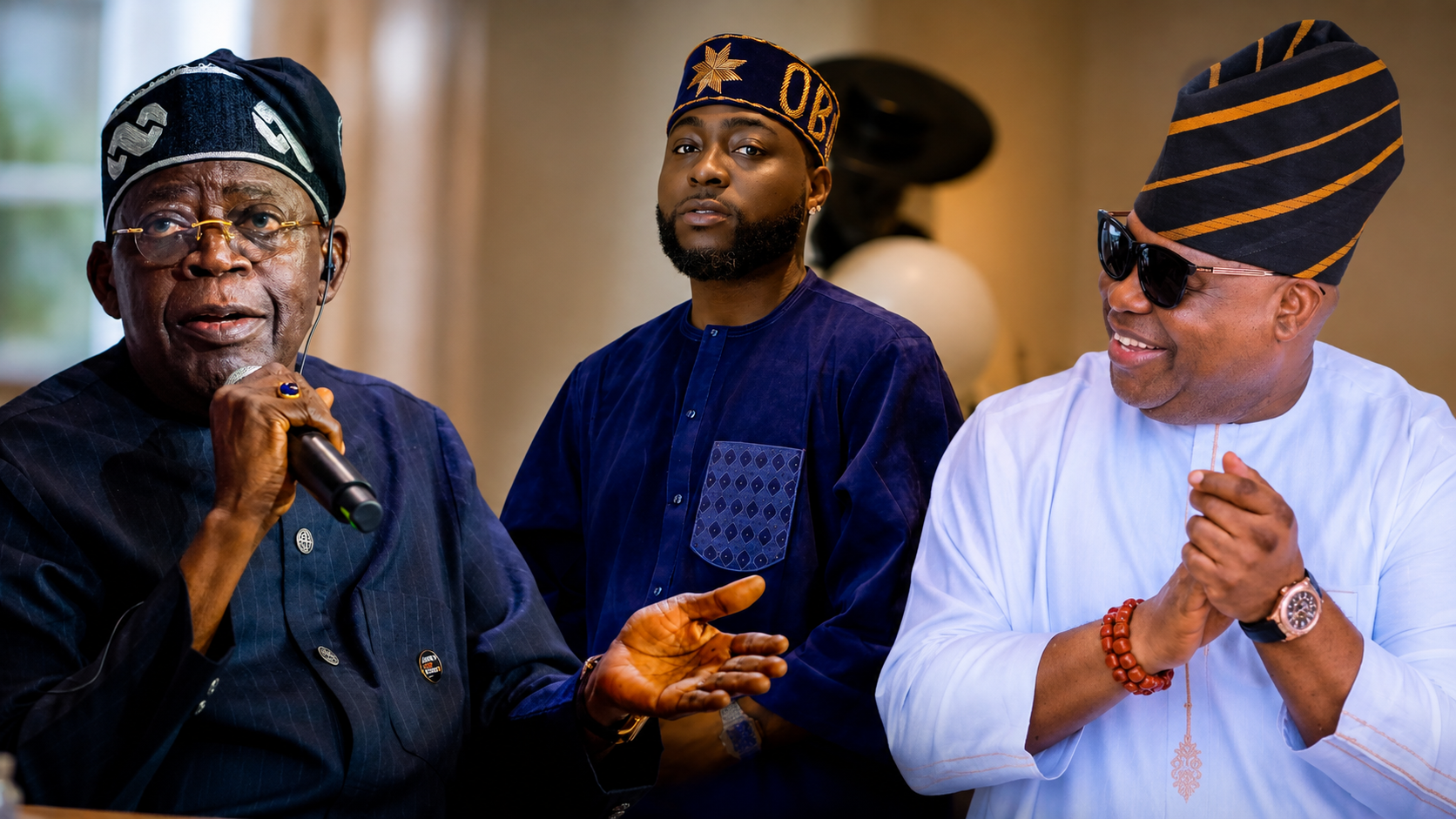
The National Youth Leader of the All Progressives Congress (APC), Dayo Israel, has named President Bola Tinubu, Governor Ademola Adeleke, and Afrobeats star Davido, as key figures who influenced the outcome of the Osun State governorship election on Saturday.
Governor Adeleke, who runs for the Accord Party, won this tough contest for a second term, beating his main rival, APC's Bola Oyebamiji, along with 13 other candidates.
Adeleke got 511,067 votes while Oyebamiji followed with 444,815 votes.
In a review of the election results, Mr Israel said the APC lost partly because it did not mobilize properly and failed to engage young voters effectively.
"There are bitter truths our party must confront before the 2027 general election," Mr Israel shared on X on Sunday, reflecting on the APC's defeat. He stated, "Three personalities emerged as the defining figures of this election."
He pointed out Mr Tinubu, Mr Adeleke, and Davido, who is Mr Adeleke's nephew, as those defining figures.
Mr Israel praised Mr Tinubu for his restraint during the election. He noted that the president did not use his office's powers to sway the election in favor of the APC.
He explained that President Tinubu could have used federal institutions and security agencies to impact the election but chose not to.
"President Tinubu may have lost Osun for the APC, but he won something larger for Nigeria: another chance to show that the Nigerian people's vote must matter," he said.
Mr Israel said Mr Tinubu's attitude matched his actions in previous elections where opposition parties won since he became president.
"This restraint is consistent with the President’s conduct in other off-cycle elections under his administration, including Anambra and Bayelsa, where opposition parties kept power. President Tinubu has shown that his commitment to democracy is not only for elections that favor the APC. That is statesmanship, and it should be acknowledged even when the result is painful for our party."
Mr Israel highlighted Governor Adeleke’s connection to the grassroots as a key reason for his continued support from voters.
He mentioned that the governor's dancing and public image were often mocked by political opponents but argued that these traits helped him connect emotionally with the voters.
"Governor Adeleke’s dancing was never a weakness. It was a political language," he said.
"It humanized him, made him accessible, and created an emotional bond with ordinary voters."
According to Mr Israel, Mr Adeleke’s dancing, singing, and public worship strengthened his ties with voters in a state where politics is deeply tied to community and local identity.
He referred to former Osun governors Bisi Akande and Rauf Aregbesola as politicians who knew the importance of cultural ties in building a political base.
"Politics is not just policy. It is emotion, identity, presence, and belonging," he stated.
"Governor Adeleke stayed close to his grassroots while some opponents dismissed the very traits that strengthened his connection with the people."
Mr Israel urged the APC to learn from this loss and not confuse elite acceptance with grassroots support.
"A candidate may dominate elite discourse and still fail to win a ward. Another may be mocked in elite spaces and still have strong loyalty on the ground," he said.
"Elections are not won by approval ratings in Abuja. They are won by understanding people as they are."
He also noted that Davido's influence helped Governor Adeleke connect with younger voters and added cultural appeal to the governor's campaign.
Mr Israel explained that Davido actively engaged young people in the governor’s campaign, not just showing up as a celebrity.
"Davido did not treat his role as symbolic. He was at the center of youth mobilization and used his influence, networks, music, digital reach, and personal credibility to connect the campaign to a generation," he said.
"He brought artists, influencers, and young voices into the process. Alongside emerging political and professional actors like Pelumi Olajengbesi, he helped give the campaign a youthful and culturally relevant face."
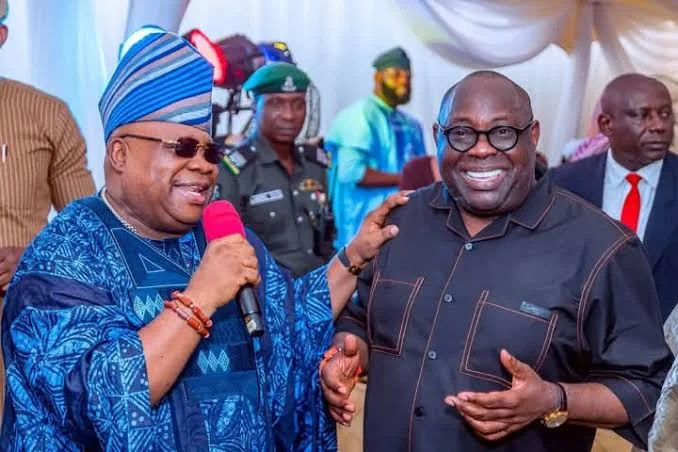
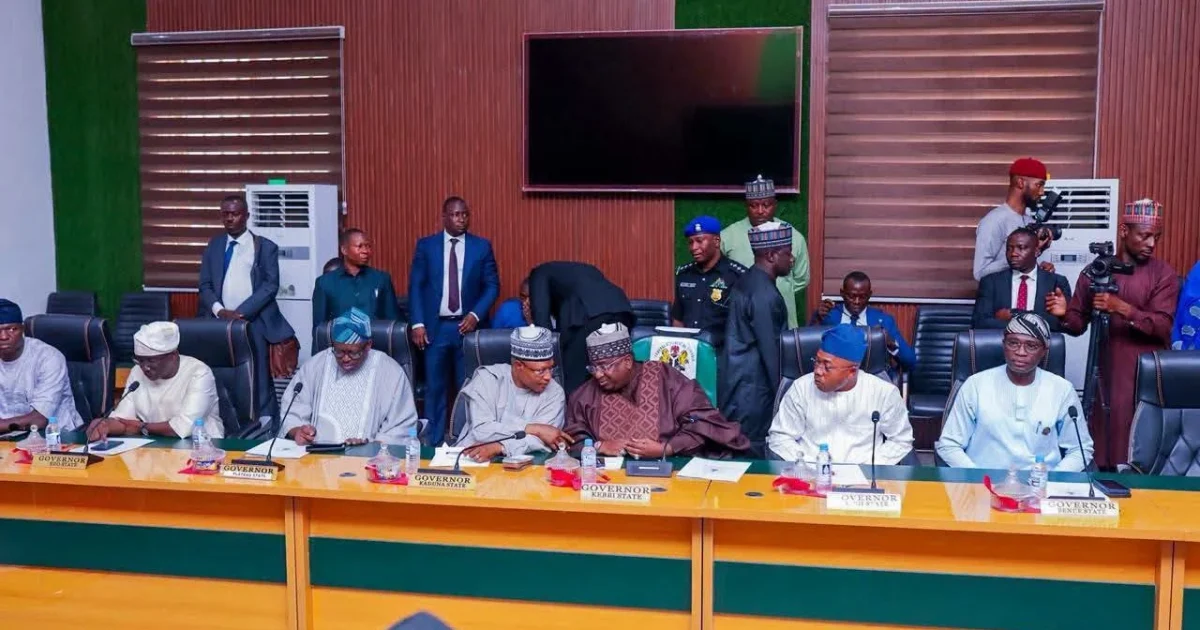
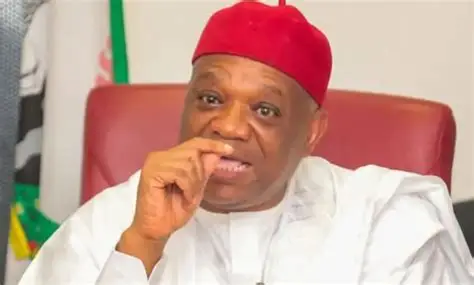
Mr Israel remarked that the APC mostly relied on a structure of governors, senators, and former office holders while failing to use young people who could mobilize their peers.
"While the opposition activated its most recognizable young figures, our party depended largely on a structure dominated by governors, senators, and former office holders," he noted.
"These leaders are important, but we must ask a tough question: how many young Nigerians do they genuinely inspire, mobilize, or connect with?"
He questioned whether the party had identified and empowered young members willing to support the APC, instead of only reaching out to them during elections.
Mr Israel based his analysis partly on his experience during the 2022 Osun governorship election when he worked across the state to mend rifts among party members.
He recalled collaborating with former party leaders, including Moshood Adeoti in Iwo, to unite party members before the election.
He said some of the same issues that hurt the APC in 2022 came up again in this recent election.
"We did not lose in 2022 because there was no effort. We lost due to division, weak reconciliation, and fragmented mobilization that overwhelmed that effort," he said.
Mr Israel added that the APC’s National Youth Wing was not properly involved in preparations for the 2026 election, despite his offers of support.
He described this as part of a larger problem where the party's official structures were ignored in favor of makeshift arrangements during elections.
"This is not just about individuals. It is about an institutional culture that sidelines its own structures while relying on ad hoc arrangements during elections," he stressed.
"No organization that ignores its own constitutional organs can consistently win statewide elections."
He criticized the APC for not holding formal meetings of its National Working Committee to review the campaign and adjust its strategy.
He said the lack of structured oversight since the campaign council's inauguration was a strategic weakness.
Mr Israel said the party’s youth and women wings should be viewed as political structures with clear constituencies, not just brought in to provide crowds at rallies.
"The National Youth Wing should not just be activated to fill stadiums or sidelined for support groups. A Women’s Wing should not be just for decoration at rallies," he said.
"These are political structures with constituencies that must be organized, engaged, and used as part of a clear strategy."
He congratulated Governor Adeleke and the people of Osun State on the election results, while also recognizing Mr Oyebamiji, APC members, agents, and volunteers who took part in the campaign.
He emphasized that the result should lead the APC to honestly assess its mobilization strategy and internal structures ahead of the 2027 general elections.
"The Osun governorship election has been won and lost," he stated. "That margin is enough to demand honest reflection, not excuses or blame-shifting or the usual routine of forming another committee whose report may never change how we campaign."
Even though 15 candidates contested, it was mainly a two-horse race between Governor Adeleke and APC's Oyebamiji since the 13 other candidates received very few votes.
Adeleke’s victory marked his second consecutive win over the APC in the state, following his unsuccessful bid for the governorship seat in 2018.
In that election, he lost narrowly to Adegboyega Oyetola as the candidate of the Peoples Democratic Party (PDP).
However, in a comeback in 2022, again as PDP's candidate, he defeated Mr Oyetola to win his first term.
Governor Adeleke switched from the troubled PDP last year to join the Accord Party, winning Saturday’s election to secure a second term.
Drop your comment
No comments yet — be the first to drop the gist 👇