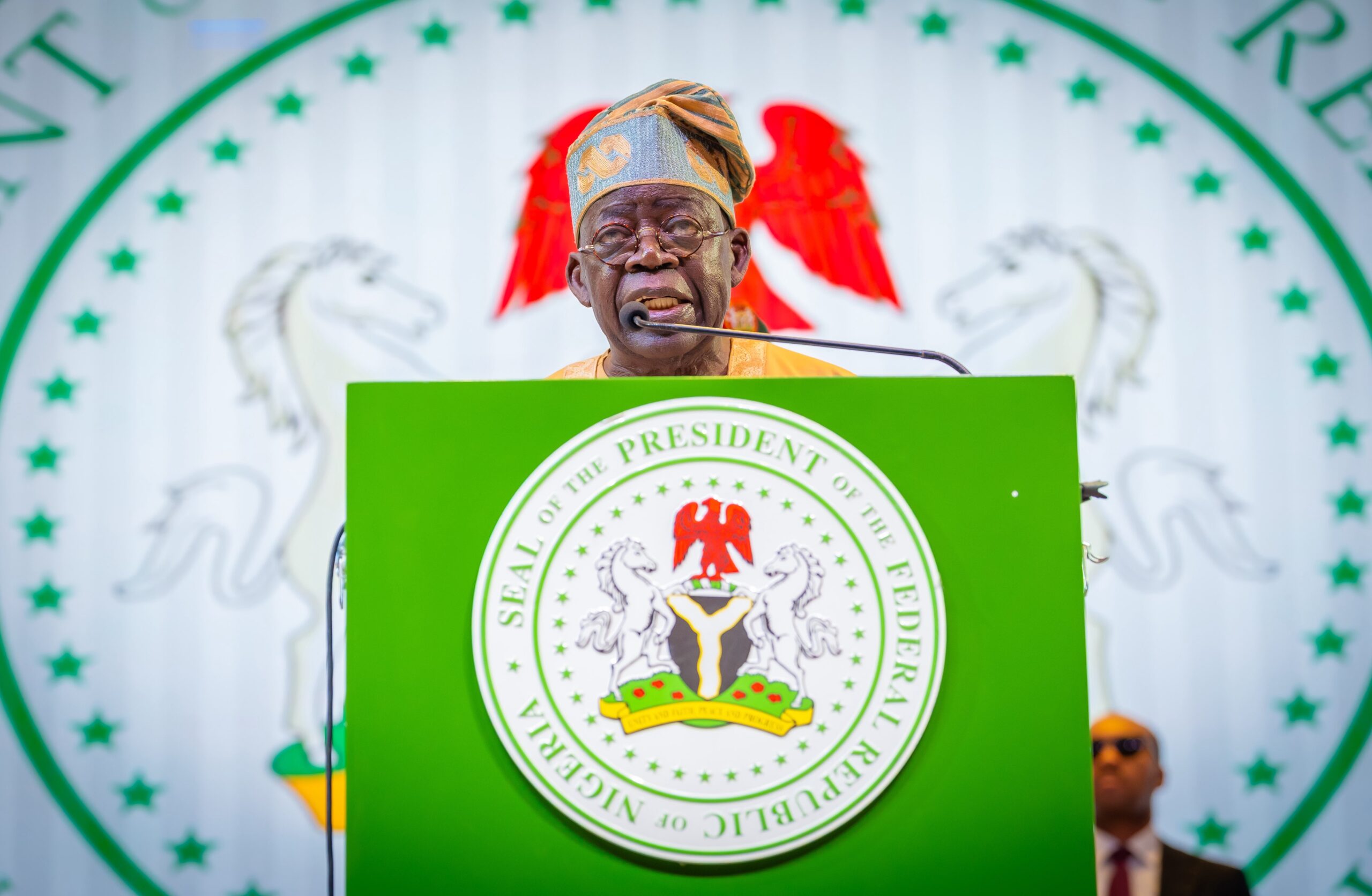
The current government has worked hard since taking office to bring back stability and trust in the economy, President Bola Tinubu said on Friday.
“Federation revenues have risen, providing states and local governments with more resources for infrastructure, education, healthcare, and security,” the president stated during his Democracy Day speech.
“Fiscal transparency has improved, leakage has been reduced, and public funds are better directed to national priorities,” he added.
The president pointed out that investor confidence has returned. This is shown by the rise in investments across various sectors such as agriculture, energy, manufacturing, technology, mining, transportation, and the creative industries.
Since President Tinubu took office three years ago, Nigeria has introduced several reforms aimed at boosting economic growth and attracting foreign investors.
The government removed petrol subsidies, which had drained the treasury of trillions of naira each year and affected public finance.
But this change has affected the cost of living, with prices for energy, transportation, and food rising to high levels.
The government also merged the foreign exchange market by combining different exchange rate windows into one system. Now, the FX rate is determined by demand and supply, unlike before when it was fixed.
The naira has been devalued to encourage foreign investments, even though this push has led to higher inflation.
Additionally, the country has revamped its tax system to increase its tax-to-GDP ratio. It has also changed how inflation is calculated, updated its GDP figures, and adopted a more standard monetary policy to control inflation.
These reforms have produced broad improvements in the economy, with net foreign exchange reserves reaching $35 billion at the end of 2025, up from $4 billion two years earlier. Still, the changes have not greatly improved the lives of many people.
The International Monetary Fund reported on Tuesday that living conditions in Nigeria remain tough. It stated that 63 percent of the population lives in poverty, and 27 million Nigerians are expected to face food insecurity later this year.
The Fund believes that rising global prices for fuel, food, and fertilizer will increase exports and government revenues. But this will also push inflation higher, possibly worsening poverty and food insecurity.
In his speech, President Tinubu acknowledged that “many Nigerians still face economic hardship.”
He promised that the government is focused on controlling inflation, increasing food production, creating jobs, improving living standards, and ensuring sustainable growth.

Drop your comment
No comments yet — be the first to drop the gist 👇