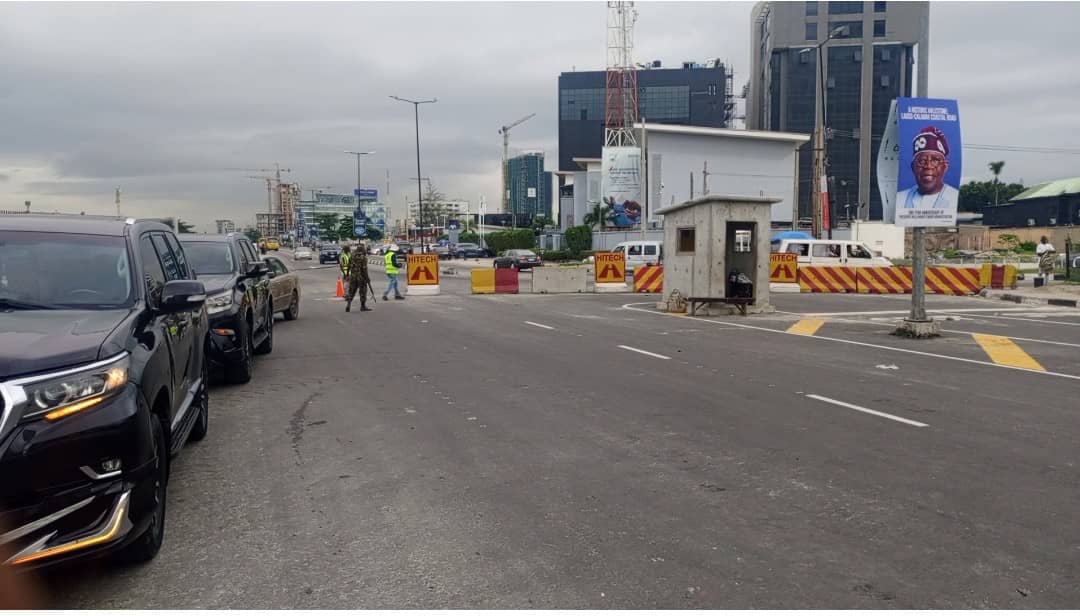
The Minister of Works, Dave Umahi, stated that the federal government has no regrets about the decisions made on the Ondo part of the Lagos-Calabar Coastal Highway. He made this known in Abuja on Wednesday while updating the public on the federal government’s road projects, especially the Lagos-Calabar Coastal Highway.
Umahi explained that the choices made for the Ondo section were based on good engineering practices and aimed at completing the project successfully. He mentioned that there were petitions claiming the project was being diverted, but he insisted that the ministry's decision to change the route was necessary due to the tough terrain.
He said the ministry looked closely at the terrain before deciding to adjust the road's alignment to deal with major construction difficulties. “We have no regret for decisions taken at Ondo. For us, it is their right to write a petition; it is my right to take the right decision.”
He added, “When people subject me to public scrutiny by asking me what is the cost per kilometre, you want me to pass through a terrain that has over 100 metres of pits deep with no defined sharp sand to 300 metres. Yet you expect the cost of one kilometre of route passing through a normal terrain to be the same cost with that?”
The minister said the ministry had redesigned the route to avoid deep pits and other tough terrains. He noted that the filling work in the affected area was almost finished. Umahi explained that the construction process involved removing pits deeper than 10 metres and filling them with sharp sand before the actual road construction could start.
He mentioned that this engineering work was crucial to create a stable foundation for the highway and to ensure the road lasts long. Umahi described the Lagos-Calabar Coastal Highway as President Bola Tinubu’s first major project, saying it stretches from Victoria Island in Lagos through Ogun, Ondo, Edo, Delta, Bayelsa, Rivers, Akwa Ibom, and Cross River.
He revealed that Section One of the highway, which is 47.47 kilometres long, has been fully completed and is ready for commissioning. He added that Section Two, which is 55 kilometres long, will have its pavement finished by November, while major flyovers, underpasses, and overpasses will continue to be constructed.
Umahi noted that some construction delays for the flyovers were due to extensive investigations of the ground, redesigns, and the need to accommodate heavy trucks for the Dangote Refinery. He also mentioned that the ministry had redesigned a key flyover to solve a problem involving the deep-sea port railway, refinery service routes, and other road networks.

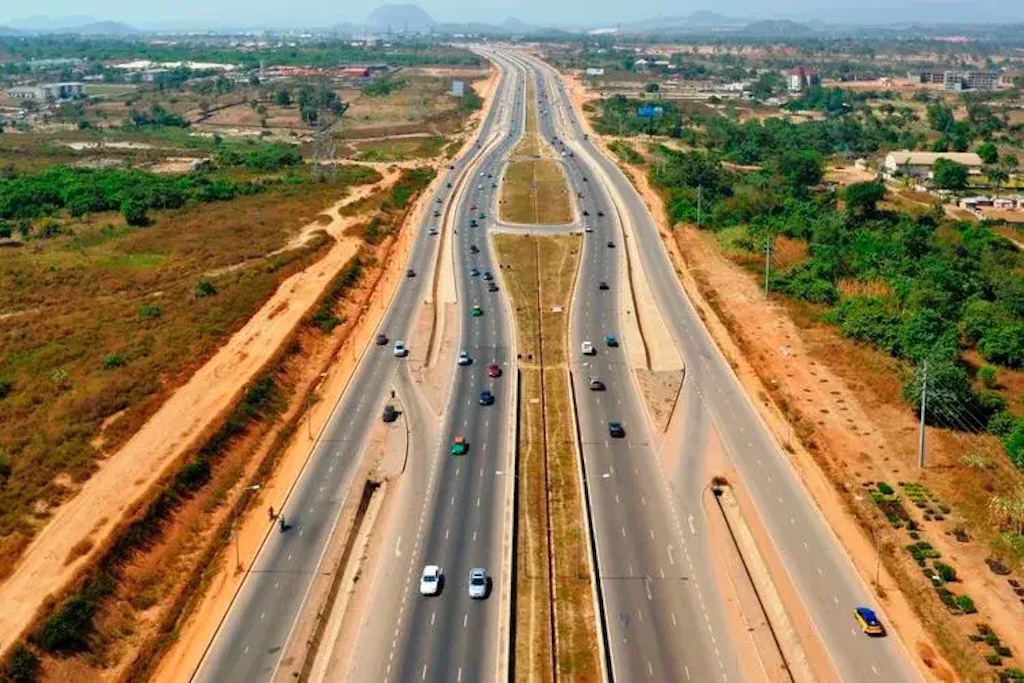
On Sections 4A and 4B, the minister said the project covers 67 kilometres, with 27 kilometres in Ogun State and about 40 kilometres in Ondo State. He said work is ongoing on the Ondo part, adding that the project will end around the Ondo-Edo axis.
Mr Umahi shared that over 30 per cent of the 65-kilometre Sections 3A and 3B has been completed, calling the project “very beautiful” as it connects existing roads and routes. He also said construction is ongoing on Section Five in Akwa Ibom State, which is about 82 kilometres long.
The minister said President Tinubu has approved continuing the coastal highway using the existing East-West Road instead of creating a new path from Ondo into Edo. He described this decision as one of the president’s “wonderful engineering decisions,” saying it will help with regular flooding along the route.
“We now have to raise the East-West Road in many locations by two metres, so that we will be above the present flood level and also expected climate change,” Mr Umahi said. He explained that the Benin bypass, which is 45 kilometres long, will stop motorists from going through the busy Benin City urban centre, cutting travel time and boosting business in the area.
Mr Umahi also said the 129-kilometre Delta section, from the Edo-Delta boundary to the Delta-Bayelsa boundary, is undergoing route survey and procurement and will start by November, pending due process. He mentioned that the federal government is also moving forward with other major projects, including the 1,068-kilometre Sokoto-Badagry Highway, Trans-Sahara route, and Abuja-Kaduna-Zaria-Kano road.
He added that the Ilela section of the Sokoto-Badagry Highway is about 60 per cent complete despite security issues, while the 258-kilometre Kebbi section and 62.35-kilometre Badagry section have over 40 per cent progress. He said the government is also working on the Trans-Sahara project, which connects the South-east, North-central, and other parts of the country.
Mr Umahi explained that these major projects are set up as investment projects, with the federal government providing 30 per cent counterpart funding in naira and 70 per cent from external financing. He said returns on these projects will come from tolls and other investments along the routes, including industrial, tourism, housing, and agricultural developments.

Drop your comment
No comments yet — be the first to drop the gist 👇