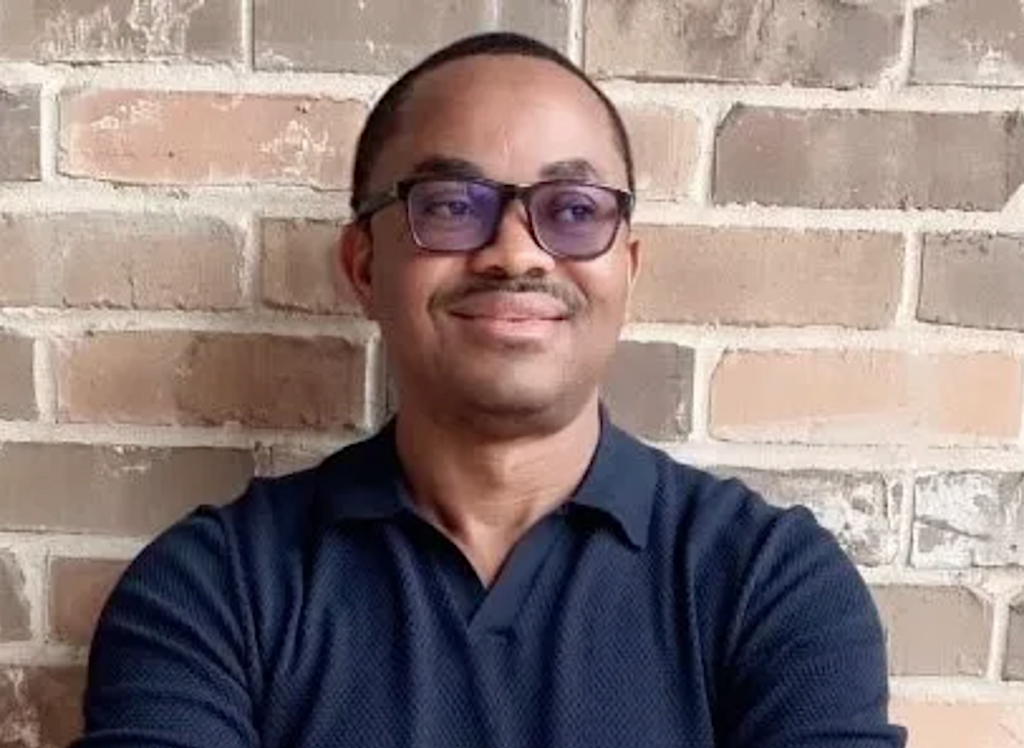
Let me start by saying this: Moses Ochonu is my friend. I met him through another friend, Farooq Kperogi. The three of us, all part of the Nigerian community in the United States, created a close bond. We call ourselves the Three Amigos. We enjoy discussing ideas, debating, and laughing without the pressure to always agree. We have even co-written a book, Dis Life No Balance, and we run Diaspora Dialogues, a monthly talk where we explore Nigeria, its challenges, and its difficult histories.
Having read a lot of Mo’s work and listened to his arguments, I sometimes feel like I have been chewing on the same ideas for too long. But when he focused his sharp historical insight on political Islam, I found his latest book, Boko Haram: The Past of the Present Upheaval, hard to put down.
I mention this not to claim I am unbiased, but to show the context from which I view this work. Moses and Farooq are not traditional mentors to me. They are intellectual partners who have helped me think in ways that are hard to describe.
As a Christian from the South, I have often noticed how easily we in the South think we understand Northern Nigeria. Yet, we mostly know only a little about the historical events, religious beliefs, and ideas that have shaped the North. Too often, we see the North only through the headlines: Boko Haram’s attacks, banditry, Sharia politics, fears about political Islam, and ongoing religious conflicts. We know the North mainly through its crises, while missing the deeper histories and traditions that define it.
In this limited view, we learn about the North's pain without fully knowing the history behind it. We cannot understand societies just through their tragedies. We must also look at the histories, ideas, institutions, religious beliefs, and political struggles that came before these tragedies. This is where Ochonu’s book is especially useful.
While it appears to study Boko Haram, the book's real importance lies in saying that the insurgency cannot be seen as a recent issue alone. Boko Haram rose from a historical backdrop filled with Islamic reform, religious disputes, fights over power, political change, and different views on governance. This historical context is often absent in public discussions.
Boko Haram has been explained through poverty, joblessness, political exclusion, corruption, state failures, climate issues, religious extremism, and international jihadist groups. Each of these explanations provides part of the picture, but none alone tells the whole story.
Ochonu’s work places these current problems in a much longer historical timeline while avoiding the mistake of treating past events as the only causes. This distinction is very important.
To explain is not to excuse. Understanding the roots of violence does not lessen the guilt of those who kill civilians, kidnap children, or terrorize communities. We must condemn these actions morally, but that does not replace the need for understanding. A society that knows only the symptoms of its problems will often be caught off guard by them.
A standout part of Ochonu’s analysis is how he talks about the political uses of history. Boko Haram has referenced Usman dan Fodio, the 19th-century Islamic reformer whose jihad changed much of Northern Nigeria’s political and religious landscape. These references matter because history is not just a record of events. It can also be a source of legitimacy, identity, grievances, and political goals. But just because Boko Haram refers to dan Fodio does not mean it has a direct connection to him.
The fact that Boko Haram draws from dan Fodio does not automatically mean there is a clear ideological link. Also, the history of Islamic reform in Northern Nigeria does not always lead directly to today’s jihadism.
The real task is more complex: to find what connects these historical events, what sets them apart, and how today’s groups use history to support their current goals. Here, the politics of history and the history of politics become closely linked. The past is alive. It is remembered, debated, reshaped, and sometimes used as a weapon.

Ochonu also makes a crucial point that is often lost in heated discussions: religious reform is not the same as religious extremism. Similar words, symbols, or beliefs might suggest connections, but similarity alone does not prove cause or direct influence.
This point is important for understanding Boko Haram’s dislike for Western education and certain aspects of modern life. Groups that reject modernity can still use its technologies, communication systems, and political structures. The better question is not just what Boko Haram opposes, but what it takes from modernity, how its beliefs have changed, and why certain ideas appeal to it in specific political and social situations.
This is where history must connect with political issues, state actions, local problems, and global influences. Poverty does not automatically lead to insurgency. Religious beliefs do not always result in violence. Political exclusion does not always cause radicalization. The challenge is to understand how these factors interact and when they become explosive.
Ochonu does not claim to answer every question, nor should he. One book cannot cover all the theological, historical, political, economic, and social aspects of an insurgency that has roots and impacts across generations and borders. There will always be questions about how older religious traditions relate to today’s militancy, the impact of state violence and international jihadism, local issues, and the experiences of communities stuck between insurgents and security forces.
But a book does not need to answer every question to change how we ask questions. That, in the end, is Ochonu’s achievement. He adds historical depth to a conversation often focused on immediate security worries. He reminds us that Boko Haram is not just a security issue, but also an intellectual, historical, political, and cultural matter. For me, the importance of the book goes beyond Boko Haram.
As a person from southern Nigeria, I see it as a key resource for anyone wanting to understand Northern Nigeria beyond stereotypes and political images. More than that, it challenges assumptions about a region often seen only through violence, religion, and political turmoil. It encourages readers to engage with the religious beliefs, intellectual battles, political structures, and historical stories that have shaped a region tied to the fate of the entire country.
Ultimately, Boko Haram: The Past of the Present Upheaval teaches us that history is not just a collection of old events or a fixed script for the future. It is a contested legacy from which today’s groups draw symbols, identities, grievances, ideas, and claims to power.
For a country always facing the fallout from an unexamined past, that is a critical lesson. A nation does itself a great disservice when it hides its history instead of facing it. History does not vanish just because a society chooses not to talk about it. It lives on in divided identities, unresolved issues, political mistrust, and the lasting results of past choices.
I know this not just as a theory but from personal experience. I am an Igbo man born during the Nigerian Civil War, a conflict that officially ended decades ago, but whose impacts are still felt in our lives. For many of us, the war is not a distant event in textbooks. Its effects are still visible in our families and communities, as is the ongoing feeling that a key part of our national story is still untold.
This is one of the deeper lessons from Ochonu’s book. His effort to uncover the historical roots of Boko Haram shows what is possible when we refuse to see history as a burden. Nigeria needs that same intellectual bravery when facing its own unfinished past. A nation cannot fully grasp its present or build a more honest future while pushing aside the hard chapters that shaped it. We do not heal historical wounds by ignoring them; we only let their effects continue.
For anyone who wants to understand Northern Nigeria, its culture, religious beliefs, intellectual growth, political structures, and historical experiences, Moses Ochonu’s book is a must-read. Mo has generously made the book available to everyone. Read it. Engage with it. Let it challenge what you thought you already knew.


Drop your comment
No comments yet — be the first to drop the gist 👇