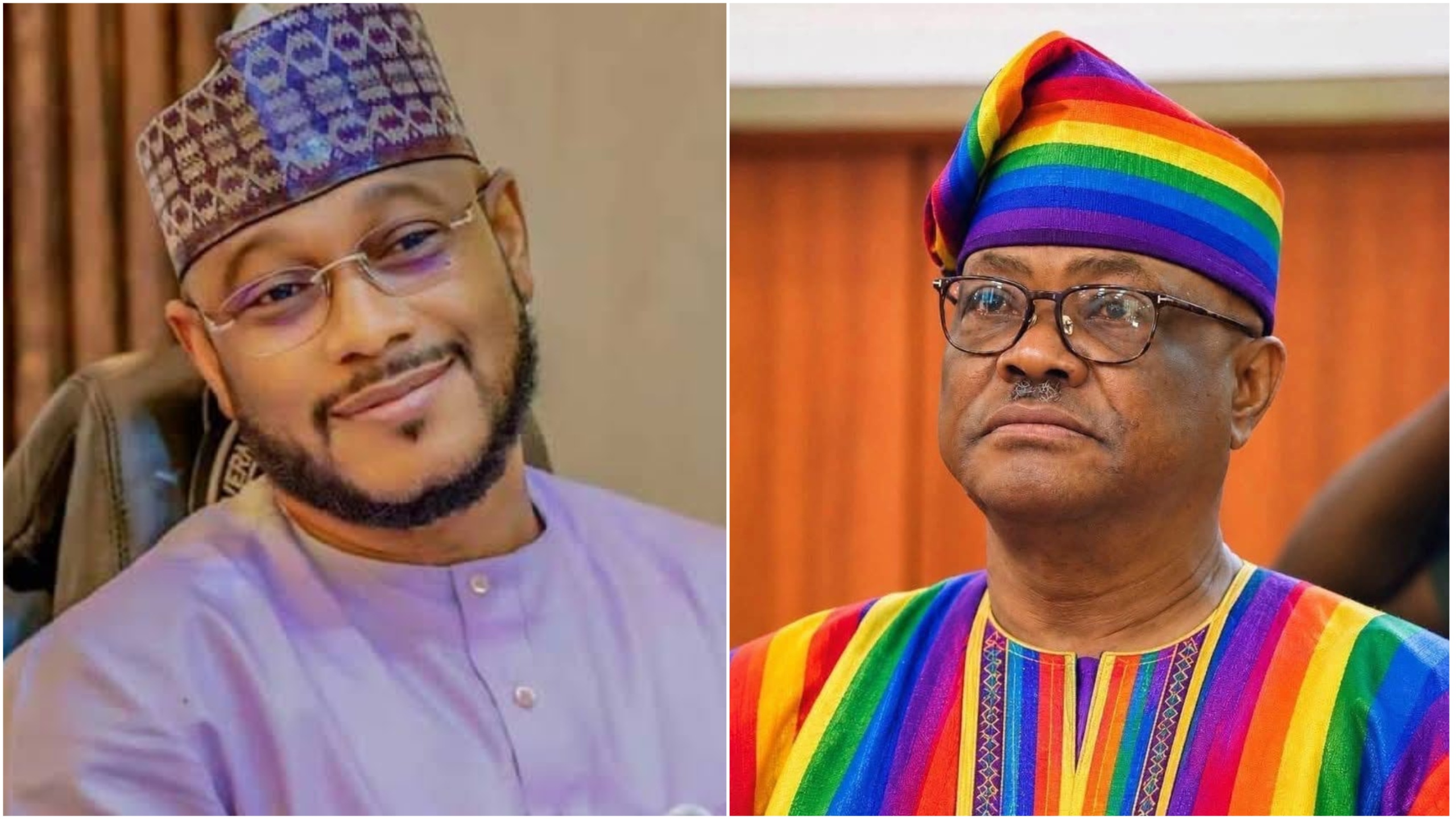
Did Chinua Achebe, the famous African writer, have Nyesom Wike in mind when he wrote his book, A Man of the People? This question comes up because of Achebe’s sharp critique of corruption among politicians and his character Josiah, a petty thief whose greed led to his downfall.
Wike is not a petty thief, but the link between him and Josiah will soon become clear.
Josiah managed to get away with his wrongdoings for years. He stole, deceived, and exploited people without fear. But he crossed the line when he stole a blind man's walking stick, which finally angered the community. Josiah did not suddenly become a thief; he simply went too far. He learned too late that there is a point when people will no longer tolerate excesses.
The connection between Josiah and Wike is not about Wike being a thief. It is about behavior: the idea that political power can be used recklessly, and that every limit can be tested. Josiah’s downfall, like Wike’s, is not about becoming bolder; it is about going too far and losing the community's patience.
Wike’s political boldness seems to have reached a tipping point. The All Progressives Congress (APC) governors, who once tolerated his behavior, are now united against him.
Since entering national politics, Wike has clashed with almost everyone, even those who helped him. He was key in the chaos that led to the downfall of the Peoples Democratic Party (PDP), especially after he did not get the presidential ticket and Atiku Abubakar chose not to pick him as his running mate. It is widely known that part of his job as minister was to weaken opposition parties, and he did this with great enthusiasm.
In exchange, he gained significant control over the political direction of Rivers State. He also tried to undermine Governor Siminalayi Fubara, his successor, in a long power struggle. But like nzia, the little bird that challenged its chi after eating too much, Wike ventured into other states in ways he would not have accepted.
The APC governors, who had long put up with Wike and his bold style, now see his “Rainbow Coalition” as a threat to their authority.
What they once thought was Wike’s usual bravado now looks like a direct attack on their power and influence. The coalition is a cross-party platform where Wike says he is rallying support for President Bola Tinubu’s re-election while also backing candidates from other parties in various elections.
But the APC governors find this arrangement unacceptable. They view supporting the President at one level while backing candidates outside the APC at other levels as a danger to their party and its candidates. Their message, through the Progressive Governors Forum led by Hope Uzodimma, is that Wike’s support for President Tinubu should also include backing APC candidates in governorship and legislative elections.
Governor Dauda Lawal of Zamfara State made their stance clear. “Be on one side. You can’t be on two sides,” he said directly to Wike. He insisted that if Wike is serious about supporting President Tinubu, he should join the APC and campaign for its candidates. Lawal added, “It’s either he is in APC or he is out.” He also promised to discuss Wike’s political position with President Tinubu, showing that the APC governors are done with Wike’s ambiguous stance.
This situation makes Wike’s political future quite interesting. His influence, which was once significant, seems to have faded. His power was linked to his role in the internal crisis that hurt the PDP, but the political scene has changed. The PDP is no longer the main threat; now Atiku Abubakar and Peter Obi's movements pose a bigger challenge to the APC. Thus, keeping Wike in the political game may not hold the same value as before.
Given all this, it would be unwise for Wike to put President Tinubu in a position where he must choose between him and the 32 APC governors. He should have stepped back. As Governor Lawal said, this issue will reach the President, and Wike may find himself in a tough position, trying to make Tinubu choose between him and the governors who control their states.
That is a tough position for any President, especially when it involves his party's interests. Wike might soon learn that the political power he once wielded has its limits against the united interests of the governors.
Wike, as a former governor, should understand the power of governors in Nigeria. Since 1999, governors have become major political players. The Nigeria Governors’ Forum, especially since 2003, has strengthened their ability to act together and get their way.
There are many examples of their influence. In 2010, for instance, the Governors’ Forum used its power to influence President Goodluck Jonathan’s choice of a running mate, leading him to pick Namadi Sambo, then the governor of Kaduna State. Even President Olusegun Obasanjo had to deal with the collective power of governors. They banded together over fiscal federalism and took the Presidency to court over revenue sharing. In one case, they successfully challenged Obasanjo’s stance on constitutional revenue-sharing rules.
This history is important because Wike knows the power governors have. He has been on that side before. He understands what it means when 32 governors speak together, and he knows they control political structures, influence delegates, shape party systems, and have strong grassroots networks that the President would not want to mess with.
Wike's mistake seems to be thinking too highly of his own political wisdom and forgetting he is now on a national stage, not just in Rivers State, where governors often push their predecessors out.
Wike seems to have carried his political style beyond Rivers, believing he could still call the shots. But the situation has changed. He is not just facing one political opponent; he is up against 32 governors who have a stake in the outcome and the systems to defend it.
If Fubara had succeeded in pushing Wike out of Rivers State, Nigeria might have avoided the Wike issue. But politics has likely convinced Wike that he can keep bulldozing everyone and dictate terms, even when he has lost ground. What Fubara could not do, the APC governors now seem set to achieve. The difference is that Wike is now up against a united group of governors who want to prevent his influence from spreading into their states.
When this political clash is over, Wike may find out, maybe too late, that he overestimated his importance.
The APC governors are clearly ready to stop him. He poses not only an immediate risk but also a future threat in 2031 with his Rainbow Coalition, which endangers their control and interests in the upcoming elections.
Like Josiah, the issue is not just whether Wike crossed a line, but if he has pushed his influence beyond acceptable limits, forcing Governor Dauda Lawal to say: enough is enough. The real question is whether Wike realizes he is in a battle he cannot win. Like Josiah, he has reached a point where his confrontations are now creating strong opposition against him.
Governor Dauda Lawal’s decision to draw a line against Wike’s Rainbow Coalition, with the backing of other APC governors, shows that Wike may have finally met the resistance his actions have been building towards. Like Josiah, it is no longer a matter of how far he can push. It is about whether he has pushed too far, uniting those who can stand against him.
Drop your comment
No comments yet — be the first to drop the gist 👇