Nyesom Wike is not the type of politician to keep quiet. When he takes a stand, he does it loudly and clearly. From being part of the People’s Democratic Party’s G5 governors in 2022-2023 to now forming the Rainbow Coalition for the 2027 elections, one thing is clear: he wants to stay relevant, keep political power, and work beyond regular party lines.
Wike's recent clash with governors from the All Progressives Congress (APC) is more than just a simple disagreement. It is a struggle for political power, party control, and who will influence President Bola Ahmed Tinubu as Nigeria approaches the 2027 elections.
The APC Governors’ Forum has rejected any political alliances that might create competing structures or weaken their candidates. They affirmed their support for APC candidates, while Wike stated he didn’t ask them for an alliance. Wike insists that his Rainbow Coalition is meant to support Tinubu’s re-election and isn't part of the APC.
This situation is a headache for President Bola Ahmed Tinubu with less than four months to the presidential election. Wike's proposal challenges traditional party politics. He believes a politician can belong to one party, support another party's candidate, and still run in elections with his own party.
Wike claims he backs Tinubu for president but has not promised that the PDP will step back from elections for governorship, National Assembly, or State Assembly. He argues that Nigerian voters can choose differently for various offices on the same ballot, citing the 2023 elections as proof.
This is why Wike believes in the Rainbow Coalition. But APC governors see things differently. They believe elections are not that simple. The same governors expected to deliver votes for Tinubu must also ensure votes for APC senators, House of Representatives members, state legislators, and often their successors. A coalition that rallies voters for Tinubu while backing opposition candidates could weaken the APC’s political structure.
The governors’ worry is not just about Wike supporting Tinubu; it is about Wike trying to gather support for Tinubu outside the APC while still being free to back candidates against APC members. This is where the tension begins.
Understanding the G5
To understand the Rainbow Coalition today, we should look back to 2022. Wike was one of five PDP governors who formed the G5, or Integrity Group, after Atiku Abubakar won the PDP presidential primary. They called for the resignation of PDP national chairman Iyorchia Ayu, saying both the party’s candidate and chairman shouldn’t come from the same region. They later refused to support Atiku’s campaign.
The G5 was a unique political move because its members stayed as PDP governors while not supporting the party’s presidential candidate. Wike later closely aligned with Tinubu’s campaign in Rivers State. Other G5 members made different choices, showing that the group was more about political leverage than a lasting party.
The G5 taught us that party membership does not always determine loyalty to a presidential candidate. The Rainbow Coalition seems to be a broader version of this idea. Wike is not just leading unhappy governors in the PDP; he is trying to build a wider, cross-party network around a sitting president, possibly for his future political goals.
What Does Wike Want?
This is the big question many are asking. Wike says he wants Tinubu to win again. He has often expressed strong support for the President and claims to be gathering politicians from different parties for this aim. In August, he mentioned a larger Rainbow Coalition forming around Tinubu. But what happens after the election?
Wike seems to be focused on staying politically relevant after 2027, no matter what role he plays. He has been a governor and is now a federal minister. When asked about his political future after Tinubu’s second term, Wike said relevance isn’t just about holding an office. It’s about how a politician connects with the people and how they view him.
This statement doesn’t mean he has specific presidential ambitions, but it shouldn’t be dismissed either. There’s no clear sign of what office he wants next, but he seems to be thinking beyond his current role. This is where his strategy gets interesting. A politician who can rally voters across party lines has a different kind of political power than one who only relies on being in office.
Why Are APC Governors Worried?
The answer lies in the difference between personal political power and official authority. APC governors have official power as they run state governments and, often, party structures. Wike has something different: personal political networks developed over years, especially in Rivers, plus the visibility that comes from being FCT Minister.
Wike knows what he is doing and is confident. He argues that being a governor does not mean having unlimited political influence. He insists that what matters is the ability to get votes, which is a bold statement because it questions the power of sitting governors.
If Wike can say that while you control the APC, I can gather support for the President outside your control, it changes the usual political hierarchy. They don’t have to oppose Wike directly, but they are clearly defending the idea that the APC should lead the political campaign for their presidential candidate, not an individual minister or coalition.
Rivers: A Political Test Ground
Rivers State is a key example of why this fight is important. The clash between Wike and his successor, Siminalayi Fubara, turned into a national crisis. On March 18, 2025, President Tinubu declared a state of emergency in Rivers, suspended the governor, his deputy, and the state House of Assembly, and named Vice Admiral Ibok-Ete Ibas (Rtd) as administrator. The President said this action was because of ongoing political unrest and security issues in the state.
Whatever anyone thinks about the Rivers situation, its political importance cannot be ignored. It showed that Wike’s political influence in Rivers and the Tinubu presidency has become very significant. I do not agree with Wike’s methods or how he treated Fubara.
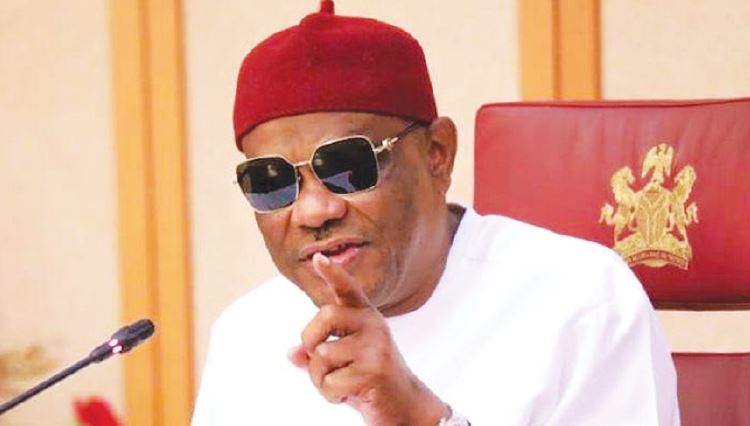
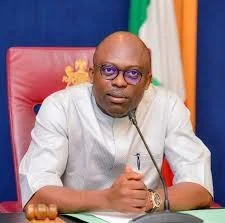
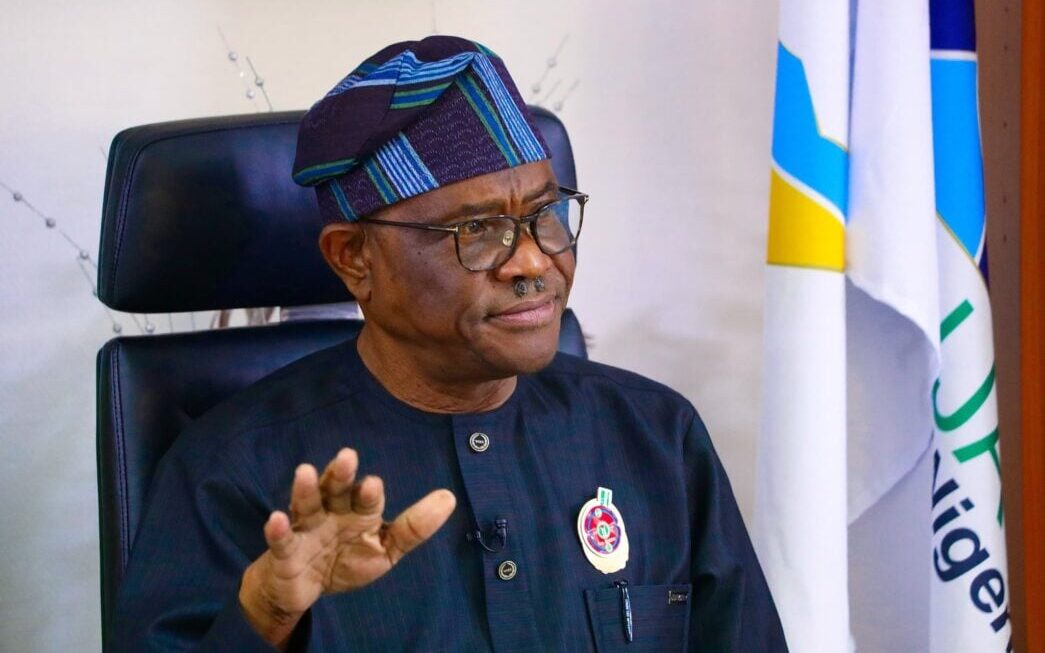
Now Wike claims he wants to deliver Rivers and FCT for Tinubu in 2027, which I criticized previously. This raises a key question: who will control the political machine that delivers Rivers for Tinubu, the APC or Wike’s network? The Rainbow Coalition might give Wike an answer.
And then there is Abuja
The FCT makes Wike’s situation even more interesting. He is no longer just a former governor in his home state, he is now a federal minister at the heart of the government, overseeing one of the most politically important areas in the country. The State House lists Wike as the Minister of the Federal Capital Territory. He has publicly claimed he can gather support for Tinubu in the FCT and beyond through his contacts, creating a potential alternate power base around the President.
Is it any wonder the governors are anxious? If Wike’s Rainbow Coalition succeeds, it could show that President Tinubu does not have to rely solely on APC governors for support.
On the flip side, if the governors insist that all support must go through the APC, Wike’s independent political setup would struggle. This is why this disagreement is important.
How will President Tinubu navigate this tricky situation? Can Wike stay in the PDP while supporting Tinubu? Technically, Wike can remain in the PDP and back Tinubu. His argument is that presidential, governorship, and legislative elections are different contests. But politically, this setup is unusual as APC leaders want a “Top to Bottom” approach. Why didn’t Wike join the APC instead?
A PDP member campaigning for an APC president while his party runs against APC candidates creates a clear conflict of interest. But Wike sees it differently and doesn’t mind. His view is that his loyalty in the presidential race is personal and political, not tied to party loyalty. His PDP supporters have now defended his right to support Tinubu while staying in the party.
The APC governors, however, see this from a different angle. They view it as a matter of party discipline, which is why both sides interpret the same situation differently.
The Tinubu Challenge
President Tinubu now finds himself in a tricky spot. Wike is a valuable ally because he can reach politicians and areas outside the APC. At the same time, the APC governors are crucial as they control the party's formal structures in the states.
Tinubu has a clear incentive to keep this disagreement from becoming a lasting split. He does not have to choose between Wike and the governors; he can try to make both important for his 2027 plans. The harder question is whether Wike’s political goals and the governors’ interests can coexist for long.
This is where Reuben Abati’s mention of Robert Greene’s The 48 Laws of Power comes in, especially the advice about not overshadowing one’s boss on Arise News. Wike is very visible, and his statements make headlines. His work as FCT Minister brings him a lot of attention, and his clashes with opponents draw national focus. But the political system ultimately revolves around the President.
So, the question is not whether Wike is becoming too powerful, but whether his growing visibility and independent network will fit into the formal political structure supporting Tinubu.
From G5 to Rainbow Coalition
This shift shows how Wike's political strategy has evolved. The G5 was about using influence within the PDP to challenge the party’s direction. The Rainbow Coalition aims at building a cross-party network to support a presidential candidate while allowing politicians to keep their party identities.
The first strategy showed Wike’s ability to disrupt his party’s ambitions, while the second aims to show his capacity to mobilise beyond party lines. Whether the Rainbow Coalition will become a lasting political force is still uncertain. Its success will depend on organization, personalities, candidate choices, and how much room the APC leadership is willing to give it, which seems unlikely.
Wike’s Rainbow Coalition seems aimed at building a strong political base for himself and his supporters beyond 2027, positioning him as a key player across parties. For now, the lines are being drawn. The APC governors are saying support Tinubu through the party and do not create competing structures that hurt APC candidates. Wike is saying my focus is on Tinubu’s presidency, not necessarily on every APC candidate.
This is a major disagreement over who owns political loyalty in an election, the party, the candidate, or the individual politician. This journey from G5 to Rainbow Coalition may tell us much more about Wike’s new political strategy and the changing power dynamics around Tinubu than the coalition's colorful name suggests.
Wike has a long road ahead.
Drop your comment
No comments yet — be the first to drop the gist 👇