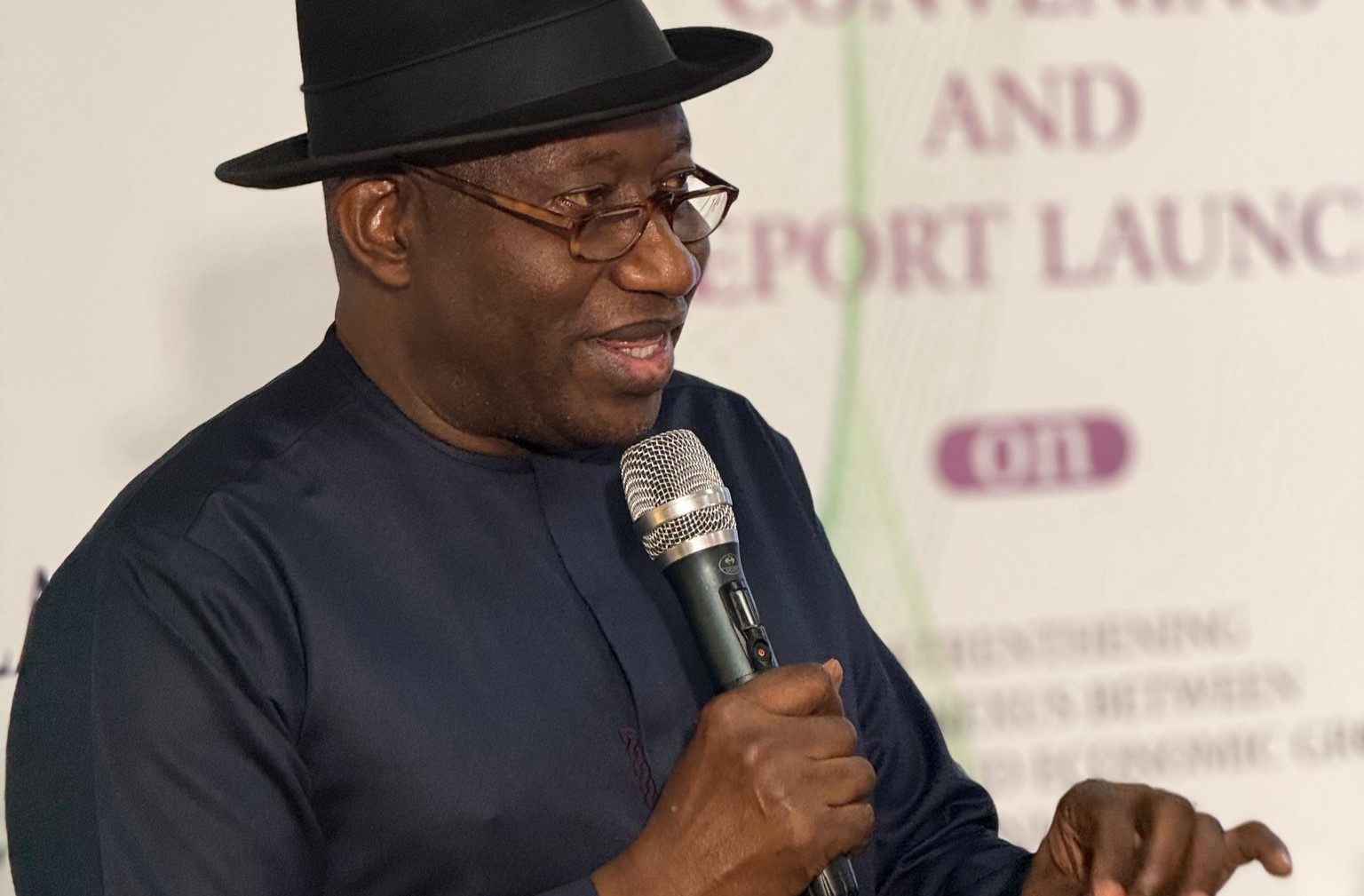
The choice of former President Goodluck Jonathan as the presidential candidate for the Taminu Turaki faction of the opposition Peoples Democratic Party (PDP) has become a key topic in Nigeria’s 2027 political discussions.
"The party had already given our presidential aspirant the waiver. As I mentioned earlier, he was deputy governor, became governor, became vice president, and then president, so we didn’t see any need for screening. The party has declared him as the candidate of the PDP for the presidential election, and that is President Jonathan," Babangida Aliyu, chairman of the Screening Committee and former governor of Niger State, told journalists on 19 May.
Mr Jonathan’s candidacy was confirmed on Saturday, 30 May, during a ceremony where Fred Agbedi, a member of the House of Representatives, received the flag on his behalf.
While many Nigerians have raised questions about this decision, especially on constitutional grounds, others have warned Mr Jonathan that running under a divided PDP might harm his respected image since leaving office in 2015.
Mr Jonathan has not publicly accepted or rejected the nomination. His silence has only fueled speculation among political circles. Some supporters think he is considering the political climate before making a choice; others believe he might hesitate to let go of the statesman image he has built.
Mr Jonathan served as Nigeria’s vice president from 2007 to 2010 before taking over from President Umaru Yar’Adua, who died in office. He later won the 2011 presidential election under the PDP.
Jonathan’s Presidency: The Ups and Downs
Jonathan’s time as president is one of the most discussed periods in Nigeria’s democratic journey. His administration saw significant economic growth, banking reforms, expansion in telecommunications, and better agricultural financing. In 2014, Nigeria rebased its Gross Domestic Product (GDP) and briefly became Africa’s largest economy.
But his time in office wasn’t without problems. His government faced corruption claims, security issues, and poor political coordination. The rise of Boko Haram in the North-east eroded public trust in his administration. The 2014 abduction of the Chibok schoolgirls drew heavy criticism both locally and internationally.
Politically, Mr Jonathan went into the 2015 election weakened by divisions in the PDP. Several governors and senior leaders left for the All Progressives Congress (APC), formed from a merger of three parties to challenge the PDP.
Mr Jonathan lost to the APC candidate, former military ruler Muhammadu Buhari, marking Nigeria’s first peaceful transfer of power from an incumbent president to an opposition candidate. His loss was significant not just for the outcome but also because he conceded defeat before the final results were announced, which was praised for stabilizing Nigeria’s democracy.
From President to Statesman
After leaving office in 2015, Mr Jonathan distanced himself from active party politics, avoiding PDP events and meetings. He has rebranded himself as a statesman and advocate for democracy on the international stage.
Through the Goodluck Jonathan Foundation and his work with various organizations, he has become a notable election observer and mediator in Africa. He has participated in missions in countries like The Gambia, Mali, Liberia, Zambia, and South Africa. He has also acted as a mediator for ECOWAS and the African Union in political conflicts.
Many analysts say his international reputation has grown significantly since he left office, especially due to his peaceful concession of defeat in 2015, which contrasts with the political tensions seen in many African elections.
Mr Jonathan has consistently pushed for electoral reforms, peaceful transitions, and democratic stability across Africa. His involvement in regional conflicts and negotiations has earned him respect among leaders and international organizations.
Why Some Want Jonathan Back
The push for Mr Jonathan’s return stems from various political reasons.
First, some see him as a unifying figure who can gain support across different regions and religions. Unlike many politicians, the former president has kept a moderate public image since leaving office.
Second, with the current economic hardships, insecurity, and political instability, some Nigerians have nostalgic feelings about his time in office, viewing it more positively now.
Third, within the PDP, some believe that only a well-known figure like Mr Jonathan can revive the party’s fortunes before the 2027 elections.
Fourth, if he decides to run and wins, Mr Jonathan would only serve one term because he has already served one term previously. That would allow power to return to northern Nigeria in 2031, according to an unwritten agreement among political elites in Nigeria regarding power rotation.
But Mr Jonathan’s adoption seems to be a gamble by the PDP faction. Mr Turaki served as Minister of Special Duties and Inter-Governmental Affairs during Jonathan’s presidency. The two have reportedly met several times in recent months, discussing the 2027 election and the PDP’s future.
The PDP has been facing internal challenges since the 2023 elections, leading to divisions as rival groups fight for control of the party’s direction.
Besides the Turaki-led faction, another group is aligned with Nyesom Wike, the Minister of the Federal Capital Territory (FCT). This faction, officially led by Abdulrahman Mohammed, is recognized by the Independent National Electoral Commission (INEC).
The Turaki faction’s choice of Mr Jonathan also highlights the growing fragmentation within the PDP. Since losing power in 2015, the opposition party has dealt with leadership disputes, defections, and disagreements over zoning arrangements.
By presenting Mr Jonathan as a consensus candidate, the faction might be trying to position itself as the legitimate leader amid the PDP crisis.
Not everyone is on board. Some Nigerians argue that this move shows that major political parties are unable to develop younger leaders and fresh alternatives. Others are skeptical about another Jonathan candidacy, believing Nigeria needs new political leadership instead of a return to past leaders.
The Makinde Factor and Confusing Signals from the Opposition
The situation around Jonathan has become more complicated due to other developments within the opposition.
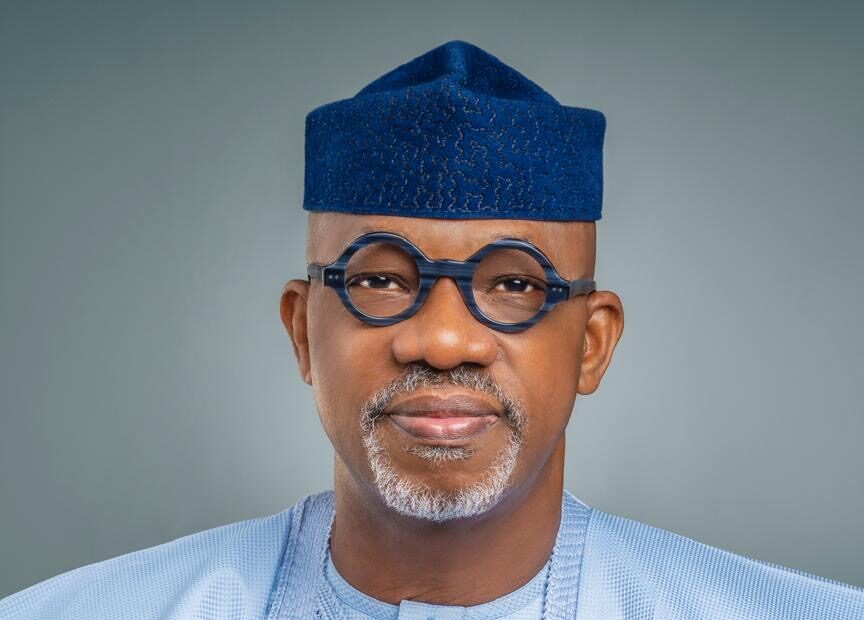
Recently, Oyo State Governor, Seyi Makinde, declared his intention to run for president under a proposed alliance between the APM and the same PDP faction that adopted Mr Jonathan. However, things may now be clearer for the former president with Mr Makinde’s recent emergence as the APM candidate.
Still, there is the faction backed by Nyesom Wike to consider. The INEC-recognized group has picked Sandy Onor, a former senator, as its candidate.
As it stands, given INEC’s recognition of the rival PDP group, Jonathan’s nomination may not mean much.
The Legal Debate Over Jonathan’s Candidacy
A significant legal question surrounding Mr Jonathan’s possible candidacy is whether he can run for another presidential term.
The confusion started with the Fourth Alteration to the 1999 Constitution, signed into law in 2018. Section 137(3) states that anyone sworn in twice as president cannot run again.
Opponents of Mr Jonathan’s ambition argue that since he was sworn in to complete Mr Yar’Adua’s term in 2010 and again after winning the 2011 election, another election would mean a third presidential term.
Supporters claim the constitutional amendment cannot be applied retroactively. This change took effect three years after Mr Jonathan left office.
The issue reached the courts in 2022 when the Federal High Court in Yenagoa ruled that Mr Jonathan is eligible to run. The judge, Isa Dashen, stated that the amendment could not be applied retroactively.
Last Tuesday, the Federal High Court in Abuja again affirmed this decision. Peter Lifu, the judge, dismissed a suit to stop Mr Jonathan from participating, stating that the eligibility issue had been settled by previous court decisions. So, there was no legal reason to prevent him from seeking office again.
Despite this ruling, legal worries remain as the case has moved to the Appeal Court.
Solu Bakare, a senior constitutional lawyer, agrees with the lower court’s decision. He told PREMIUM TIMES that Mr Jonathan has not used up his allowed time in office according to the law.
"This Jonathan case, was he a president for two terms? I would argue that he wasn’t since he didn’t contest as president but was a running mate to the then-president.
"He didn’t run for president at that time; he only stepped in as vice president. Because of that, I would say he still has the chance to go for another term since he didn’t contest for the election; he just completed the former president’s term," the lawyer explained.
Mr Bakare, however, warned that only the court can ultimately interpret the Constitution and issue binding decisions on eligibility.
"His victory could be challenged because there are many issues that remain unclear until the court decides. For example, during the Shagari-Awolowo interpretation of the two-thirds (of 19 states), it was only after the Supreme Court clarified the best interpretation that we understood, and whatever the court says is final, especially the Supreme Court."
Zoning Politics and Jonathan’s Possible Advantage
If the court rules in Mr Jonathan’s favor again, the next question will be whether the zoning arrangement will work in his favor. Mr Jonathan is from Bayelsa in southern Nigeria.
With President Bola Tinubu, another southerner, running for a second term, many politicians, even within the PDP, believe the presidency should stay in the South until 2031, following the country’s informal power rotation principle.
Although the Nigerian constitution doesn’t recognize zoning, it has been a significant political tradition since Nigeria returned to democracy in 1999. This principle aims to balance power between the North and South and ease ethnic and regional tensions in Nigeria's diverse political system.
Zoning became more controversial in the PDP after the party chose former Vice President Atiku Abubakar, a northerner, as its presidential candidate in the 2023 election. This decision led to internal rebellion, weakening the party before the elections.
Some governors and influential party leaders openly opposed the PDP’s presidential ticket, claiming the party went against its principles of equity and rotation.
In light of this, some PDP stakeholders now view Mr Jonathan as a possible acceptable southern candidate who can gain broader support across the country.
Jonathan’s Electoral Support
Mr Jonathan’s real electoral strength, years after leaving office, is also up for debate.
Though his public image has improved since 2015, popularity alone may not guarantee electoral success in Nigeria’s competitive political scene.
One big worry is whether Mr Jonathan still has the grassroots political machinery needed for a successful nationwide campaign.
Since leaving office, he has distanced himself from active party politics and has not kept the political structure that is typical of leading presidential candidates. The former president has repeatedly avoided PDP meetings and events.
Unlike in 2011 and 2015 when he controlled the federal government and the PDP’s national structure, Mr Jonathan lacks a strong political base in the current divided opposition.
Political watchers also doubt if he can win the same level of support in northern Nigeria, where discontent with his administration’s handling of security issues played a big part in his 2015 defeat.
While some northern politicians may support him for strategic reasons related to zoning and building coalitions, it’s uncertain if ordinary voters in the region would back him again after the divisive politics of his previous administration.
There are also worries about generational politics. Nigeria’s voting population has changed a lot since 2015, with younger voters now having more influence in elections.
The 2023 election highlighted the power of youth-led political movements, especially on social media where candidates face intense scrutiny and quick political mobilization.
Given the current situation, Mr Jonathan might find it tough to connect with younger voters who want political reforms, economic opportunities, and a break from Nigeria’s traditional political setup.
Another challenge is the financial and organizational strength of the ruling APC. Presidential elections in Nigeria require vast resources, nationwide mobilization, and strong political alliances across the country’s six geopolitical zones.
Some analysts say that even if Mr Jonathan gets support from parts of the PDP, building a solid coalition to challenge the APC’s national structure will be a major political obstacle.
Perception also matters. While some Nigerians now recall Mr Jonathan’s administration more fondly due to current economic conditions, others still link his government to corruption, rising insecurity, and weak leadership.
That nostalgia alone might not be enough to convince voters who are looking for new solutions to Nigeria’s worsening economic and security challenges.
Will Jonathan’s Candidacy Split Votes in the South?
Another concern about Mr Jonathan’s nomination is how it might affect voting patterns, especially in southern Nigeria.
If the former president accepts the nomination, he would join a crowded field of southern candidates and possible contenders.
Other southern presidential candidates include President Tinubu (APC), Peter Obi (NDC), Adewole Adebayo (SDP), Donald Duke (PRP), Dan Nwanyanwu (ZLP), Esther Okereke (NRM), Omoyele Sowore (AAC), Chibuzor Okereke (LP), and Mr Makinde (APM).
This is assuming Sandy Onor, the candidate of the Wike-backed faction of the PDP, does not join the race.
Political analysts warn that having multiple southern candidates could divide opposition votes across the South-west, South-east, and South-south, making it harder for any one candidate to be the main challenger to the ruling party.
This situation could indirectly help a northern candidate if they emerge as a key opposition figure. Former Vice President Atiku is among the northern politicians whose plans continue to draw attention amid reports of possible opposition realignments.
The worry is not that Mr Jonathan cannot attract votes, but that his entry could complicate opposition strategies at a time when many are calling for unity instead of a multitude of candidates.
What a Jonathan Candidacy Could Mean
If Mr Jonathan accepts the PDP faction’s nomination and runs in the 2027 election, the consequences could be significant for both the PDP and Nigeria’s political landscape.
For the PDP, his candidacy might temporarily unite some factions and bring national attention back to the party. His name recognition and political experience could help rebuild trust among supporters who have been disappointed by years of internal conflicts.
But a Jonathan candidacy could also create deeper divisions within the opposition. Other candidates and factions might reject the process, especially if the adoption seems to lack broad party support.
It is thought that Mr Jonathan’s candidacy could also impact the political future of key opposition figures, particularly Atiku.
Some political observers think the APC may not see a Jonathan candidacy as a major threat compared to younger or more aggressive opposition figures.
They suggest that some strategists in the ruling party might prefer facing a familiar political figure whose past administration is still open to criticism for issues like insecurity and governance challenges.
On the flip side, Mr Jonathan’s return to active politics could rekindle political awareness in the Niger Delta, where many still view his 2015 defeat as a significant setback for the region.
His re-emergence might spark discussions about minority representation, regional inclusion, and power distribution in Nigeria’s political landscape.
Critics may also question whether bringing back former leaders is more about recycling politics than renewing democracy.
Public Opinions
The President of the Campaign for Democracy (CD), Ifeanyi Odili, told PREMIUM TIMES that Mr Jonathan is entering the race at a politically tough time, given the current dynamics within his party and the national political scene.
"He wants to run at a time that isn’t favorable for him. He lost while he was in power. Is it now that he’s out of power that he hopes to win the election?
"I believe he’s being used by some people, and unfortunately, at his age, he doesn’t see it," he said.
On his part, the Archbishop Metropolitan and Primate of the Church of Nigeria, Henry Ndukuba, urged Mr Jonathan not to run for president in 2027, warning that a return to party politics could tarnish the respected statesman reputation and global respect he currently enjoys.

Drop your comment
No comments yet — be the first to drop the gist 👇