Opposition parties are worried about campaign funding as the 2027 elections approach. They claim the ruling All Progressives Congress (APC) has more money, while the tough economy and fear of political backlash are stopping potential donors from helping other parties.
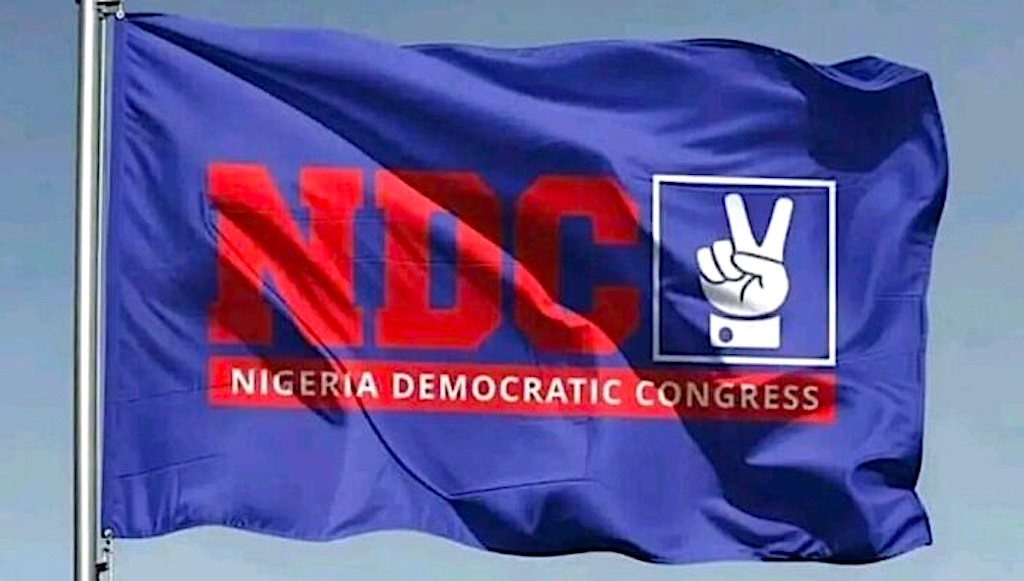
In interviews with Sunday PUNCH, members of the Nigeria Democratic Congress, the interim National Working Committee of the Peoples Democratic Party led by Tanimu Turaki, the Peoples Redemption Party, the Young Progressives Party, and the Obidient Movement Worldwide expressed that the funding gap could hurt their chances against the APC.
They mentioned they are focusing on grassroots mobilization, town hall meetings, online campaigns, voluntary donations, and political partnerships to reach voters without the APC's financial strength.
These worries come as the Electoral Act 2026 raises campaign spending limits. The maximum amount a presidential candidate can spend has increased from N5 billion to N10 billion. For governorship candidates, it has gone up from N1 billion to N3 billion.
Senatorial candidates can now spend up to N500 million, up from N100 million, while House of Representatives candidates’ limit rose from N70 million to N250 million. State House of Assembly candidates can now spend N100 million instead of N30 million.
The spending limit for Area Council chairmanship candidates increased from N30 million to N60 million, while the limit for councillorship candidates doubled from N5 million to N10 million. The law also raised the maximum amount any person or group can donate to a political party from N50 million to N500 million.
The National Assembly defended this change, saying inflation and rising costs for advertising and logistics made the old limits unrealistic. But opposition leaders say the higher limits create new worries for parties with less money in an election where money is a major factor.
NDC: APC has Endless Resources
The National Publicity Secretary of the NDC, Osa Director, stated that the APC has “bottomless resources,” but he believes this advantage won’t guarantee them a win in the elections.
“The signs are clear. More people are determined to vote them out in 2027,” he said. Director mentioned that the NDC will focus on town hall meetings and community engagement instead of expensive rallies.
He said the party is already mobilizing locally and building structures in constituencies for elections to state and federal legislative offices, governorships, and other positions.
“The NDC will manage because we will campaign in every corner of Nigeria. We are holding town hall meetings everywhere and building local structures for the elections,” he added.
Director dismissed claims that the party lacks visibility because it hasn’t held large rallies. He said their strategy is focused on direct engagement with voters. He blamed the funding gap on the ruling party’s misunderstanding of public funds and personal resources.
He said, “Funding is a challenge for everyone except the APC. They don’t see the difference between public funds and their money. They believe Nigeria’s money is theirs.” He acknowledged that the NDC is also facing economic challenges but said they are managing with available resources.
Director criticized attempts to use money to influence voters. He insisted voters should not feel obligated to support a candidate just because they received money during a campaign.
PDP: Funding Not the Biggest Problem
For the Tanimu Turaki-led interim NWC of the PDP, campaign funding is not the main issue for opposition parties. The group’s National Publicity Secretary, Ini Ememobong, told Sunday PUNCH that restrictions on political participation, intimidation, and threats of violence pose bigger risks than not matching the ruling party’s money.
“I don’t think funding should be the main issue. It’s the shrinking political space, and we have raised this concern several times,” he said. Ememobong stated that the PDP is counting on dedicated members willing to contribute their own money, just like when the party started.
He said financial contributions from members have allowed the party to continue its activities despite ongoing legal battles. “When we started, we didn’t have money. We had dedicated people. What money could have done, people did. That is the funding model we are using today,” he added.
Ememobong said just having money can’t ensure political participation in places where candidates and party members face threats. “The bigger issue is the restriction of the political space, where candidates cannot go to certain areas without permission from governors.
There are threats and intimidation happening across the country. Those are the real issues, not just funding problems,” he stated. He insisted that political parties must be able to campaign freely and safely for elections to be credible, and money cannot replace that.
PRP: Poverty Used During Elections
The National Chairman of the PRP, Hakeem Baba-Ahmed, said his party and other opposition groups forming an alliance against the APC lack the funds to compete with the ruling party. He blamed the monetization of elections on increasing poverty, accusing political leaders of exploiting voters’ financial struggles to gain support.
“The PRP feels the pain of a nation struggling for basic democratic governance through the monetization of the electoral process. Our people's poverty is made worse by those in power, and this is exploited during elections. This current government is worse than the others. They have turned politics into a contest of who has the most money to buy votes,” Baba-Ahmed said.
He said his party and its allies are creating campaign strategies that do not rely on giving money to voters. He insisted that opposition parties with limited funds need to focus on presenting credible policies that show how changing the government can improve lives.

“We don’t have that kind of money because we don’t have sources to steal from. So we’re designing alternative campaign strategies that won’t insult voters by returning the money that was stolen from them,” Baba-Ahmed stated.
He criticized the distribution of cash to women, youths, and other groups as a way to use stolen public funds for electoral support. He said his party will focus on policy proposals, credible leadership, and reforms instead of financial incentives.
He added that working together among opposition parties and the quality of their candidates could help lessen the influence of money in elections. “We believe that the quality of our candidates and forming a political alliance will counter this steal-and-bribe strategy. That may be the solution,” Baba-Ahmed concluded.
YPP Turns to Digital Campaigns
The YPP National Publicity Secretary, Martins Egbeola, also pointed out that access to state resources gives the ruling party a big advantage. He said economic hardship has made it hard for opposition parties to raise funds.
“The funding issue is a general problem for opposition parties, except maybe for the ruling APC, which has access to state resources. This is one of the challenges affecting fair competition in our democracy,” he said.
Egbeola mentioned that the party is using a cost-effective strategy that relies on digital platforms, grassroots mobilization, and direct engagement with voters. He believes that limited finances should not stop the party from sharing its message or presenting candidates to voters.
He said elections should be decided by candidate quality and their proposals, not their campaign budgets. “Nigerians deserve leaders who care about their welfare, not politics driven by money and misuse of public resources,” he stated.
Obidient Movement Claims Donor Intimidation
Meanwhile, the Media Director of the Obidient Movement Worldwide, Onyeka Dike, stated that intimidation of people supporting Peter Obi and Rabiu Kwankwaso is stopping potential donors from supporting the opposition openly.
He mentioned the sealing of the business premises of Tobore Alex Agbah, a businessman accused of organizing a large march for the Obi-Kwankwaso alliance, by the Ughelli North Local Government Area in Delta State. Although the council explained its actions, Dike said the timing raised concerns about political intimidation.
“This incident sends a chilling message to others who might want to support the opposition,” Dike explained. He said some businessmen who support Obi are scared to provide financial help because they worry about their businesses being targeted.
“Many legitimate businessmen who believe in him are afraid to openly support his campaign because they fear their businesses could be attacked,” he added.
He contrasted the pressure on opposition supporters with reports of wealthy individuals buying many campaign buses. Dike said the movement will continue to gather support through grassroots efforts and lawful contributions instead of trying to match the ruling party’s financial power.
“Our strength is the people, and we want to turn that strength into votes and lawful participation for a New Nigeria,” he said.
He added, “No amount of pressure, fear, or financial imbalance can wipe out the desire for change. Time is short, but we are determined. We will keep organizing and pushing for a New Nigeria.”
APC: Don’t Blame Us for Your Problems
The APC has rejected claims that it uses public funds for its campaigns. The party said its financial strength comes from its popularity and support from major donors. They insisted being the ruling party does not mean they misuse government resources.
Speaking with Sunday PUNCH, the party National Director of Publicity, Malam Bala Ibrahim, called the opposition’s claims baseless. He challenged them to provide proof that public funds have been used to finance APC campaigns.
“Do they have any evidence that the APC is using public funds or state treasury money for campaigns? Is our party getting help from the government through public money for campaigns?” Ibrahim asked.
“Unless they provide such proof, the opposition parties have no argument,” he added. He maintained that being in power does not justify using public funds for party activities and that the APC’s ability to attract donors shows its public support.
“It makes sense that the APC has more major donors than other parties. We have public acceptance. Most Nigerians are members of the APC and support our actions,” Ibrahim said.
He added that the party should not be expected to reduce its financial strength to help opposition parties that do not have similar support.
“It’s unfortunate they have not gained the acceptance the APC has. If they want to learn how to gain that acceptance, they should come and join us,” he concluded.
Drop your comment
No comments yet — be the first to drop the gist 👇