When Governor Umo Eno spoke to guests on 29 April to open Akwa Ibom State’s new agricultural equipment leasing facility at Ekpri Nsukara in Uyo, he said the project showed his government’s goal to change farming for the better.
The facility sits on the old Akwa Ibom State Agriculture Development Programme (AKADEP) Farm. It was meant to give farmers access to modern machinery and boost food production under the government’s ARISE Agenda.
But just a short distance from the new facility, another story was happening.
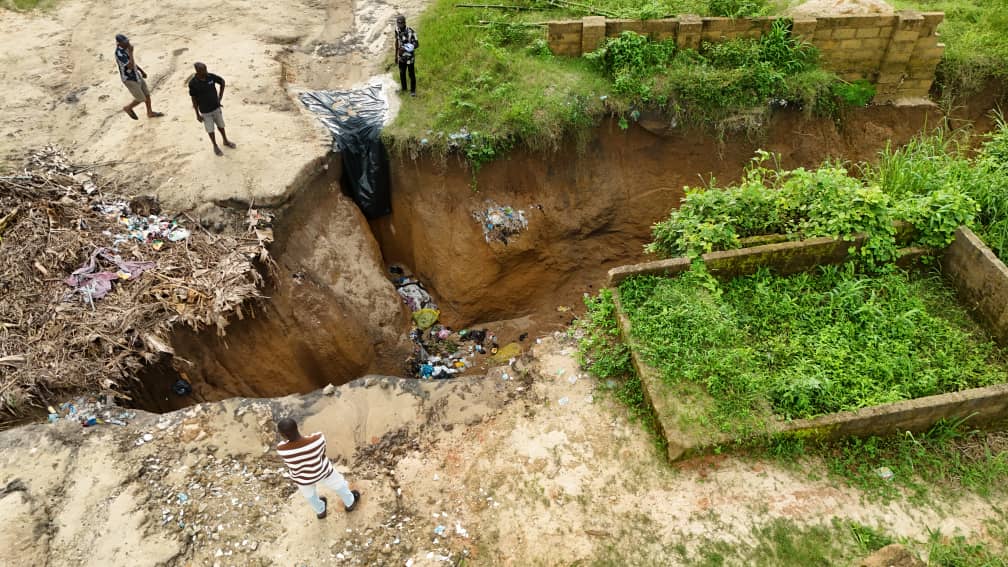
A road called Ekpri Nsukara/Ikot Okoidio, which residents worked hard to keep up, had turned into a muddy mess. Parts of the road were washed away. Some families could not reach their homes by car.
Residents said that when it rains, they wait for hours for the water to go down before they can leave home. The bad road made some people abandon their cars. Many now walk to the main road to catch public transport.
For some parents, rain means keeping their children at home. Those who welcomed the government’s project now face the pain of seeing it worsen a problem they thought would get better.
PREMIUM TIMES visited the area in late July and again on 2 September. The road was in worse shape than before.
The newspaper found parts of the drainage system not finished, new drains damaged by floods, and existing drains that were not connected. Parts of the outfall drainage were also left without backfilling.
Our investigation raised questions about how the drainage contractor was picked, if the work followed legal environmental rules, and whether the government shared enough information about the project that cost billions of naira.
Residents noted that a large area of uncultivated land helped soak up some of the water in the area. They said this changed in August 2024 when the state government announced plans to develop the site. Construction started in 2025, and the area was fenced off as work continued.
The 2025 revised budget set aside N160 million for fixing the mechanic workshop and buying safety gear. The 2026 approved budget allocated N1.5 billion for “Construction of Equipment Leasing Yard at Ekpri Nsukara-Uyo,” under the Ministry of Agriculture. Mr Eno officially opened the project on 29 April.
During an earlier visit in February, Mr Eno praised the work done. “I am so proud of what this young female engineer has done. She has done very well, and I am told by Hensek that this is the best concrete road in this state,” he said.
At the opening, reports named the engineer as Alorye Ewa, managing director of Hansie Building Services Limited, and said she was in charge of the project.
Mr Eno claimed Ms Ewa was chosen through the ARISE Procurement Portal for her skills. But now, this claim is part of the questions surrounding the project.
Flooding was not a new problem in the community. Inyang Victor, a public servant who has lived in the area for 11 years, told PREMIUM TIMES that residents had worked for years to manage the water problem.
“We have tried in many ways to make this place habitable,” he said.
Mr Victor said residents once pooled money to buy laterite, build makeshift drainage channels, and do other work themselves. Earlier this year, they bought more laterite and used cement bags to strengthen weak areas to direct water away from the road. “The road was manageable although we still needed intervention,” he said.
The Akwa Ibom State Government later started a drainage and road project for the community. Residents hoped this new work would fix their issues.
Mr Victor said workers built drains from the main road toward the community but stopped before finishing the system. “To encourage the workers, the community was very supportive. Personally, I bought the workers bags of water many times,” he said.
He noted many of the workers were women who carried materials by hand. But he said the workers vanished just before the equipment leasing facility was opened.
“The day before the Ibom Leasing Company project was commissioned by the governor, all the workers left. We thought perhaps they wanted to attend the event and they would return but they never did.”
Since then, residents say the effects have been severe, ruining the road they had.
Okon Williams, the street caretaker, said he spent over N800,000 of his own money to build and maintain a drainage system before the government project started.
He thinks the new drainage system failed to handle the water because it was poorly built. “The flood water no longer passes through the drains; it now moves into the streets and houses. It has destroyed the roads,” Mr Williams said.
He said residents could wait three to four hours for floodwater to go down after heavy rain. He finds it especially frustrating since the community is near the government seat.
“We are at the back of Government House. Would it be right that we live close to Government House yet we suffer this much?”
Mr Williams also questioned how the construction was done. He said residents often asked who was in charge of the outfall drainage but could not find out.
Residents claimed some construction work happened late into the night, but PREMIUM TIMES could not verify the hours of work.
The problems extend beyond one area. PREMIUM TIMES saw that Ambassador Kufre Akang’s Street was cut off from Ekpri Nsukara/Ikot Okoidio Street.
Residents said they now park their cars elsewhere and use public transport to reach home.
Mary Williams, who has lived in the community for over five years, said their efforts to keep the road up were ruined. “Before the holiday, when it rains, we are unable to allow our children to go to school because of the risk,” she said.
She noted the flooding made the road unusable. “We no longer use our vehicles because the road has been destroyed. We now trek out and use public transport.”
She asked what would happen if someone needed urgent medical help.
Another resident, Amarachi Anyanwu, who has lived in the area for three years, said she had never seen flooding like this before.
“Going to work is very difficult. You have to trek out. Taking the children to school has been a challenge. When it rains, they miss classes,” she said.
A resident, Emmanuel Udofia, said the road was so bad that people could get trapped during emergencies.
“Now, water is flowing recklessly, destroying the road more. I am only afraid about emergencies.”
When PREMIUM TIMES contacted Uwem Etim, chief of staff to the village head and adviser to the Ekpri Nsukara Village Council, he confirmed that the village council had heard about the flooding issues.
He said the village head, Emem Asikpo, had tried to fix some erosion problems in the past, but the flooding had become too much for the community to handle.
“We asked the government to help us so that property and lives would not be destroyed,” Mr Etim said.
“I know the governor loves us and is trying. But please, he should speed up action.”
One striking issue was the failure to connect an existing community drainage channel to the new drain. Community member Mr Victor said a resident had built the old drain before government action. The project workers broke part of it during construction but did not connect it to the new system.
PREMIUM TIMES saw that the old drain did not connect to the new drain. Water from the old channel was left without a clear path to the new drainage system.
Residents said they complained during construction and were told the connection would be made later. They now worry that fixing the channels will mean breaking into the new concrete structure, which they say is about six inches thick.
This is a concern because the capacity, reinforcement, slope, connections, and discharge points of drainage systems affect how well they handle stormwater.
In some places that PREMIUM TIMES checked, the outfall drainage had not been backfilled. The newspaper also saw that the drainage serving the area from the equipment facility to the community school looked better than parts of the outfall drainage.
At the outfall drain, instead of moving water away safely, the poorly built or unfinished sections seem to have pushed water into vulnerable parts of the community.
In some spots, the increased flow was already creating gullies in the soil.
Residents also questioned the materials used in parts of the drainage.
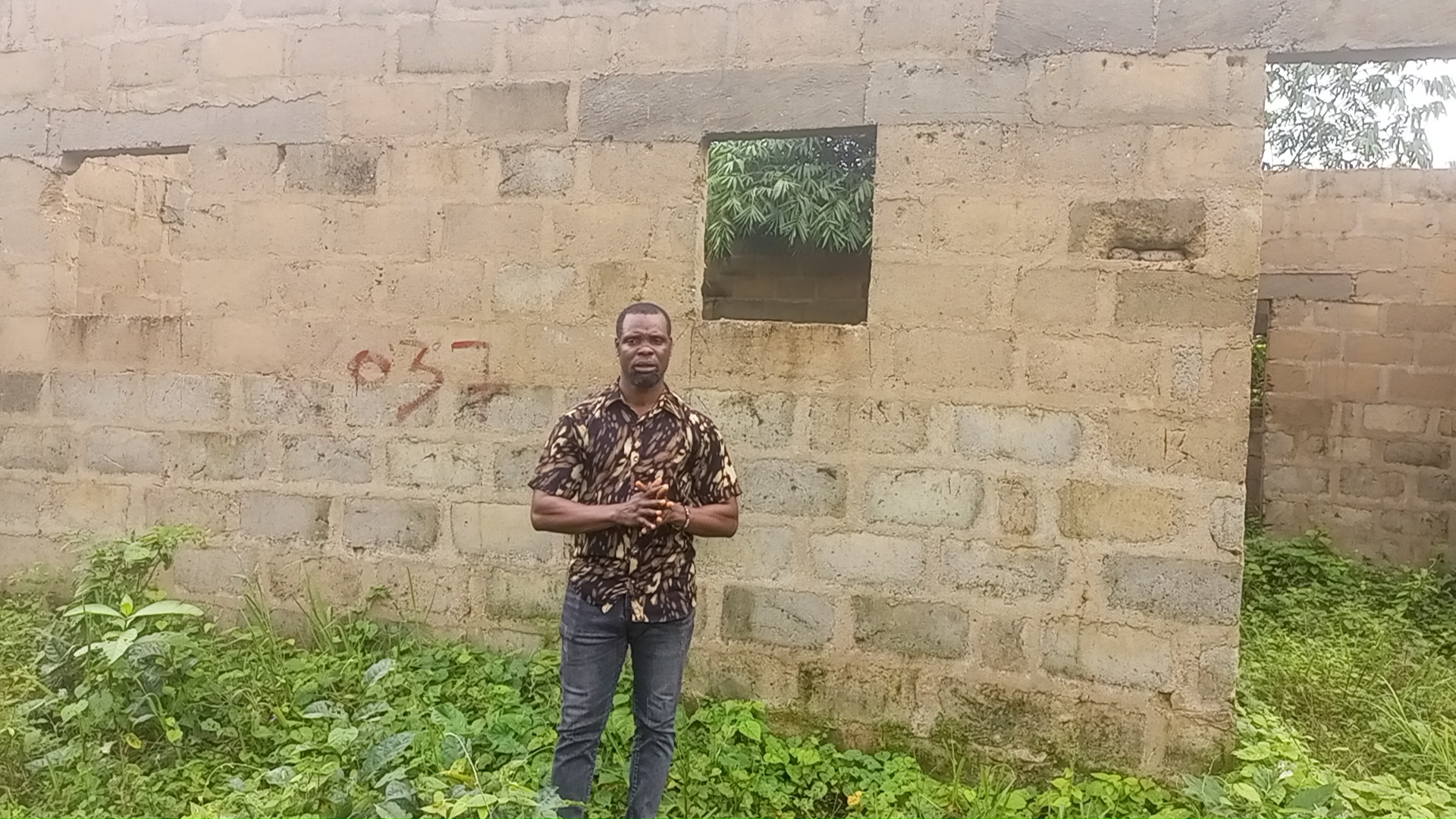
PREMIUM TIMES saw broken drainage sections where the reinforcement appeared to consist of three lines of 10mm rods. Residents claimed that parts needing stronger support had not been built properly.
Despite these issues, the Akwa Ibom State Government has not provided PREMIUM TIMES with the project’s approved plans, bills of quantities, technical specifications, or independent engineering assessment to show that the construction met the required standards.
The lack of a contractor’s signboard at the site made it harder to find basic information about the project. Normally, project signboards tell the public who the contractor is, who the client is, and give a brief description of the project.
When PREMIUM TIMES visited, there was no signboard showing the contractor in charge of the outfall drainage.
The contractor’s identity remains unclear. Residents said Amitec Construction managed the drainage from the entrance of the equipment leasing facility to the community school, while another company handled the outfall drainage.
PREMIUM TIMES spoke to Peter Umoru, Secretary and Head of Legal and Community Relations of Amitec Construction. He confirmed that Amitec worked on the drainage from the facility entrance to the school.
He denied that his company was responsible for the drainage work blamed for the flooding around Ikot Okoidio and Ekpri Nsukara. That leaves the identity of the outfall contractor still unresolved.
But sources within the Ministry of Works and Agriculture told PREMIUM TIMES that Hansie Building Services Limited was the contractor responsible for the outfall drainage and also for the equipment leasing facility.
This information could not be confirmed from government records. PREMIUM TIMES reached out to Hansie Building Services, but they did not reply.
Searching the Akwa Ibom State Government website, media reports, and other available material identified Ms Ewa as managing director of Hansie Building Services Limited.
Records reviewed by PREMIUM TIMES show that Hansie Building Services Limited, registration number 1887431, was incorporated on 27 January 2022.
The Corporate Affairs Commission records show that Glory Anigbo holds 70 percent of the company’s control, and Ruth Ebong holds 30 percent.
The records do not list Ms Ewa as holding significant control of the company. This does not mean wrongdoing, but it raises questions about the transparency of the contracting process, especially since the governor has publicly recognized her.
Governor Eno said Ms Ewa was chosen through the ARISE Procurement Portal for her skills. Still, PREMIUM TIMES could not find any call for bids for the equipment leasing facility or the outfall drainage project on the state government’s procurement portal or in media reports.
PREMIUM TIMES asked the Ministry of Agriculture and the Ministry of Works for clarification about the procurement process. The newspaper also asked Ms Ewa if her company was picked through a competitive process and where the invitation to bid was published. None of them replied.
Section 21 of the Akwa Ibom State Public Procurement Agency Law (2026) states that all state procurements should be done through open competitive bidding to ensure fairness.
The law also requires public monitoring of procurement to guarantee transparency in awarding contracts.
Yet, section 64 of the procurement law allows limited bidding only for highly specialized goods and services. The outfall drainage project does not fall under this category.
If a competitive process occurred, the government should provide the procurement notice, bidding documents, evaluation report, award decision, and contract.
Section 61(5) states that procurement information must be regularly published on the procurement portal. But information needed for the public to check the project award was not available when PREMIUM TIMES checked.
For a project using significant public funds, transparency is a part of the process, not just a courtesy.
The government did not allocate funds specifically for the road affecting the residents. However, the 2026 approved budget includes N70 billion for “Emergency Roads Intervention Projects (Statewide).”
When the governor visited the leasing facility in January, residents said he promised to build the road beside the project because the community was also facing erosion. They said the road was important not just for them but also to protect the new facility from erosion. Yet months later, the road is still in bad shape.
On top of the poorly built drains and the bad road, there is a bigger issue.
The Federal Ministry of Environment’s Akwa Ibom State office told PREMIUM TIMES that no Environmental Impact Assessment (EIA) was done for the equipment leasing facility or the outfall drainage project.
The ministry’s head in Akwa Ibom, Patrick Etim, said this when PREMIUM TIMES visited.
Section 2 of the Environmental Impact Assessment Act 1992 prohibits projects likely to harm the environment from going ahead without an EIA first.
A senior source in the Akwa Ibom Ministry of Works said the ministry had often received notices from the Federal Ministry of Environment about not following EIA rules but was often limited by project timelines.
The source showed PREMIUM TIMES letters, including one dated 15 July. This claim could not be independently verified as a general practice across all ministry projects.
Still, the lack of an environmental assessment is especially important here because the project has changed how stormwater moves in an area already prone to flooding and erosion.
Residents believe the new drainage system has increased water flow into their streets, causing visible gullies and damaged roads.
PREMIUM TIMES sent detailed questions to the Ministry of Works, the Ministry of Agriculture, and Hansie Building Services.
The newspaper asked the Ministry of Works to identify the contractor for the outfall drainage, the contract amount, award date, and completion period.
It also asked for the approved technical specifications and why the work stopped around the time of the equipment leasing facility opening. The Commissioner for Works, Eno Ibanga, did not reply despite several calls.
The Ministry of Agriculture was asked whether it supervised the outfall drainage and who awarded the contract. It was also asked if an EIA was done and whether the drainage was inspected before it was opened. The Commissioner for Agriculture, Offiong Offor, also did not respond.
PREMIUM TIMES sent Hansie Building Services detailed questions on 2 September. The company was asked whether it executed the equipment leasing facility and outfall drainage, the contract amounts, and the dates. It was also asked if the contract was competitively procured and where the invitation to bid was published. The company did not respond.
This story shows a troubling picture. On one side is the new agricultural equipment leasing facility, a government investment meant to show progress and food security. On the other side is a community struggling with more water because a drainage system meant to help has caused bigger problems.
Residents notice the irony. “We were happy when Governor Umo Eno’s administration came to use the place as the Equipment Leasing Company,” Mr Victor said.
“We were happy because we knew that with the government beside us, we would benefit and our environment would be taken care of.”
Then he paused. “Well, we thought as humans. But to our greatest surprise, it got worse. But we are hopeful, that is why we beg our governor to come and see things for himself.”
This sentence shows the failure of accountability more than any budget document since public infrastructure is judged by what happens after the project is finished.
The state government has many questions to answer.
Will it reveal the contracts for the equipment leasing facility and outfall drainage, including the amounts, contractors, award dates, completion periods, and supervising agencies?
Will it publish the procurement records showing how the contractor was chosen?
Will it provide the approved drainage design and technical specifications and have an independent engineering assessment of the parts residents questioned?
And most urgently, will it order the road to be built to standard so the residents can have relief?
Residents told PREMIUM TIMES they appreciate the agricultural project. But they want to make sure it does not leave them behind walls of concrete and floodwater.
For now, every time it rains, they wonder if the state’s promise of development goes past the fence of the equipment leasing facility. Outside that fence, residents are waiting for a road, a working drainage system, and answers to a key question: Who built this, and why has a project meant to help made things worse?


Drop your comment
No comments yet — be the first to drop the gist 👇