Former Vice President Atiku Abubakar wants to change the current crude oil supply agreements. This includes those linked to loans. He aims to make more crude available to local refineries under his planned petrol subsidy if he becomes president in 2027.
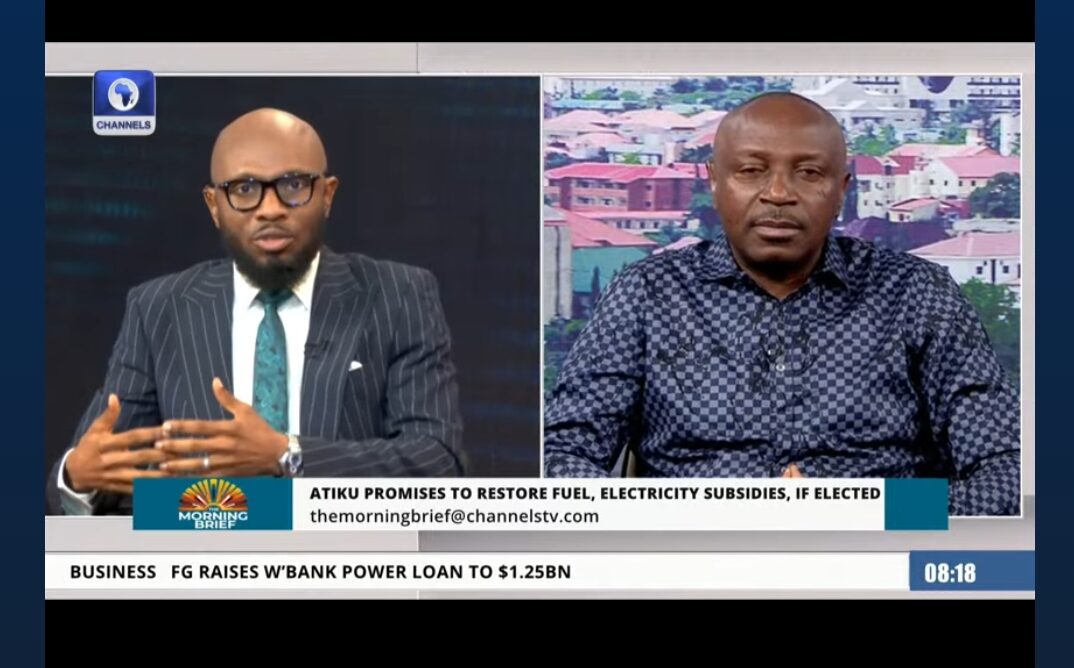
Phrank Shaibu, who is Atiku’s Director of Strategic Communication, spoke on Channels Television’s The Morning Brief on Tuesday. He said this change would help secure crude for local refineries at lower prices.
“A lot of our crude has been mortgaged, loans have been taken, and all of that. A majority of these will be reviewed,” he stated.
Shaibu answered questions about funding the proposed subsidy. He talked about Nigeria’s current crude supply obligations and what local refineries need. He believes past agreements could be reconsidered to free up crude for this subsidy.
“Some of the commitments they made before now will be reviewed. They are not cast in stone,” he added.
“We will start with what is available, while the review is ongoing. Whatever we can recover will be included to support this project.”
Shaibu did not say which agreements would be reviewed or how much crude could be freed up. He also did not explain how they would handle the rights of lenders and other contract parties.
The proposed review raises questions about current financing deals that have pledged future crude supplies against loans. One of these is with the Nigerian National Petroleum Company Limited (NNPC) through the Project Gazelle facility.
In August, the National Economic Council approved a $4.5 billion refinancing of the original $3.3 billion oil-backed facility. This new plan, called Project Gazelle 2, aims to refinance about $1.5 billion that is still owed while providing an extra $3 billion in cash flow.
Reuters reported that the new terms would cut the pledged crude volumes from 90,000 to about 78,750 barrels a day. While this shows how oil production can be tied to financial agreements, Shaibu did not mention Project Gazelle. He did not say if an Atiku administration would want to change that deal.
The extent of any review that could release more crude depends on specific contract terms, current repayment responsibilities, and agreements with affected parties.


Shaibu emphasized that the proposed subsidy would focus on local oil production, not imported finished products. “We are talking of local producers. We are going to give crude to local refineries here in Nigeria,” he said.
Under this plan, qualifying refineries would get crude at lower prices than the market rate. This aims to cut production costs and lower petrol prices.
He listed the Dangote Refinery, the proposed BUA refinery, and smaller modular refineries as facilities that could be part of this plan. However, the Channels Television hosts questioned if there would be enough uncommitted crude to meet their needs.
They also asked about the financial impact of changing existing contracts. They wondered if cheaper crude would actually lead to lower pump prices in a market without regulations. Shaibu insisted that the review would make more crude available but did not give any estimates on how much petrol prices might drop.
In a previous interview, Shaibu said the production subsidy would have a spending limit, need budget approval, and go through independent audits. He also mentioned that the refineries involved would have to pass savings to customers. However, the campaign has not shared the discount rate, annual spending limit, or how they would enforce it.
Tuesday’s interview showed a possible way to secure more crude but did not detail the financial costs. The Petroleum Industry Act states that domestic crude supply obligations must be commercially negotiated based on current international market prices.
This law does not specifically allow for government-funded discounts for local refineries. Any deal selling crude below market price would need a clear legal and financial plan. These discounts could hurt suppliers' income unless they get compensated in another way. The proposed terms would decide who takes on that cost.
The campaign has not explained whether its plan would need changes to existing oil laws or separate government spending. President Bola Tinubu has refused calls to bring back the petrol subsidy. He says that removing the old system is key to protecting public funds and focusing on development.
At an All Progressives Congress (APC) rally in Dutse, Jigawa State, on November 10, he stressed that the subsidy would not come back. The APC Presidential Campaign Council has also asked Atiku to clarify how he will fund the proposed program, its legal basis, and how to prevent misuse.
Atiku’s campaign insists that supporting local refining is different from the old import-based subsidy. Shaibu’s latest comments add another layer: reviewing crude commitments made before Atiku takes office. It remains unclear if this plan can provide enough oil for local refineries while still meeting current contracts and keeping the subsidy within budget.

Drop your comment
No comments yet — be the first to drop the gist 👇