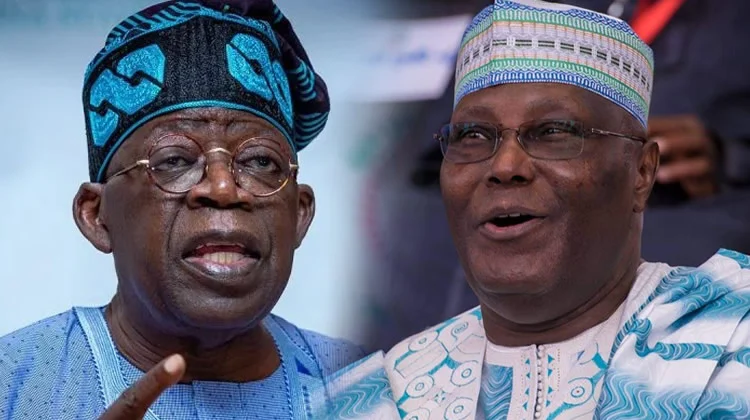
Former Vice President Atiku Abubakar has called on President Bola Tinubu’s government to clear up the confusing numbers about how many households have benefited from its cash transfer program.
Atiku pointed out the difference between the government's earlier claim of reaching 15 million vulnerable households and a more recent figure of "slightly over 10 million households." He said this raises serious doubts about how the program is being run and how public funds are managed.
In a statement from his Senior Special Assistant on Public Communication, Phrank Shaibu, on Thursday, the African Democratic Congress presidential candidate asked the Federal Government to explain what happened to the five million households missing from the latest number.
"On July 16, 2026, the presidency officially declared that expanded cash transfers had reached 15 million vulnerable households. It repeated the same figure on August 2, 2026. Yet on August 26, 2026, the Minister of Humanitarian Affairs suddenly told Nigerians that only ‘slightly over 10 million households’ had been reached. So where did five million households go? These are not opposition figures. They are Tinubu’s figures contradicting Tinubu’s figures," the statement said in part.
Atiku urged the Federal Government to publish detailed records of payments, including verified beneficiary households, payment tranches, state-by-state distribution, failed transactions, and reversals.
"If ₦600 billion truly moved, then the government must show the trail: unique verified households, payment tranches, state-by-state distribution, failed transactions, reversals, and an independent audit," he said.
This criticism from the former vice president comes as the Federal Government has expanded social protection measures. The Tinubu administration has presented these measures as a response to the rising cost of living and economic struggles faced by vulnerable households.
The cash transfer program was expanded after the removal of the petrol subsidy, which led to higher transportation, food, and other household costs.
The government has consistently claimed that targeted social programs are needed to help ease the effects of economic reforms on poor and vulnerable Nigerians. But Atiku believes the government should focus more on reducing the underlying costs that push households into poverty rather than just increasing the number of people receiving cash.
"Beyond the arithmetic lies a bigger indictment. A government boasting that tens of millions of households require emergency cash transfers should not be congratulating itself. It should be explaining why its economic policies pushed so many people into desperation," he added.
He accused the government of increasing financial pressure on households through higher fuel, transport, food, and energy costs.
"Tinubu has turned poverty into a government program: make fuel expensive, transport rises; transport rises, food rises; food rises, medicine becomes expensive; the family basket shrinks," Atiku said.
He also mentioned that businesses are facing higher energy and logistics costs, while workers are losing purchasing power. "When millions become poorer, the government registers them as ‘vulnerable,’ gives some of them cash, and calls it reform. That is not prosperity. It is the industrial production of poverty followed by the bureaucratic management of the poor," he argued.
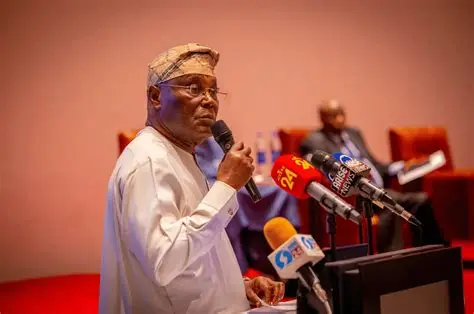


Atiku compared the administration’s cash transfer strategy with his own plan to lower the cost of living, especially through intervention in the domestic petroleum value chain.
He said his proposed policy would involve a targeted, capped, and transparent intervention to lower fuel and transportation costs at the source. "This is precisely why Atiku proposes a targeted, capped, and transparent intervention in the domestic petroleum value chain. It is designed to reduce fuel and transportation costs at source," he stated.
Atiku argued that lowering fuel costs would positively affect the economy by reducing transportation and logistics costs for farmers, traders, manufacturers, and households. "When petrol becomes cheaper, the bus driver spends less, the farmer moves produce more cheaply, the trader pays less for haulage, businesses face lower logistics costs, and the savings travel through the economy to the family kitchen," he said.
He claimed that the difference between his proposal and the Tinubu administration’s approach is that his plan would tackle the causes of rising household expenses instead of compensating people after the damage is done.
"Tinubu waits until poverty enters the home and arrives with a cash-transfer form. Atiku wants to reduce the cost pressures that drove the family into poverty in the first place," he said.
The former vice president stated that a credible anti-poverty program should ultimately reduce the number of people dependent on government support instead of increasing the beneficiaries.
"A serious anti-poverty policy should reduce the number of people needing palliatives, not celebrate how many millions have become vulnerable," he said.
Atiku also accused the Federal Government of applying a different standard of accountability to opposition proposals and its own spending.
"The same government that demands every kobo of Atiku’s proposed intervention cannot ask Nigerians to accept its own hundreds of billions on faith. That is not accountability. It is hypocrisy armed with a calculator," Atiku said.
He urged the government to clarify the conflicting beneficiary figures and provide proof of the payments made.
"Until the Tinubu administration reconciles these figures and produces a verifiable payment trail, Nigerians are entitled to keep asking: where did the five million households disappear to? Did they graduate from poverty, vanish from the social register, or simply disappear because government propaganda ran ahead of the truth?" he asked.

Drop your comment
No comments yet — be the first to drop the gist 👇