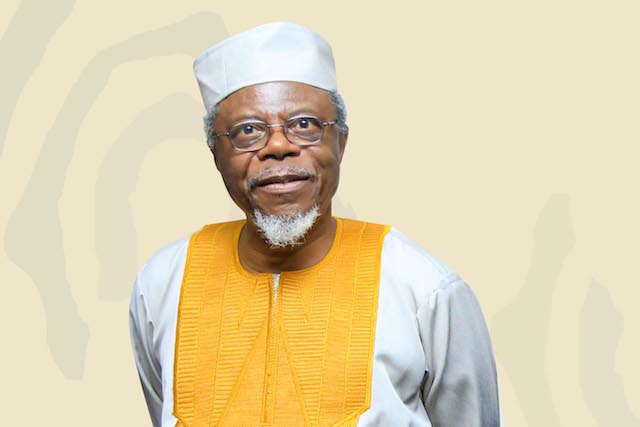
At the launch of the Kwame Nkrumah Chair in African Studies at the University of Ghana, Professor Ato Quayson shared insights from his academic journey. He spoke about nationhood, environmental issues, the diaspora, and the duty of African scholars to society.
During the ceremony on 21 October in the Great Hall of the University of Ghana, Professor Quayson gave his inaugural lecture titled "Reflections on a Life of Scholarship Leavened with Random Curiosity." The lecture was not just about his successful academic career. He focused on nurturing curiosity, understanding society, and the need for new ideas that explain the African experience. As the fifth person to hold the Kwame Nkrumah Chair, Professor Quayson connected his personal journey to the challenges facing the nation today.
He began by sharing the roots of his curiosity that shaped his scholarship. Growing up in Accra, Ato was surrounded by books, newspapers, and stories. This environment helped him develop a love for learning that went beyond school. His father’s interesting questions, like how stones became earth or how volcanoes formed, sparked his curiosity. His mother’s tales from her time at Kaneshie Market also played a key role in his growth. These experiences show that learning can happen through formal education, folklore, storytelling, and everyday life. So, curiosity is not just about gathering information but finding deeper meanings in simple things.
This curiosity drove Professor Quayson’s passion for learning during secondary school. He would sneak out of Apam Secondary School to visit libraries in Accra, sometimes hitching rides on trucks because he could not afford transport. One time, he wanted to understand Kofi Awoonor’s novel This Earth, My Brother, so he traveled to the University of Cape Coast to ask the author questions, waiting for hours to do so. This shows that curiosity pushes one to seek information beyond their immediate surroundings. It raises questions about what schools do: do they teach students to just repeat knowledge or help them ask and solve their own questions? It also highlights the need for good learning conditions, such as accessible libraries and supportive teachers.
But curiosity alone does not explain how he became a respected scholar. Quayson reflected on his time at the University of Ghana and his studies at Cambridge University. He emphasized the importance of mentorship, discipline, and a continual exploration of ideas. He particularly mentioned Aloysius Denkabe, whose practical criticism lessons inspired him to study language and literary structure. Through long talks, chess games, and discussions, he learned the value of mentoring, which he sees as a conversation between experienced scholars and their students. Knowledge is not just learned in classrooms; it is passed through discussions across generations. Yet, he questions how to maintain this mentorship in today’s universities, given the challenges of administration and research. Professor Quayson believes that mentoring can still thrive despite these challenges.
His time at Cambridge taught him that curiosity must go hand in hand with discipline and courage to push limits. He recalled his doctoral supervisor, Tim Cribb, who made him write long essays every two weeks. This discipline helped him build strong writing and research skills. This relates back to his father’s idea that both the content and the style of writing matter. His father taught him that seeking knowledge means overcoming the fear of looking ignorant, as students often hesitate to ask questions to save face. Professor Quayson believes overcoming this fear is key to becoming a good scholar. This way, curiosity and perseverance can be applied to various fields, like urban studies, diaspora studies, and disability studies.
This broad approach is seen in his study of Oxford Street, Accra, a well-known area in the city. Oxford Street is more than just a busy road; it reflects the historical, social, economic, and cultural life of the city through its signs, leisure activities, buildings, and diverse communities. This means African societies are rich in knowledge found in everyday spaces. A street, a market, a transport system, or a neighborhood can serve as an archive for understanding the link between history and modern life. The belief that knowledge cannot develop in African settings based on foreign experiences is incorrect.

This view allows us to look at the political questions Quayson plans to address as part of the Kwame Nkrumah Chair. His research, titled "Kwame Nkrumah and the National Longing for Form," will explore the relationship between the nation and state after Ghana gained independence. Professor Quayson argues that independence did not automatically create a nation-state. Nkrumah inherited areas with various administrative systems and social structures shaped during colonial times. Thus, nation-building involved not only gaining independence but also forming a national identity and institutions to unite the inherited fragments.
This perspective invites us to rethink Ghana's post-independence experiences. Quayson suggests that we should not view different political periods as separate successes or failures. Instead, we should see them as historical contexts that pose new questions about the relationship between the state and its citizens. He refers to these as "problematics" rather than "problems," highlighting that they need ongoing evaluation, not just quick fixes. For instance, when discussing Rawlings's time, he points out how economic pressures from the IMF led to a decline in the welfare state and increased reliance on market values. He questions whether the state can fulfill its national responsibilities when its ability to provide welfare is compromised. This places economic policies within the historical context of nation-state formation and challenges us to rethink how political and economic choices shape citizens’ expectations and identities.
From this angle, Quayson identifies two key issues in Ghana today: illegal small-scale mining known as galamsey and the need to redefine ties with the Black diaspora. He views galamsey as a serious issue, meaning we should look at environmental destruction in a broader context, not just as economic crime. This raises questions about the state’s power to manage natural resources, protect its people, and balance economic interests with environmental care. By linking galamsey to his research on Ghana’s national story, Quayson argues that we should understand environmental damage in relation to the institutions, economic structures, and political choices that shape the relationship between the state and its citizens. This means we must look deeper into the conditions that make solving these issues challenging.
He also suggests creating a new Pan-African dialogue that includes all Black people, not just Ghanaians or African migrants. He distinguishes between visiting Ghana and settling there. He believes the interest of people with African roots in living on the continent needs serious attention. His inaugural lecture raises questions about how people feel they belong and how that influences business, social integration, and national identity. These discussions complicate the idea of the diaspora’s return by showing that belonging involves more than just heritage, tourism, or symbolism. The Pan-African project must consider what existing communities expect and the conditions that allow people with multiple national ties to engage in society. In this way, the diaspora issue becomes part of a larger conversation about building a national community.
Professor Quayson linked these challenges to his goal of training a new generation of African scholars. He plans to set up a mentorship program for graduate students and early-career academics with help from the Interdisciplinary Research and Mentoring Unit at the Institute of African Studies. This plan reflects his core belief that intellectual growth happens when curiosity is nurtured, discipline is developed, and older scholars support younger ones. It also helps put the ideals of the Kwame Nkrumah Chair into action. As Vice-Chancellor Professor Nana Aba Appiah Amfo remarked in her closing comments, curiosity and determination are key traits of Quayson.
In summary, Quayson’s lecture during his return to his university is more than just an impressive academic display. He presents a vision of scholarship that starts with curiosity about the world, requires discipline, and addresses societal issues. By linking childhood experiences, literary analysis, urban living, and historical study to intellectual growth and national questions, he highlights the need to view everyday realities from fresh perspectives. This way, Ghana and the broader African intellectual community face the task of keeping intellectual curiosity alive and building systems that turn knowledge into action. In a world where discussions about identity, economic growth, environmental health, and global belonging shape the future, Africa needs scholars who can rethink existing ideas and interpret their societies.



Drop your comment
No comments yet — be the first to drop the gist 👇