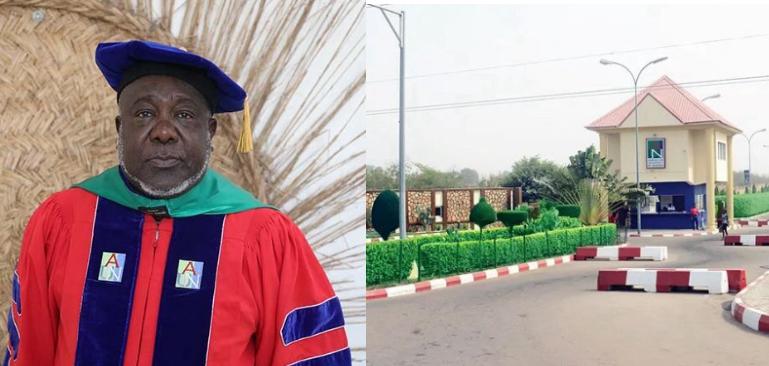
The American University of Nigeria (AUN) in Yola has suspended the Dean of its School of Law, Bello Magaji. This decision comes after a PREMIUM TIMES investigation showed how he avoided a prison sentence for sodomy, even though Nigeria's highest court upheld his conviction.
AUN shared the news of Mr Magaji's suspension in a statement by its registrar, Daniel Okereke, on Monday.
The statement said Mr Magaji, who is an associate professor, has also been placed on indefinite leave without pay. This will last until an administrative review by a panel set up by the university management is completed.
The university explained that the suspension resulted from Mr Magaji's “non-disclosure of prior military service and misrepresentation of records in the university’s employee records when he was hired.”
“These actions are a serious breach of trust and are of great concern to the University,” the statement added.
AUN also emphasized that it is committed to “upholding the highest standards of integrity, transparency, and accountability in all its operations.”
On Sunday, PREMIUM TIMES reported that Mr Magaji, who was a military police officer, was convicted of sodomy by a General Court Martial (GCM) but never served his prison sentence. This happened despite the Supreme Court confirming the sentence.
In 1997, the military court sentenced him to seven years in prison. This was later reduced to five years after he was found guilty of sodomy with four boys, one of whom was 17 years old.
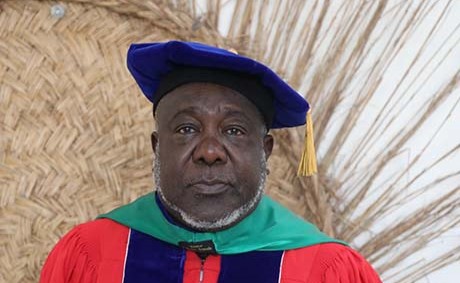

Court documents reviewed by this newspaper show that two of the victims and a witness testified during the trial. They said he had given them alcohol before committing the act in 1996.
Mr Magaji insists he is innocent and claims he was set up because of his work as a military police officer. He took his case through various courts in Nigeria, starting from the General Court Martial to the Court of Appeal and then to the Supreme Court. He also approached the National Human Rights Commission (NHRC) and the Human Rights Violations Investigation Commission (HRVIC), known as the Oputa Panel, which was established in 1999 by then-President Olusegun Obasanjo after Nigeria returned to civilian rule.
In 2008, the Supreme Court upheld the 1997 conviction, but Mr Magaji never served his sentence.
Instead, he received a presidential pardon from former President Goodluck Jonathan in 2013, five years later.
The Nigerian Army also changed Mr Magaji's official records. They replaced his dismissal from service with a note that he retired voluntarily.
After leaving the military, Mr Magaji focused on building an academic career. He has held senior positions in Nigerian universities, including serving as dean of law faculties.

Drop your comment
No comments yet — be the first to drop the gist 👇