As Bauchi State gets ready for a political change in 2027, one big question is coming up. What happens to the huge public investments already made in roads, healthcare, education, and other key areas?
This question goes beyond party politics. It deals with how to protect taxpayers' money, finish projects already paid for by the government, keep development gains, and ultimately, the welfare of Bauchi State's people.
Governor Bala Abdulkadir Mohammed took office on May 29, 2019, inheriting a state filled with unfinished projects. His government started a big program to finish these inherited projects while also starting new ones in infrastructure, healthcare, education, agriculture, housing, social services, and economic growth.
The Bauchi State government projects portal shows that the administration focuses on infrastructure, healthcare, education, public finance, social welfare, and economic revitalization.
With Governor Bala's second term ending in May 2027, the discussion around succession is also about continuity, good management, and taking care of public resources.
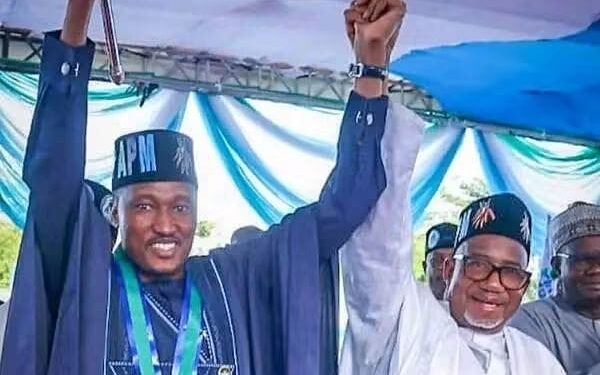
The Allied Peoples Movement (APM) has chosen Dr Yakubu Adamu, a former Bauchi State Commissioner of Finance, as its candidate for the 2027 election. When he was introduced, Adamu said he plans to build on the achievements of Governor Bala Mohammed, focusing on continuity and development.
The Cost Of Abandoning Projects
For Bauchi, the point is not just whether a new government should start new projects. It is about what happens when governments leave behind projects that have already used public funds.
An unfinished road does not just mean a physical project is incomplete. It represents money spent without any expected returns. It can disconnect communities, slow down the movement of farm products, raise transport costs, and force the government to spend more money later to fix or restart the same project.
The same goes for hospitals, schools, water systems, bridges, and other public infrastructure.
If a new government abandons an inherited project because it was started by someone else, the initial public investment can lose its value. Inflation can raise the cost of finishing it, and the structures can fall apart, leaving communities waiting for promised services.
Continuity is not just about keeping a politician’s legacy. It can also protect the public money that has already been spent on development.
From Inherited Projects to Completed Infrastructure
Governor Bala Mohammed inherited many road projects left unfinished by the previous government of Muhammad Abdullahi Abubakar of APC.
These include the Itas-Atafowa-Magarya Road, Darazo-Gafchiyari Road, and several others. The records also show the 20-kilometre dual carriageway along Ningi Road and roads like Awala Roundabout-Gidan Mai-Zaranda Hotel-Miri Road.
Completing these projects is about more than just the roads. Roads link farmers to markets, students to schools, and patients to hospitals. A good road network can save time, enhance the movement of goods, and boost business activities across local government areas.
The administration also completed roads like the Adamu Jumba Road and others in various local governments. In August 2026, former President Goodluck Jonathan opened 18 township roads in Bauchi and praised the governor’s efforts in developing infrastructure.
Among the highlighted projects is the longest state-sponsored bridge on the Itas-Gadau axis. This road and its bridge link ten farming villages to four local government headquarters.
The importance of finishing infrastructure is clear. A bridge is not just a standalone structure. It connects to a network and its usefulness relies on the maintenance of the roads.
When projects are completed and kept in good shape, the government gets more value from the money spent. Communities benefit and future governments can focus on expanding the network instead of going back to unfinished projects.
Continuity is especially important in healthcare. The records show that the Bala Mohammed administration has built, renovated, and upgraded many primary healthcare facilities across Bauchi State.
The government aims to have at least one working primary healthcare centre in each of the state’s 323 electoral wards. Collaborations with partners have supported renovations and the building of more facilities.
The health program also covers general hospitals in places like Alkaleri, Toro, and others. The Specialist Hospital in Bauchi has received upgrades, including maternity renovations and new equipment.
These investments highlight a key point: building a health facility is just the start. It needs to be maintained, equipped, and staffed to be effective. Abandoning it at any stage can lower its value.
Before upgrading the Dajin Primary Healthcare Centre in Tafawa Balewa, residents needing certain services, like scans for pregnant women, had to travel far. A nearby facility makes things easier. That is what continuity means for people.
Every government has limited resources. This makes managing existing projects just as important as announcing new ones. If a project is nearly finished, abandoning it can mean spending much more later to finish what could have been done earlier.
Continuity can protect public investments. But it should not mean that citizens give up their right to check the government.
A new leader should check inherited projects, confirm their costs and quality, share information, and make sure projects deliver value. Continuity should come with accountability.
The main question for voters should be: who can maintain useful projects, finish ongoing ones, keep current infrastructure in shape, and also bring in fresh ideas when needed?
The 2027 Succession Question
The 2027 election gives Bauchi voters different candidates and ideas to choose from.
Dr Yakubu Adamu, the APM candidate, has positioned himself as a continuity candidate. His campaign focuses on infrastructure, healthcare, education, youth and women empowerment, agriculture, and food security.
His past role as Commissioner for Finance is relevant to public investment discussions because managing finances is key to keeping infrastructure and public services going.
The case for continuity is not just that every policy or project of an outgoing government must stay. It is that projects with clear public value should not suffer because of political changes.
If a road connects communities and helps trade, it should be kept up. If a health centre provides essential services to families, it should stay open. If public money has been spent on a project, finishing and maintaining it should come before starting new ones.
If an inherited project is no longer needed or is not worth it financially, the public deserves a clear explanation, not just silence and abandonment.
Governor Bala Mohammed’s time has created many projects that will need support and funding after May 2027. A change of government does not change who owns a public road, hospital, school, or bridge. They belong to the people. This should guide the 2027 succession talks.
For supporters of Governor Bala Mohammed’s chosen successor, the argument is that Dr Yakubu Adamu can ensure continuity and keep the development agenda moving forward. The APM has officially backed his candidacy, and he promises to build on existing successes.
For voters, the key is to look closely at the candidates, their records, plans, financial management ideas, and commitment to accountability before making a choice.
Development needs planning, investment, completion, and maintenance. When public resources are already spent, finishing valuable projects can protect those investments. Abandoning them can lead to more financial and social costs.
As the 2027 election nears, the discussion about succession should seriously consider continuity, not just as a political slogan, but as a real question of how Bauchi can protect what it has built, finish what is still pending, and wisely use its limited resources for lasting value.
Drop your comment
No comments yet — be the first to drop the gist 👇