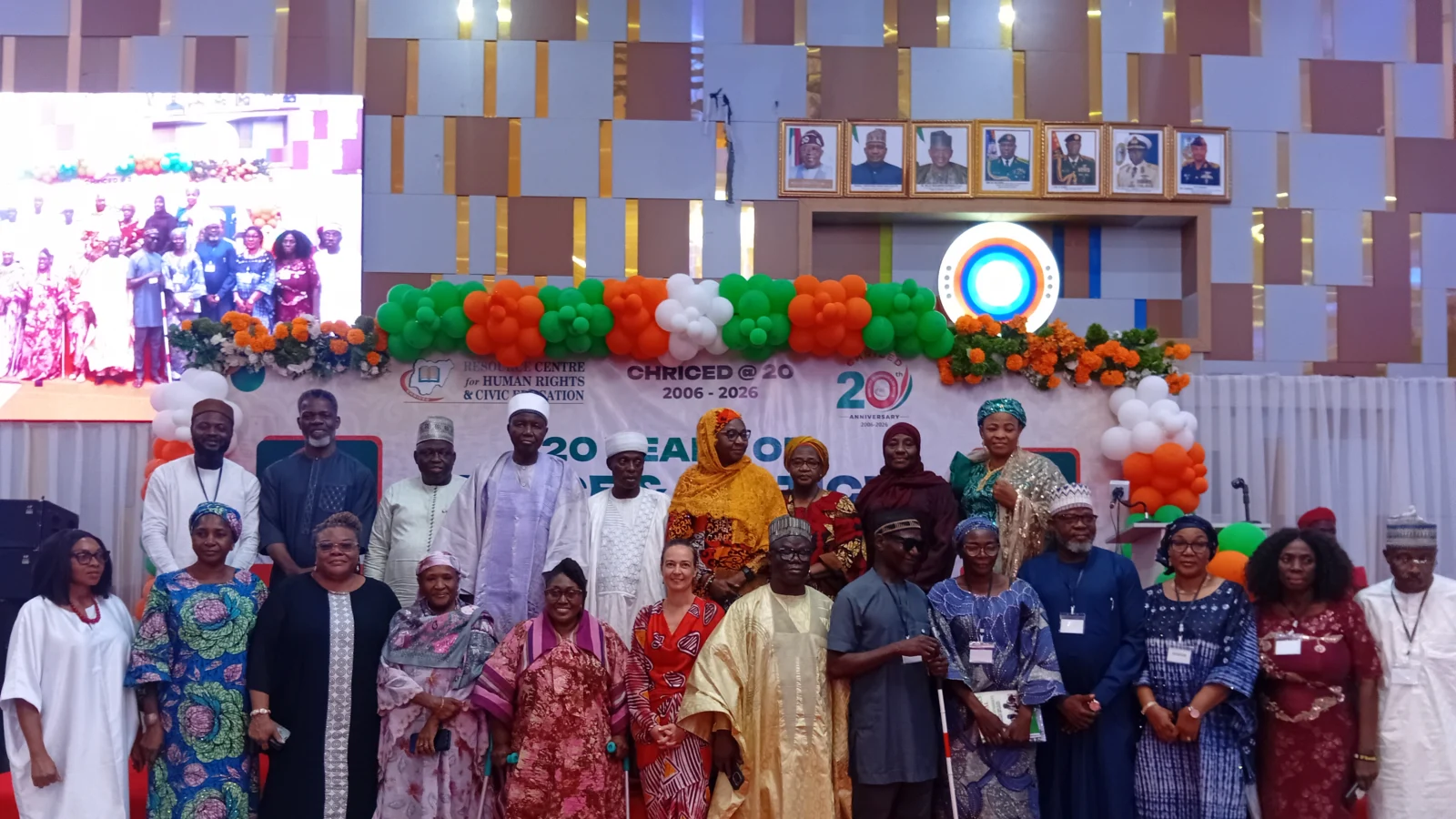
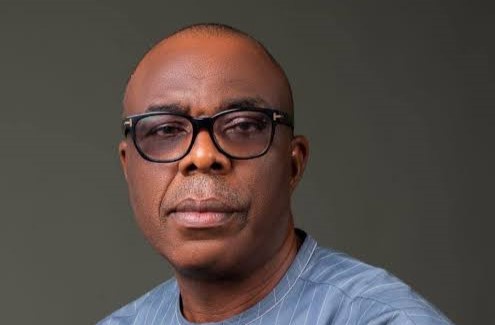
A former Resident Electoral Commissioner of the Independent National Electoral Commission, Sam Egwu, has urged Nigerians to take back their civic space. He warned that limits on civil rights and weak accountability could harm democratic growth.
Mr Egwu, who teaches political science, said Nigerians need to get involved in democracy. This means organizing, joining in public matters, questioning elected leaders, and asking for clarity on government actions.
He made these remarks on Monday at the 20th anniversary event of the Resource Centre for Human Rights and Civic Education in Abuja.
The lecture was titled Reclaiming Civic Space: The Rule of Law, Democratic Accountability, and the Future of Citizen Participation in Nigeria. It looked into how civic freedoms relate to the rule of law and democratic accountability.
Mr Egwu stated that having an open civic space is key to democracy. It allows citizens and civil groups to organize, share their views, and participate in public life without unnecessary limits.
He emphasized that the government must protect citizens’ rights to associate, assemble peacefully, and express themselves. He added that the government must also respect the rule of law.
“The civic space is very important to the construction of democracy. It is the foundation of any open and democratic society,” he said.
The ex-INEC official pointed out that accountability, the rule of law, and active citizenship are vital for a working democracy. He stressed that public institutions should be accountable for their actions.
Using the political culture theory from political scientists Gabriel Almond and Sidney Verba, Mr Egwu said Nigeria needs to develop a participatory political culture. This means citizens should know their rights and responsibilities and actively engage with the government.
He explained that this culture would help citizens gain political knowledge, adopt democratic values, and participate in elections to influence governance.
“The challenge that faces us as Nigerians today is to understand what citizenship truly means and to engage actively in politics and the democratic space,” he said.
Mr Egwu added that citizens should do more than just vote. They need to ask their representatives for explanations and ensure that government policies tackle the daily issues Nigerians face.
He criticized the federal government’s handling of public policy, saying some decisions showed a lack of accountability to the people.
He mentioned the unification of the exchange rate, the removal of the petrol subsidy, the new tax regime, and rising electricity tariffs. He believes these policies were carried out without enough accountability to the citizens.


Mr Egwu also raised concerns about laws that he said limit civil society organizations' ability to operate freely.
He specifically mentioned parts of the Companies and Allied Matters Act, saying it could hinder non-profit organizations’ freedom to operate.
He pointed out issues with the Economic and Financial Crimes Commission, especially its anti-money laundering measures, which he said could impact non-profit organizations.
On press freedom, Mr Egwu called the media an essential part of democratic accountability. He said journalists give citizens the information needed to question government actions and demand answers from officials.
He expressed worry about what he sees as increasing state repression of journalists and media organizations, along with limits on digital rights and freedom of expression.
He also mentioned the police response to the 2020 #EndSARS protests as an example of how the state can act against citizens exercising their rights.
Mr Egwu noted that insecurity, banditry, and insurgency have created an environment that could be used to justify limiting civil rights.
He argued that poverty and economic difficulties have weakened citizens’ ability to engage in public affairs and hold elected officials accountable.
He called for a review of laws that limit civic activities and for reforms to strengthen the judiciary and protect institutions that check executive power.
Mr Egwu said Nigeria should learn from its history of civil society activism, especially its fights against colonial and military rule. This can help rebuild a space where citizens can organize and defend their interests.
He urged the government to see civil society organizations as real representatives of the people and to let them operate freely without unnecessary interference.
Mr Egwu concluded that empowering citizens is necessary to prevent authoritarianism and protect democratic freedoms.

Drop your comment
No comments yet — be the first to drop the gist 👇