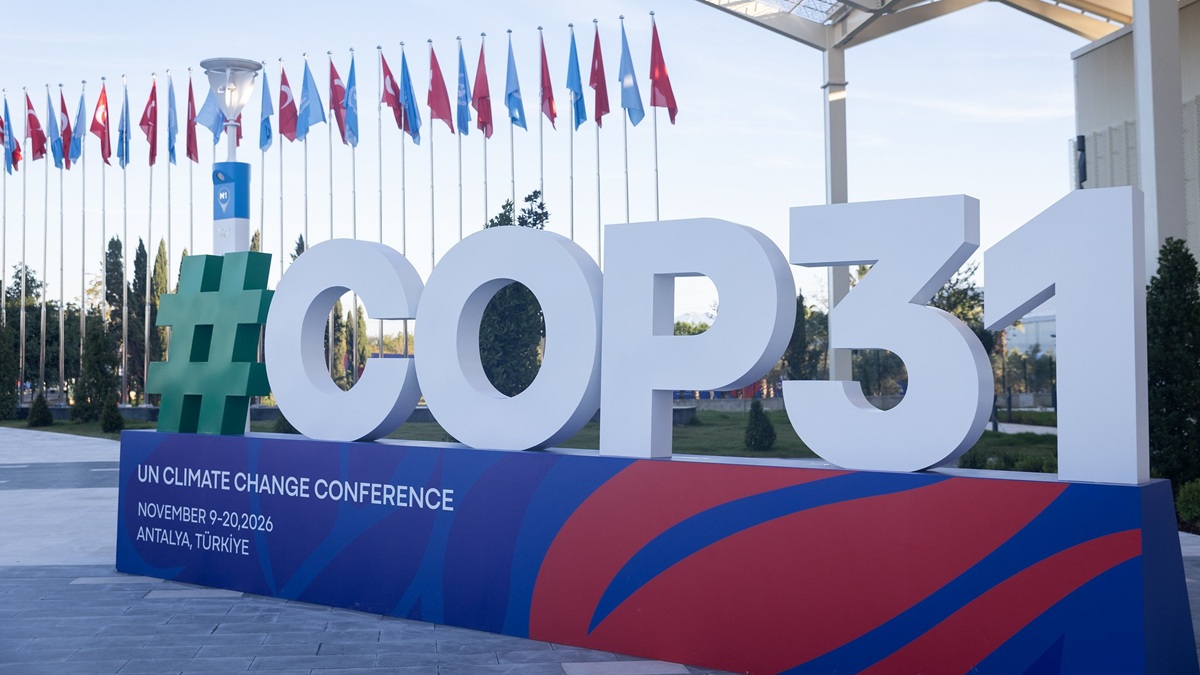
A new draft at the ongoing United Nations Climate Change Conference (COP31) in Türkiye wants to triple adaptation finance by 2035. It also aims to increase global electrification to 35 percent and speed up the implementation of the Paris Agreement.
The draft, released on Thursday, is an updated version of the cover text shared on Monday. It suggests decisions for Parties to adopt, acknowledging the growing impacts of climate change and the need for more financial support for developing countries, especially the most vulnerable ones.
A review of the document by PREMIUM TIMES shows that the new draft has cut down to nine pages and 80 paragraphs. This is shorter than the 18-page draft released on Monday, which had 144 paragraphs.
The earlier draft included some tough issues still being negotiated. Observers noted that many of its points might not make it into future drafts.
The latest text, published just two days before COP31 ends on November 9, suggests increasing electricity's share in global energy use to 35 percent by 2035. It also wants to triple global renewable energy capacity and double energy efficiency improvements by 2030.
The draft emphasizes the urgency of keeping global warming below 1.5 degrees Celsius compared to pre-industrial levels. It warns that going beyond this limit will increase climate-related risks and cause serious damage to human and natural systems.
It forecasts that global peak warming could go over 1.5°C but stresses that limiting warming to this level would make the impacts much less severe than if it reached 2°C.
The draft warns that every bit of extra warming will raise the chances of loss and damage, highlighting the need for quick and deep reductions in greenhouse gas emissions.
On climate finance, the draft points out the huge funding needed by developing countries to meet their climate goals. It estimates that required costs reported in their nationally determined contributions (NDCs) range from $5.1 trillion to $6.8 trillion through 2030. This is about $455 billion to $584 billion each year.
It also mentions that adaptation finance needs will be around $305 billion each year through 2035. The draft warns of a growing gap between available climate finance and what developing countries need.
The proposed text demands steady, predictable, grant-based finance to support adaptation, especially in least developed countries (LDCs) and small island developing states (SIDS). These countries face major challenges and climate threats.
It suggests creating an “Antalya-to-Addis Ababa Roadmap on Adaptation and Resilience Finance.” This roadmap will be developed under the leadership of COP31 and COP32. Its goal is to find reliable and increased funding sources for adaptation and managing loss and damage.
The roadmap is expected to look into new finance sources and ways to improve access. A report on its findings will be shared at the ninth Conference of the Parties to the Paris Agreement (CMA9) in 2027.
The draft also calls for talks on how to implement the plan to triple adaptation finance by 2035. It asks for more technical work to check progress and set possible baselines.
On energy, the proposed outcome acknowledges how electrification helps cut emissions, boosts energy security, improves efficiency, expands access, and supports economic growth. It wants to speed up the use of renewable energy, modernize electricity grids, and improve energy storage and system flexibility.
The goal of 35 percent global electrification by 2035 aligns with aims to triple renewable energy capacity and double annual energy efficiency improvements by 2030.
The draft also encourages faster cuts in methane and other non-carbon dioxide emissions. It notes that acting on these gases could delay warming and limit how much temperatures rise above 1.5°C.
It supports increasing carbon capture, utilization, and storage technologies, targeting at least 500 million tonnes of carbon dioxide each year by 2035. There is also an alternative target that seeks to reach between 1.3 billion and 2.5 billion tonnes annually.
The text highlights that carbon dioxide removal must not replace or delay the need for deep cuts in emissions. It should also respect the rights of Indigenous Peoples and local communities.
The draft mentions the growing climate impacts on oceans, biodiversity, livelihoods, mountains, glaciers, and human health, including both physical and mental health.
It proposes a Work Programme on Mountains and Climate Change under the Nairobi Work Programme. This programme aims to improve adaptation, disaster risk reduction, resilience, scientific observation, and early warning systems in mountain areas and glacier-dependent communities.
It also wants to enhance support for national adaptation plans, integrate climate resilience into development strategies, and strengthen local and ecosystem-based adaptation programs.
On disaster readiness, the draft sees multi-hazard early warning systems as one of the best tools for saving lives and reducing loss and damage. It supports the United Nations goal of universal coverage by 2027.
It urges countries to boost forecasting, climate risk monitoring, preparedness, anticipatory action, and adaptation planning.
The proposed text reaffirms the importance of working together and the principle of equity, considering different national situations. It recognizes the progress made under the Paris Agreement. Projections of global warming have dropped from over 4°C before the agreement to about 2.6°C if current national climate plans are fully implemented.
Still, it warns that the global carbon budget for the 1.5°C target is getting smaller quickly. Historical carbon dioxide emissions account for at least four-fifths of the remaining budget to have a 50 percent chance of achieving that target.
The draft praises 167 Parties that submitted new NDCs by November 18, 2026. It also welcomes 81 countries that provided long-term low-emission development strategies and 96 that submitted national adaptation plans.
It appreciates the progress made under the Paris Agreement’s enhanced transparency framework. This includes 140 first biennial transparency reports submitted, 112 technical expert reviews completed, and 80 countries going through facilitative multilateral review of their progress.
Countries that have not submitted their reports are urged to do so quickly. Countries are encouraged to submit their next biennial transparency reports by December 31, 2026.
The draft calls for stronger cooperation across climate, biodiversity, desertification, and other multilateral environmental agreements. It also recognizes the roles of Indigenous Peoples, local communities, civil society, workers, farmers, women, young people, and subnational authorities in pushing climate action forward.
It suggests continuing discussions on climate and trade, ocean-based climate action, international carbon markets, and ways to strengthen the UN climate process driven by Parties.
These proposed decisions are still up for negotiation and may change before COP31 ends.


Drop your comment
No comments yet — be the first to drop the gist 👇