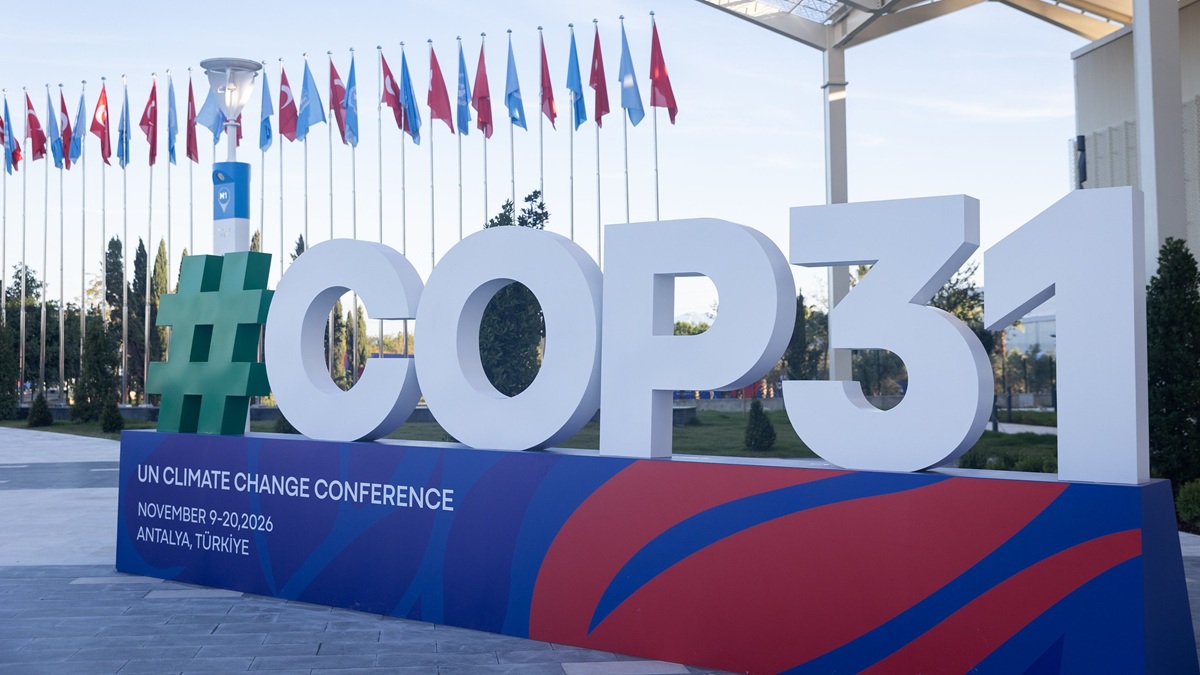
The COP31 Presidency wants to boost annual climate adaptation finance for developing countries to at least $120 billion by 2035. They also want faster action to stop using fossil fuels.
These proposals are in an 18-page draft cover decision released on 16 November. This comes as discussions hit the second week of the United Nations climate conference in Antalya, Türkiye.
The document lists plans for climate finance, energy change, health, workers’ rights, oceans, and gender equality. But it also points out that it lacks details on agriculture and food systems, which are key to adapting and managing climate change.
This draft is still a working document, meaning it is not yet an agreement among the countries involved. The details will be further negotiated before the conference ends on 20 November.
Adaptation finance
In paragraph 73, the Presidency proposes that the goal to triple adaptation finance by 2035 should reach at least $120 billion each year. They are asking developed nations to boost their financial support to developing countries and provide a clear plan on how to reach this target.
This proposal comes as many countries already face the impacts of climate change but lack funds. The United Nations Environment Programme (UNEP), in its 2026 Adaptation Gap Report released earlier this month, says developing countries will need about $305 billion each year by 2035 to meet their adaptation needs.
But the actual international public adaptation finance from developed to developing countries was only between $28.2 billion and $31.7 billion in 2024.
UNEP warned that even if the goal to triple adaptation finance by 2035 is met, it would only cover 20 to 29 percent of the needed funds.
The COP31 proposal also recognizes the challenges developing countries face in getting climate finance. These include high borrowing costs, limited government budgets, unmanageable debt, and complex funding processes.
It encourages more public, grant-based, and low-interest finance instead of loans that could worsen the debt issues in these countries. Another idea is to set up the Antalya-to-Addis Ababa Roadmap on Adaptation and Resilience Finance. This would find stable public funding sources for adaptation and loss and damage. The results are expected to be discussed at COP32 in 2027.
Loss and damage funding gap
The draft also points out the gap between the financial needs of countries suffering from climate-related losses and the funds available through the Fund for responding to Loss and Damage (FRLD).
Paragraph 84 states that requests made under the fund’s Barbados Implementation Modality total about $2.8 billion, while only about $342 million is available.
It also notes that just 50 percent of the pledged $822 million to the fund has been turned into actual contributions.
The Presidency is asking developed countries to make bold financial promises to the loss and damage fund and other climate funds by the end of 2027. This shows the difference between money promised by governments and what is actually available to affected countries and communities.
Fossil fuel transition
Besides climate finance, the document includes plans to speed up the move away from fossil fuels. This is a hot topic in global climate talks.
Paragraph 65 reaffirms the commitment made at COP28 in Dubai to shift away from fossil fuels in energy systems in a fair and orderly way. Paragraph 66 goes further, asking for quick action to phase out fossil fuels, including a fast end to their use in energy systems.
This proposed language is important because it moves from just talking about transitioning away from fossil fuels to clear actions to stop using them. The draft also wants to increase electricity’s share of total energy use to 35 percent by 2035. It aims to triple global renewable energy capacity and double the annual rate of energy efficiency improvements by 2030.
On methane emissions, it encourages better measurement and reporting, quick detection and repair, and stopping routine gas flaring and venting. But the document makes it clear these are global efforts and countries will contribute based on their own situations. They do not set specific targets for individual countries.
Workers and just transition
The Presidency also talks about the social and economic effects of shifting to low-emission economies.
Paragraphs 111 and 112 call for fair transition paths that enable developing countries to join technology value chains, build their industries, and create good jobs. The draft recognizes workers’ rights, decent work, and quality jobs as key to effective climate action. It also highlights the need to protect workers and their families from the impacts of changes in technology and industry.

But turning these ideas into real protections will need more than just acknowledging workers’ rights in a climate agreement. It will also rely on workers and trade unions having a say in decisions that affect their jobs, along with enough funding for skills training and economic diversity.
Agriculture and food systems
Even though agriculture and food systems are crucial to climate adaptation and livelihoods, they get little focus in the proposed decision.
The document does not include specific measures for adapting or managing food systems, nor does it mention actions on agricultural methane emissions. While it talks about food and nutrition insecurity in relation to climate health impacts and the role of forests in food security, these points do not create a full approach to resilient food production and supply systems. This is especially important for developing countries, where issues like changing rainfall patterns, rising temperatures, flooding, and drought threaten farming, food availability, and rural jobs.
For countries like Nigeria, where agriculture is a key source of jobs and income, paying more attention to climate-resilient agriculture and food systems is vital to dealing with the broader economic and social effects of climate change.
Health, oceans and vulnerable communities
The draft acknowledges that climate change is already impacting both physical and mental health, especially in vulnerable communities.
It points out risks like heat stress, malaria, dengue, cholera, maternal health issues, food and nutrition insecurity, and damage to health facilities during extreme weather. It calls for countries to include health issues in their national adaptation and climate plans while strengthening climate information and early warning systems to protect public health.
For mountain areas, paragraph 31 suggests a specific work program on climate change and a standing agenda item under the Conference of the Parties, plus a high-level dialogue at COP32.
The document also encourages countries to include sustainable ocean-based methods in their national climate commitments and adaptation plans, backed by reliable finance, technology, and capacity-building.
It also calls for meaningful participation from Indigenous Peoples, women, children, young people, people with disabilities, and local communities in climate action and decision-making.
Climate-related trade measures
The draft also tackles developing countries’ worries about one-sided climate-related trade measures.
Paragraph 115 shows concern that these measures could shift the economic burden of climate actions onto developing countries, affecting market access, competitiveness, investment, and industrial growth.
It suggests talks on common guiding principles for climate-related trade measures, covering transparency, non-discrimination, and interoperability. Paragraph 119 urges developed countries to stop one-sided climate-related trade restrictions and other measures that hurt international climate cooperation by the end of 2027.
These proposals reflect worries in developing countries that climate policies from wealthier nations should not create extra economic challenges for countries with fewer resources to move to low-emission industries.
Negotiations enter decisive phase
As countries move into the final stage of COP31, major disagreements still need to be settled.
COP31 President of Negotiations Chris Bowen mentioned that over 100 agenda items and about 60 important mandates are still under review. These include issues like climate finance, adaptation, mitigation, and fair transition.
COP31 President Murat Kurum said the upcoming week will be crucial for turning the progress made at the conference into real decisions.
“We will step up our ministerial-level talks and work hard to turn the issues countries are considering into common decisions,” Mr Kurum said.
Mr Bowen also recognized that some parts of the draft may not gain support from all countries involved. He described the document as an early basis for discussions before further negotiations.
As the conference nears its end on 20 November, countries will need to iron out their differences over climate finance, the future of fossil fuels, and support for vulnerable nations.

Drop your comment
No comments yet — be the first to drop the gist 👇