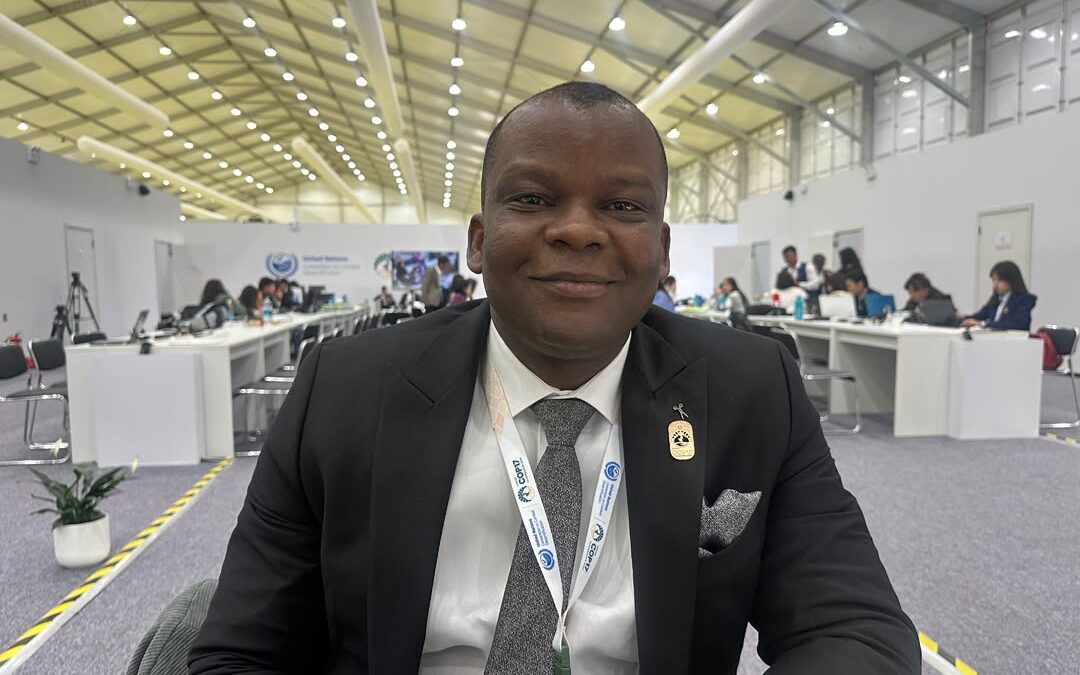
In an interview with PREMIUM TIMES during the 17th session of the United Nations Convention to Combat Desertification (UNCCD COP17) in Mongolia, Martins Achadu, a lawmaker from the Cross River State House of Assembly, shared his views. He is the Chairman of the House Committee on Education and Vice Chairman of the Committee on Environmental Matters. He noted that COP17 has revealed major weaknesses in Nigeria’s environmental policies.
Achadu emphasized the need for stronger laws and enforcement to restore damaged land and safeguard biodiversity. He pointed out that Cross River’s heavy rainfall makes the state prone to flooding, erosion, and landslides. This is why he and the Clerk of the State Assembly were chosen to seek international help at COP17 in Mongolia. According to him, Nigeria must improve state involvement in approving mining and agricultural projects.
Excerpt:
PT: How has your participation at COP17 been so far? Is this your first COP?
Achadu: Yes, this is my first COP, and I am very impressed by what I have seen here. I have participated in all the relevant sessions, especially those related to issues affecting my state.
I come from a rainforest area in Nigeria, where we experience heavy rainfall. This leads to flooding, erosion, and landslides. I have focused on sessions addressing these issues to gain better insights into solutions.
I have also attended sessions on financing. I had meetings and photo sessions with important people.
Overall, my time in Mongolia has been great. The people are warm and welcoming, and the city is tidy.
PT: What major lessons are you taking home from your participation?
Achadu: There are many gaps and challenges in our laws. I learned a lot from the experiences shared during the sessions, as many were from different countries. I focused on policy and found that their successes are based on solid policies. For example, in our mining system, the federal government gives licenses to companies to operate in communities. Communities have some authority through agreements.
But I found the Indian case study fascinating, and I asked questions during the session. In India, like Nigeria, land is mainly controlled by the government. However, states are involved in almost every part of the process for mining or agricultural activities.
When the central government sends an investor for mining or agriculture, the state checks the company. It assesses the company’s plans against its environmental policies. If the project does not align with the state’s policies, the state can reject it. I asked what happens if the central government has already approved a project. They told me the state can still say no, and the project stops there.
This is not the case in Nigeria.
Also, they monitor ongoing activities to ensure companies follow environmental rules. I requested copies of their laws, which I received and will review. I also made proposals for our own system. You cannot expect results from others if you do not have the policies that create those results. By applying similar policies, we can hope for better outcomes. I see a big breakthrough for Cross River and Nigeria from our experiences here.
PT: What led you and others from Cross River to attend COP17? We have not seen much of your state’s legislature at events like this before.
Achadu: Our motivation comes from our governor. Seeing him think outside the box inspires us to do extraordinary things.
When we faced flooding and landslides in Calabar, I felt it was the right time to attend COP. This year’s focus is on restoring life, land, and hope. This directly relates to Cross River’s issues of land loss, displacement, and investment loss. COP17 was the right place to be. I discussed it with the governor, and he agreed it was a good idea. I represented the legislature while the Clerk of the House joined as a technocrat.
We knew we were on a mission. For every session, we took notes because we have to report back to our boss. So, to answer you directly, we were motivated to come because we see how our governor is working. We decided to take action.
PT: Cross River has rich biodiversity. But during your travels, illegal logging is still evident. What lesson will you take home related to this?
Achadu: Let me clarify. It depends on the timing. Since this administration started, we have focused on following environmental policies. I cannot speak for past administrations or their logging activities. But under Governor Bassey Otu, we are committed to aligning with environmental policies to protect our environment.
PT: What is the situation of logging in Cross River?
Achadu: The state is working to restore the system and correct past mistakes. I commend the governor for his efforts. Recently, he employed many forest rangers to tackle illegal activities in our forests.
PT: Do you think attending COP17 is valuable for you and Cross River?
Achadu: I see COP as a learning opportunity. You cannot stay at home and expect to gain experiences you haven't sought. Being here for the first time, I feel we are late. If Cross River had consistently participated like this before, some issues we face might have been avoided.

COP shows you what others are doing. Your attendance offers solutions for your challenges. It gives hope and reveals the potential you might be overlooking. Attending COP is an exposure. For me, there should be no COP about biodiversity or land restoration that we should miss.
PT: Have you identified any specific mistakes Cross River has made from your participation?
Achadu: I cannot point to any direct mistakes, but I see ways we can improve.
PT: As a legislator, what will you do when you return?
Achadu: First, we need to review our environmental policies. Any outdated ones should be updated. Second, we must assess our biodiversity management policies. We will look at existing laws and determine how to improve them. But it is not just about having policies; we must enforce them. For instance, Cross River has gorillas that need more attention.
I will seek a policy that makes the state aware of our heritage. This should help us attract funding and preserve our heritage sites and species in Cross River so they do not go extinct. As legislators, our role is to create policies. My COP17 experience has been enlightening and has motivated me to learn more.
PT: Cross River also has elephant populations facing threats. Are there lessons from COP17 that can help address these issues?
Achadu: Yes. Biodiversity loss is a global challenge, so we must see how our region contributes to it. Cross River has a significant portion of the remaining rainforest in Africa, and we are aware of that. The elephants you mentioned are plentiful in Cross River forests. Recently, they have moved into human habitats.
PT: Doesn't that create the risk of conflict?
Achadu: That is where we need effective legislation and management. People must realize that preserving elephants can offer alternative livelihoods. Instead of hunting, we can guide them to other jobs. We also need to create policies. Killing an animal is as serious as killing a human being, especially endangered species. If people do not see the value in protecting them, they may kill them. If elephants damage crops, we need to provide support to affected communities instead of resorting to killing.
PT: You came here partly to attract investors for Cross River. How is that going?
Achadu: Before answering that, let me say what I will do when I get back. I will hold seminars with key stakeholders, including commissioners for environment, water resources, and agriculture. I need to share my experiences and guide them on global trends.
Regarding wooing investors, we met many potential partners. They often said that their investments must align with national goals. Investors typically do not just enter a region without considering national priorities.
We met the Minister of Environment, who was very welcoming. We shared our proposal with him, took pictures, and he promised to follow up. He mentioned the NEWMAP project, which covers parts of our state. I told him that while NEWMAP exists, the current erosion problems are bigger than before, and we need more intervention. He agreed, and we assured him that our governor would engage him to visit Calabar. We also met the World Bank Country Director and other stakeholders, and they were all positive.
Everyone who hears about Cross River sympathizes with us. But it all comes down to national interest. If the nation prioritizes it, it will receive attention. While here, we highlighted land loss and erosion and also met investors in agriculture and water sectors. It looks promising. We have their contacts, and when we return, we will begin formal discussions with them.
PT: The conversation at COP17 also includes drought management and funding for the environmental sector. Do you think this sector is getting enough funding in Nigeria and Cross River? What would you suggest?
Achadu: I may not be in the best position to comment on funding, but I encourage every system to prioritize the environment. For my state, I can say the governor is doing well, which motivates us. As for Nigeria, the minister’s presence here shows that the environment sector is being addressed. With proper funding and budget provisions, we can avoid overwhelming environmental challenges.
READ ALSO: COP17: Cross River woos investors, partners to tackle land degradation
PT: Finally, what is your message from Mongolia to Nigeria?
Achadu: My final message is filled with hope based on the discussions here. We should expect positive feedback soon.
Nigeria needs to take land issues seriously. Wealth comes from land, and health is tied to land.
I learned a lot at COP17, and I will do my best to share that knowledge back home.

Drop your comment
No comments yet — be the first to drop the gist 👇