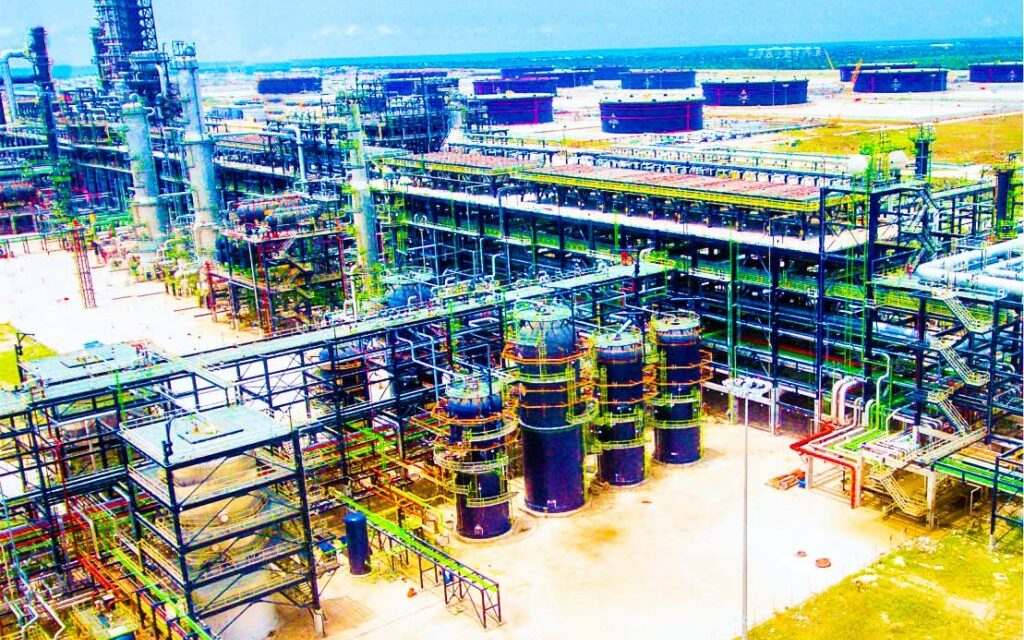
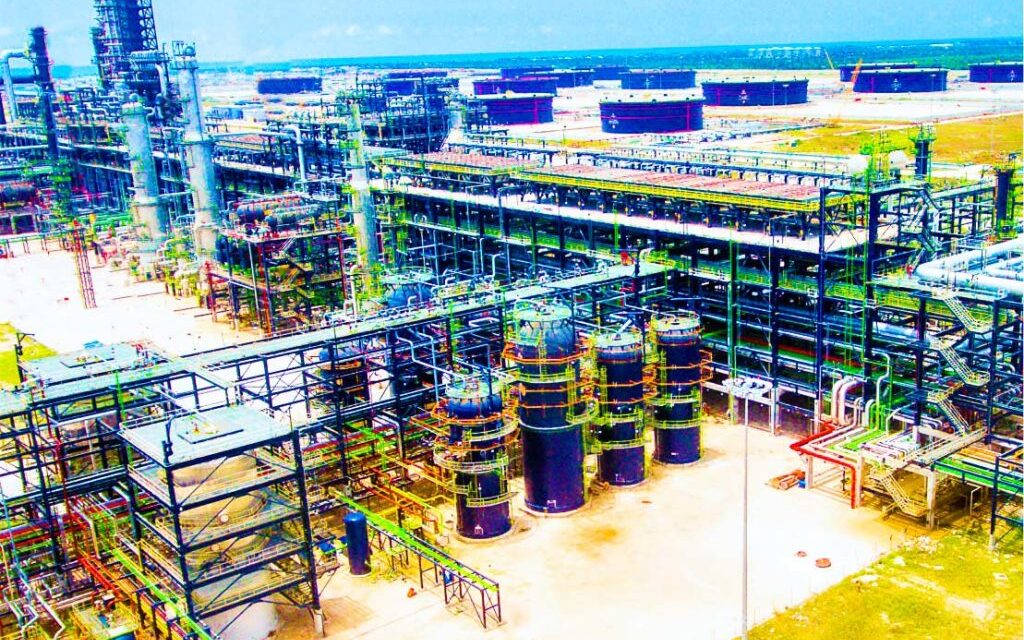
Dangote Petroleum Refinery and Petrochemicals has increased its crude oil processing to 700,000 barrels per day. This is more than its initial capacity of 650,000 barrels per day after a review by its process licensors.
This is a big step for the refinery, which is known as the largest single-train petroleum refining facility in the world.
In a statement shared with PREMIUM TIMES on Thursday, Anthony Chiejina, the Group Chief Branding and Communications Officer of Dangote Group, said this increase shows the refinery can process more feedstock while improving performance across its production units.
Devakumar Edwin, the Vice President of Oil and Gas at Dangote Industries Limited, said the refinery's output growth is part of a larger plan to increase capacity to 1.4 million barrels per day within the next 30 months.
Mr Edwin believes this planned expansion could make the facility one of the largest refining complexes in the world. It will also help Nigeria achieve energy self-sufficiency.
He said, "The refinery’s growth trajectory reflects a deliberate move toward continental and global refining dominance, not just domestic supply sufficiency."
The announcement of the 700,000 barrels capacity comes just days after the refinery's CEO mentioned that they plan to reach this production target by 2028.
On Tuesday, during the S&P Global Energy Middle East Petroleum and Gas Conference in London, David Bird, the refinery CEO, said they are operating at full capacity. He talked about a strategy for what he called “ruthless replication” to increase output.
He stated, "We will bring 700,000 barrels per day of fully complex refining capacity on stream by the end of 2028." He added that they have already bought long-lead equipment and are awarding construction contracts.
Bird also mentioned that they could eventually increase refining capacity to 2.1 million barrels per day, thanks to plans for another refinery in East Africa. This positions the company as a key player in global oil and refined product markets.
He said, "Nigeria has gone from fuel scarcity to absolute fuel abundance since the Dangote refinery came online."
Kpler data from last month showed that the Dangote Petroleum Refinery exported about 57 million barrels of jet fuel between April 2024 and April 2026.
The data indicated that exports rose from around 20,000 barrels per day in April 2024 to about 65,000 barrels per day by the end of that year, peaking at around 160,000 barrels per day during the review period.
These figures show the growing importance of refined petroleum exports in Nigeria’s energy sector, especially aviation fuel. This comes as the country aims to strengthen its refining capacity and cut down on imports.
The refinery, owned by Aliko Dangote, started producing fuel in 2024 and has since expanded its output to include petrol, diesel, aviation fuel, and other refined products.
The company noted that the facility now supplies both local and international markets. It exports refined products to several African countries and to Europe, including the UK, France, Spain, Italy, and the Netherlands.
Refined products from the facility have also reached markets in the United States, with jet fuel exports going to Saudi Arabia.
Dangote Industries said the refinery has helped stabilize regional fuel markets during supply issues tied to geopolitical tensions in the Middle East. More African nations are relying on the facility for energy security.
The refinery's growing output has strengthened its position in the global fuel markets.
The company pointed out that the facility became the world’s largest exporter of jet fuel in April, based on data from S&P Global Commodities.
Industry analysts suggest that the refinery's operations have already helped cut Nigeria’s dependence on imported oil. This has reduced pressure on foreign exchange and improved local fuel availability.
As production increases, the refinery has attracted more interest from international crude suppliers and traders. They are sourcing feedstock from both local and foreign producers to keep up with rising production.
Dangote Industries believes that the planned expansion to 1.4 million barrels per day by 2028 will bring broader economic benefits. This includes job creation, increased industrial activity, and better trade balances.
The refinery also aims to boost downstream industrialization by increasing the supply of liquefied petroleum gas (LPG), polypropylene, and other industrial materials used in manufacturing.
Plans also include making Linear Alkylbenzene (LAB), a key ingredient in detergent production, as part of efforts to grow Nigeria’s petrochemical value chain.



Drop your comment
No comments yet — be the first to drop the gist 👇