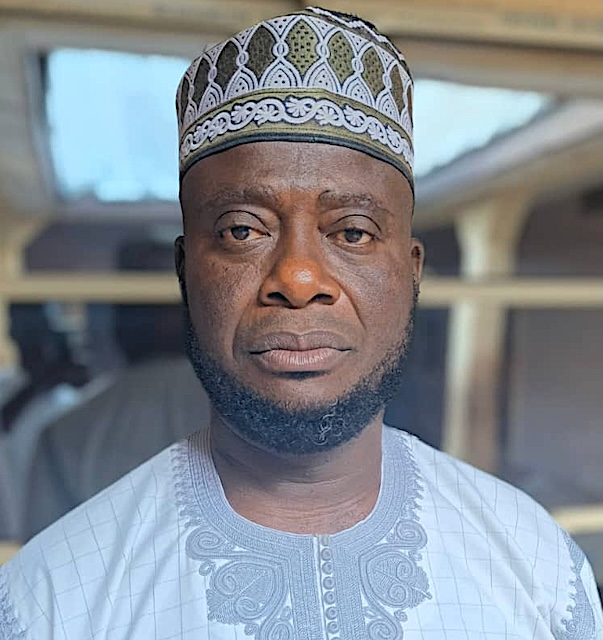

Tinubu performs Umrah in Saudi Arabia
In the Name of Allah, the Most Gracious, the Most Merciful.
All praise belongs to Allah, the Lord of all worlds. He knows what is in our hearts and hears every word we say. We send peace and blessings upon the Prophet Muhammad (Peace be upon him), who warned us about the dangers of the tongue and disrespecting sacred symbols.
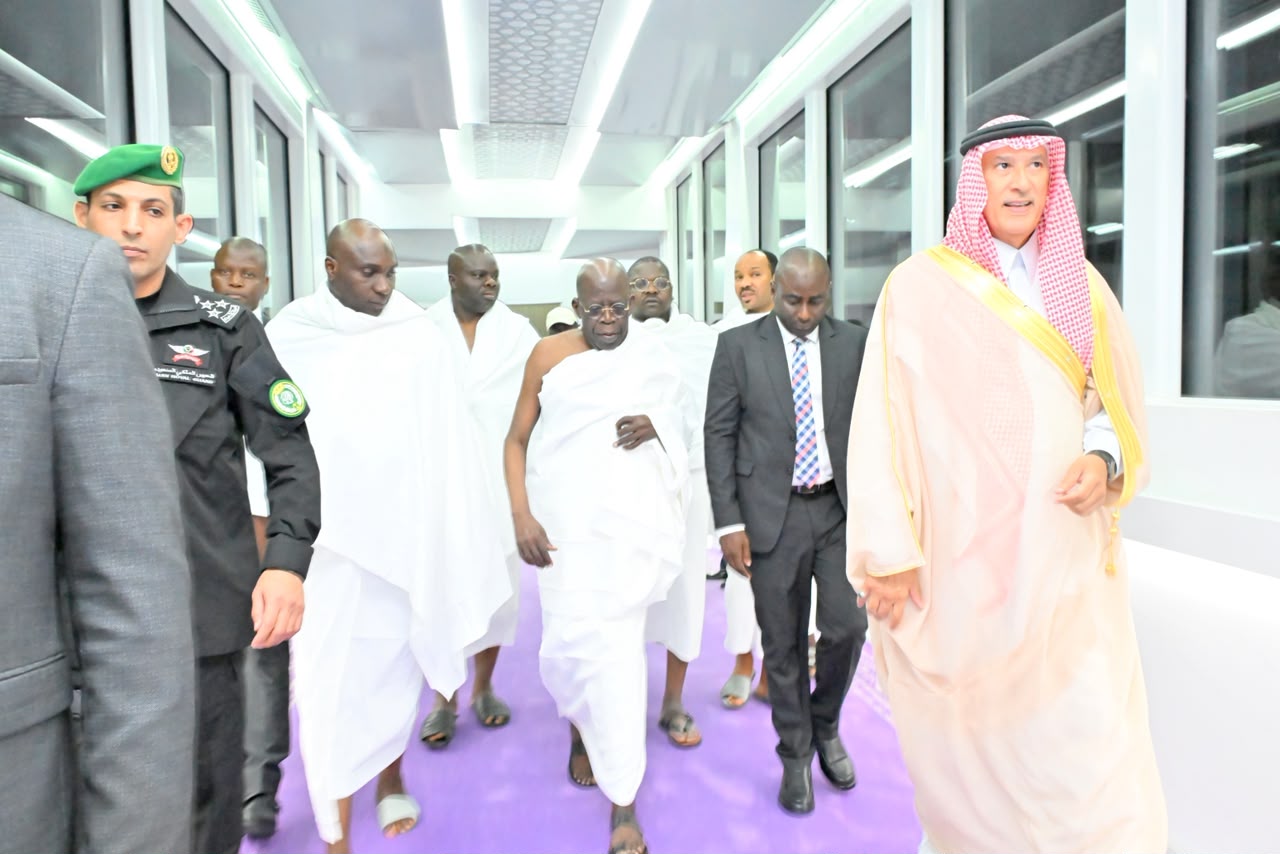
Dear brothers and sisters! President Bola Ahmed Tinubu performed the Ibadah of Umrah, the lesser Hajj, in Makkah, Saudi Arabia, in late October 2026.
During this trip, President Tinubu and his team had the special honour of praying inside the Noble Ka’abah. This privilege was granted by King Salman Bin Abdulaziz Al Saud and Crown Prince Mohammed Bin Salman.
The Nigerian delegation included chosen Muslim governors, led by Kwara State Governor AbdulRahman AbdulRazaq, National Security Advisor Nuhu Ribadu, businessman Abdul Samad Rabiu, as well as various ministers and officials.
While on this spiritual journey, President Tinubu prayed for lasting peace, unity, security, economic growth, and stability in Nigeria. He also encouraged Nigerians to see their diversity as a strength.
After completing the visit, President Tinubu left Saudi Arabia.
Dear servants of Allah! Understand that this world is temporary, and politics is a game played within it. Leaders come and go, and political loyalties change. Yet, some things must remain sacred for a Muslim believer: the sanctity of worship, the respect for Allah's rituals, and the danger of letting political hatred spoil our spiritual hearts.
A worrying trend has emerged, using the sacred for political gain, and mocking the spiritual journeys of individuals. We see many targeting the Umrah of leaders, including President Bola Ahmed Tinubu. This sermon is a serious reminder to those who let their political feelings blind them to spiritual truths: Be careful!
The first important fact is that Umrah is not a political event; it is a sacred response to a divine call. When anyone, regardless of their political position or your views on their leadership, puts on the white Ihram and says, “Labbaikallahummah Labbaik,” Here I am, O Allah, they are performing a fundamental act of Islam.
Allah says in the Noble Qur’an:
“That is so. And whoever honours the symbols of Allah, indeed, it is from the piety of hearts.” [Qur’an, 22:32]
On the other hand, treating these symbols lightly or using them for jokes can lead to spiritual disaster. When you mock a believer’s presence at the Ka’abah, are you mocking the person or the place? Are you criticizing policies or ridiculing someone standing before Allah?
The tongue is small, but its power can lead someone to ruin. Control your speech so it does not lead to arrogance.
Human nature often tempts us to judge others, especially those we do not like. In politics, it is easy to dismiss a leader’s pilgrimage as just “PR,” “photo-ops,” or “hypocrisy.”
Let us remember a lesson from the life of the Prophet Muhammad (Peace be upon him) and his companions. During a battle, Usamah Bin Zaid (may Allah be pleased with him) faced an enemy who had killed many Muslims. As Usamah raised his sword, the man yelled, “La ilaha illallah,” There is no god but Allah. Usamah, thinking the man was just trying to save himself, killed him anyway.
When the Prophet Muhammad (Peace be upon him) heard this, he was filled with grief and asked Usamah:
“Did you split open his heart to see whether he said it sincerely or not?” [Sahih Muslim]
If the Prophet (Peace be upon him) rebuked a close companion for doubting the sincerity of a dying enemy, what gives anyone the right to judge a pilgrim in Makkah? Remember, you do not control who is accepted by Allah; He does.
Political dissatisfaction is valid, and holding leaders accountable is both a civic and Islamic duty. Islam encourages speaking truth to power and demanding justice. But when political frustration turns into blind hatred, it clouds judgment and harms spiritual insight.
Allah warns believers:
“O you who have believed, be persistently standing firm for Allah, witnesses in justice, and do not let the hatred of a people prevent you from being just. Be just; that is nearer to righteousness.” [Qur’an, 5:8]
When you mock someone’s prayers or pilgrimage, you train your mind to see them as less than human. This is a trap of Satan. A person can be a flawed leader, implement harmful policies, or govern poorly, yet still possess a faith that brings them to tears at the Ka’abah.
Do not allow your political views to cloud your spiritual judgment. If a leader seeks guidance or forgiveness at Allah's House, a true believer should pray they find it, because a guided leader benefits everyone, while a broken leader leaves people vulnerable.
Think of this as a final lesson for the soul. The great scholars of Islam feared discussing the sins or spiritual states of others. They understood a frightening truth: What you mock in your brother, Allah may test you with before you die.
Imam Ibn al-Qayyim noted that criticizing others for their spiritual weaknesses or mocking their connection with Allah shows self-righteousness. When you look at a leader’s Umrah and sneer, you are saying, “My worship is genuine, but his is fake.” This arrogance can ruin your own good deeds.
Imagine standing before Allah on Judgment Day, expecting to see your prayers, charity, and fasting. Instead, you find nothing because your good deeds were given to the politician you mocked. You traded your eternal rewards for a few likes or laughs in a political chat group. What a sad loss!
Respected brothers and sisters! Let us draw a clear line between political critique and disrespecting worship.
● Critique policies? Yes.
● Demand accountability? Yes.
● Express frustration over governance? Yes.
● Mock sacred acts of worship, judge intentions, or ridicule someone at Allah's House? Never.
Keep your words away from the sacred boundaries of worship. Protect your own spiritual balance. If you see a leader at the Ka’abah, let your heart remind you:
“Ya Allah, if he seeks Your guidance, lead him to justice for the sake of the millions he leads. And if he is lacking, change his heart, for the change of the leader is the change of the community.”
Fellow Nigerians! Recently, we have seen a troubling trend, political rivalry has invaded our faith. People are using mockery and ridicule regarding the worship of others. Specifically, turning the sacred Umrah journey of leaders, including President Bola Ahmed Tinubu, into a joke for political gain is a serious issue that needs urgent attention.
Politics is about governance, debate, and critique. Critique policies as you like. Demand accountability as you must. But when you cross the line from criticism to mocking a believer before Allah in Makkah, you are not just playing politics. You are risking your own hereafter!
Allah warns us in the Qur’an about those who mock signs of faith. He says:
“If you ask them, they will surely say, ‘We were only conversing and playing.’ Say, ‘Is it Allah and His verses and His Messenger that you were mocking?’ Make no excuse; you have disbelieved after your belief.” [Qur’an, 9:65-66]
The Prophet Muhammad (Peace be upon him) taught us that a person’s heart is known only to Allah. When a believer wears the Ihram, declares “Labbaikallahummah Labbaik,” and walks around the Ka’abah, they respond to the call of Prophet Ibrahim (AS). To turn this deep spiritual submission into a joke, meme, or political weapon shows a serious lack of respect.
Remember the Prophet Muhammad (Peace be upon him) said:
“A Muslim is the brother of a Muslim. He does not wrong him, he does not fail him, and he does not humiliate him. Piety is here”, and he pointed to his chest three times, ”It is enough evil for a man to humiliate his Muslim brother.” [Sahih Muslim]
Think about the spiritual cost of your words. When you make fun of someone’s worship, you create arrogance in your own heart. You convince yourself that your political beliefs make you better spiritually, or that your dislike for a leader gives you the right to judge their relationship with Allah. This arrogance led to the downfall of Satan.
Let the history of our righteous predecessors inspire us. They feared speaking ill of others’ worship. They knew that a leader’s accountability is with Allah, and a servant's devotion is private. If you think a leader is failing, the Prophetic way is to pray for their guidance, not to ridicule their prayers.
Dear believers! This is a strong call to cleanse your hearts. In today’s digital age, we often speak without thinking of the weight of our words for our afterlife.
Imagine standing before Allah on Judgment Day, when all deeds are revealed, and finding that your good deeds have been given to the leader you mocked, because your words and actions could not refrain from making fun of their pilgrimage. Is a temporary political win worth your eternal loss?
Return to Allah in true repentance. Remove political hate from your faith. Let’s critique with respect, hold accountable with fairness, but protect the sacred boundaries of Islam with deep respect.
Dear brothers and sisters! The Ka’abah is the core of the human spirit, a reflection of the divine, and the center around which a Muslim's life revolves. It is not just a building; it is the physical symbol of the oneness of Allah and the ultimate focus of our devotion.
When you stand before the Ka’abah, you are at the meeting point of heaven and earth. Islamic scholars remind us that the Ka’abah is directly beneath the Baitul-Ma’mur, where angels worship daily. When you perform Tawaf, you join in the cosmic worship that has always been.
Every day, over two billion people turn toward this point on Earth. This is not just a ritual; it is a source of mental and emotional strength. No matter how chaotic your day has been, turning toward the Qiblah brings order. It connects you with millions of Muslims across the globe. The Ka’abah is our ultimate symbol of unity, reminding us that despite our differences, we share one faith and one goal.
While the Ka’abah is sacred, the Prophet Muhammad (Peace be upon him) reminded us that:
“How great you are and how great is your sanctity! Yet, the sanctity of a Muslim believer is even greater in the sight of Allah than you.” [Sunan Ibn Majah]
This is a key Islamic lesson: The Ka’abah directs our hearts to Allah, but the heart is where faith resides. To disrespect or harm another believer is a greater sin than damaging the Ka’abah itself. We must respect Allah's House, but we must also respect His servants.
Stop living a scattered life. If you feel lost, it may be because you have placed your desires or worries at the center of your life.
Recenter your spiritual compass. Let your daily prayers be your journey around Allah's commands. Direct your heart, thoughts, and ambitions toward Allah, the King of Kings. Just as the Ka’abah stands firm amidst the crowd, may your faith remain steady amidst life's challenges.
Dear servants of Allah! Remember, Umrah is not a holiday. It is a spiritual journey. It is a divine call from Allah to those He chooses to forgive.
When you intend to perform Umrah, you enter the state of Ihram. You remove status, wealth, and pride. You wear two simple white garments, stepping out of worldly life and into a rehearsal for your resurrection. You stand equal among millions, declaring with your body and spirit that you own nothing, and that Allah owns everything.
Umrah represents a complete spiritual renewal. The Prophet Muhammad (Peace be upon him) taught us that:
“Alternate between Hajj and Umrah, for they remove poverty and sins just as the bellows remove impurities from iron, gold, and silver.”
He also said:
“An Umrah to another Umrah is an expiation for whatever sins occur between them.”
Umrah is a powerful tool against despair. When the world weighs you down, and your sins feel overwhelming, Umrah is the reset you need. It is where tears do not show weakness but wash away the past.
Think of the Tawaf. You walk around the Ka’abah, the center of your existence. Seven times you circle, aligning your heart with Islamic monotheism. Every step is a heartbeat. Every circle shows that Allah is the center of your life, your thoughts, your family, and your destiny.
Think of the Sa’yi. You run between Safa and Marwa, recalling Hajar's trust in Allah. It shows reliance on Allah. You run through your struggles, knowing that when the world fails you, Allah will provide.
You arrive burdened. You leave unburdened. You arrive trapped by desires. You leave free. When you shave or cut your hair after the rites, you shed the old you. You leave the Haram as a new person, filled with mercy and peace, and a strong connection to Allah.
Do not ignore this call. If you can afford it and are able, respond to your Lord's invitation. Let your tears flow on sacred ground. Let your voice rise with the Talbiyah: “Labbaikallahummah Labbaik, Here I am, O Allah, here I am!”
Finally, know that mocking Allah’s religion is not a small matter; it is a serious spiritual danger that can erase faith. In a time when sacred acts like Umrah become jokes, believers must face a harsh truth: treating Islam lightly is a sure way out of its fold.
Allah has set clear boundaries. The verses of Allah, His names, the character of His Messenger (Peace be upon him), and the pillars of Islam are foundational to our lives. When these are mocked, it shows a deeper problem, the loss of respect for Allah in our hearts.
This sin was shown during the Campaign of Tabuk. A group remarked about the reciters of the Qur’an, saying:
“We have not seen anyone like them, they eat a lot, have dishonest tongues, and are cowardly.”
A companion, recognizing the danger in these words, called them out as hypocrites. The men rushed to the Prophet Muhammad (Peace be upon him), pleading:
“O Messenger of Allah, we were just joking to pass the time!”
The divine response was immediate and severe. Allah says:
“And if you ask them, they will surely say, ‘We were only conversing and playing.’ Say, ‘Is it Allah and His verses and His Messenger that you were mocking?’ Make no excuse; you have disbelieved after your belief.” [Qur’an, 9:65, 66]
Notice the reality: they did not intend to fight against Islam; they just wanted to joke. But Allah did not accept their excuse. Treating entertainment as more important than Allah removes one’s faith.
The Prophet Muhammad (Peace be upon him) warned of this exact desensitization. He said:
“A servant may say a word casually, not realizing its weight, and because of it, he falls into Hell.” [Al-Bukhari]
To protect your soul from this decay, you must set three boundaries:
1. Guard Your Words
Treat the Sunnah, Umrah, Ka’abah, Hijab, Beard, Prayer, and scholars with utmost respect. If a joke threatens these, it is harmful.
2. Walk Away
If you are in a conversation, online or offline, where Islam is mocked, leave. Staying silent means you agree. Allah says:
“…do not sit with them until they enter into another conversation. Indeed, you would then be like them.” [Qur’an, 4:140]
3. Renew Your Respect
Always learn about Allah's greatness. The more you know Him, the less likely you will make jokes at His expense.
● The Bottom Line
Do not trade your honor as a servant of Allah for a cheap laugh. Protect your respect, guard your tongue, and cherish the sacred.
May Allah open the doors of His Sacred House to every yearning heart, cleanse us of our faults, and accept our worship.
Ya Allah! Guide our leaders and followers. Cleanse our hearts of hypocrisy, arrogance, and malice. Help us speak only what pleases You. Protect us from mocking Your signs and worship.
May Allah cleanse our hearts, guard our tongues, and help us balance our worldly and eternal duties. Ameen.
All praise is due to Allah, Lord of the worlds. May peace, blessings, and salutations be upon our noble Messenger, Muhammad, and upon his family, companions, and true followers.
Drop your comment
No comments yet — be the first to drop the gist 👇