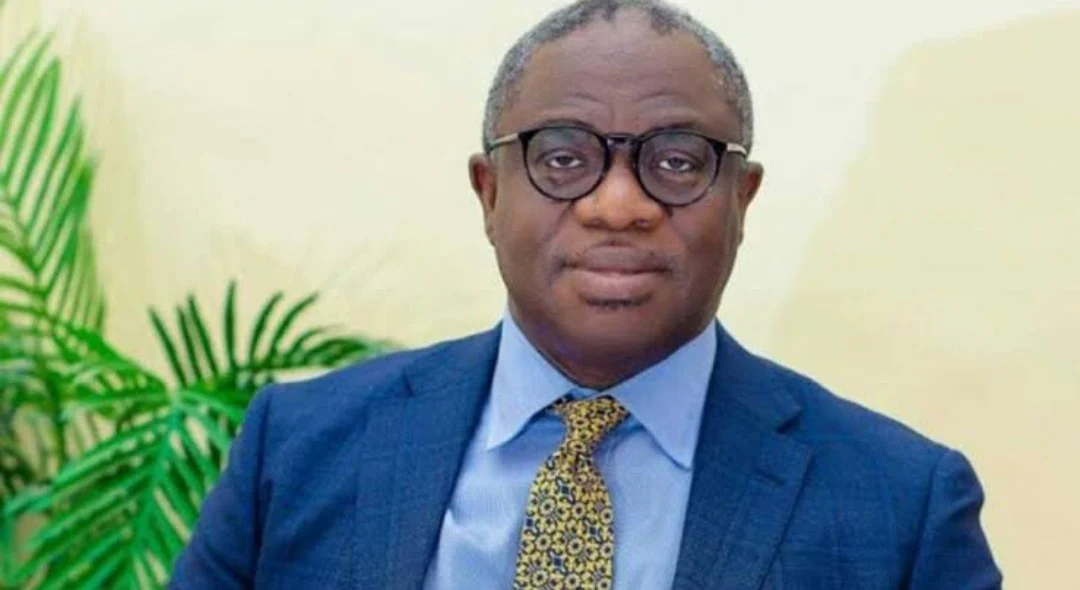
The Peoples Democratic Party candidate for the June 20 governorship election in Ekiti State, Dr Wole Oluyede, has shared why he withdrew his petition against the election results. He said his choice was based on statesmanship and the wider national interest.
Oluyede also voiced his support for President Bola Tinubu's re-election in 2027. He urged political leaders not to overlook the need for grassroots mobilization ahead of the presidential election.
He mentioned that the June 20 governorship election brought crucial lessons for political strategists. He believes it should guide those preparing for the 2027 general elections.
Oluyede described the election as one that “was not merely about who won or lost, but exposed changing dynamics in voter participation, grassroots mobilisation, political loyalty and the danger of taking the electorate for granted.”
Election Results
He shared this information in a statement titled, “Ekiti 2026: The Election That Should Keep 2027 Political Strategists Awake,” which he released in Ado Ekiti on Sunday.
In that election, the Independent National Electoral Commission announced that Governor Biodun Oyebanji of the All Progressives Congress won with 319,224 votes. Oluyede came in second with 40,543 votes.
Oluyede praised PDP members for their loyalty despite the party's struggles in the state.
“We remain alive and formidable together. Under my leadership, the PDP will play a very prominent role in the 2027 election and cannot be taken for granted,” he stated.
Reason for Tribunal Case
Explaining why he initially went to the Election Petition Tribunal, Oluyede said it was to find the truth, review the election process, and protect his integrity.
“I approached the tribunal seeking the truth, examining the election and clearing my name. I believe the conduct and results of the June 20, 2026 election deserved to be thoroughly examined. Following the election, we subjected the results and available electoral documents to forensic review and identified issues that, in our assessment, required further scrutiny,” he explained.
He later withdrew the petition after careful thought and discussions.
“My withdrawal should not erase the lessons of the election. The results and the conduct of the election must be studied carefully as we prepare for 2027. We must learn from what happened, address the weaknesses exposed by the election and build a stronger, more credible electoral and grassroots mobilisation process.
“My decision to withdraw the petition followed extensive consultations and personal reflection. I also considered the broader national interest. I had to ask myself whether prolonged litigation over the governorship election would ultimately serve the greater political and national objectives that I have supported for many years. After careful consideration, I chose statesmanship.”
Integrity Clarified
He emphasized, “Let me state this categorically: I did not collect a kobo from President Bola Tinubu, Governor Biodun Oyebanji, the APC or anybody else in exchange for withdrawing my case. I did not sell my mandate. My integrity is not for sale.”
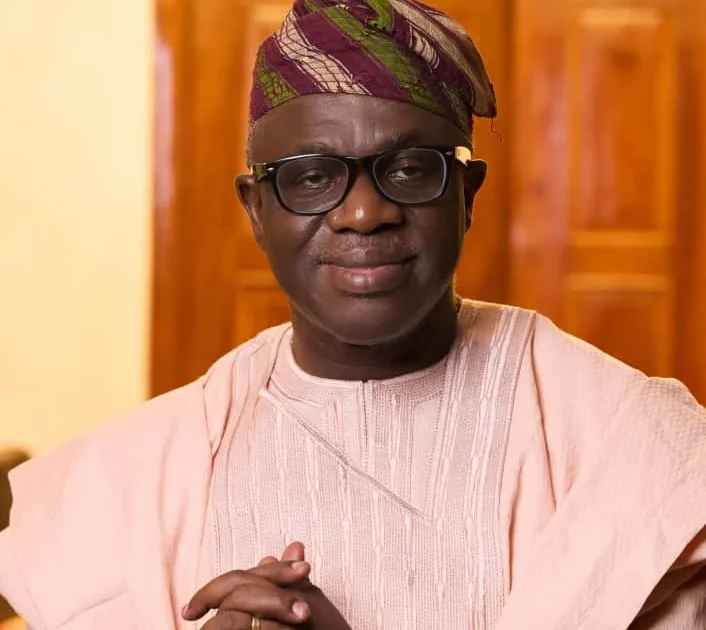
Oluyede rejected claims that he received money after a meeting with Oyebanji and Senate Leader, Senator Opeyemi Bamidele, after the election.
“I received them as brothers, and our meeting was cordial. To the best of my recollection, our discussion had nothing to do with the conduct or the outcome of the election. Rather, we discussed our past relationship and the need for all of us, irrespective of our political differences, to work together in the interest of Ekiti State,” he said.
He was surprised that people thought the meeting was about money.
“Within minutes of the governor’s visit, I started receiving telephone calls and visits from political leaders and members of the electorate demanding their share of a purported financial settlement from the governor. That is completely untrue.”
Political Culture Concerns
He added that it was unfortunate that some people twisted the meeting into a financial issue.
“One of the problems with our political culture in Ekiti is the tendency to reduce every political interaction to money. Politics should be about service, ideas and the future of our people, not a game in which every relationship is interpreted through the lens of money and every act of goodwill is turned into an opportunity for blackmail or character assassination. Ekiti deserves better than that,” he noted.
Oluyede also mentioned that he raised concerns about some of his supporters who were arrested during the election. He said Oyebanji later intervened.
“We discussed the need for us to explore ways of working together to make Ekiti better and move the state forward. That, to me, was the essence of the visit and our conversation,” he said.
He pointed out that issues like low voter turnout, problems with the Bimodal Voter Accreditation System, and voter intimidation should be carefully looked at to improve Nigeria's electoral process.
Oluyede urged political players to start preparing for the 2027 elections now.
“We must study the 2026 Ekiti results carefully. We must understand the voting patterns, voter turnout and the factors that influenced the outcome. The work for 2027 must begin with genuine grassroots mobilisation, meaningful engagement with voters and a clear understanding of the issues that matter to the people,” he stated.
The PDP candidate, who is a supporter of the South-West Agenda for Asiwaju, reiterated his backing for Tinubu’s re-election.
But he warned that assuming the governorship election results would mean victory in the 2027 presidential election would be a mistake.
“Anyone working for Tinubu’s re-election must understand that the 2027 presidential election will be national, with wider participation, stronger competition and greater political stakes. Every state, local government and community will matter.”
He stressed that the APC should not rely on assumptions. The governorship election is not the only guide for 2027. Many voters who did not vote in 2026 will participate in the presidential election, and opposition parties will mobilize strongly.
“The real question is not whether APC members alone can deliver victory. The real question is whether the President’s structure can reach APC members, undecided voters, young people, women, professionals, farmers, artisans, civil servants and others who may not normally vote APC but are open to persuasion. That is where the battle will be won,” he said.
Oluyede added that the PDP under his leadership should be included in efforts to support Tinubu’s re-election.
“If we want President Tinubu to win overwhelmingly in Ekiti, we must begin serious mobilisation now. We must engage the grassroots, explain the Renewed Hope Agenda, listen to the people and build trust beyond party membership.”
He reminded everyone that each election is a fresh contest.
“Every vote must be earned afresh. Do not assume past results will repeat themselves. Do not wait until the last minute before mobilising. The work must begin now.”
He concluded, “The 2027 presidential election is a different contest entirely. The electorate is broader. The competition will be stronger. The stakes are higher. For those who truly believe in President Tinubu and the Renewed Hope Agenda, this is the time to take 2027 seriously.”
Drop your comment
No comments yet — be the first to drop the gist 👇