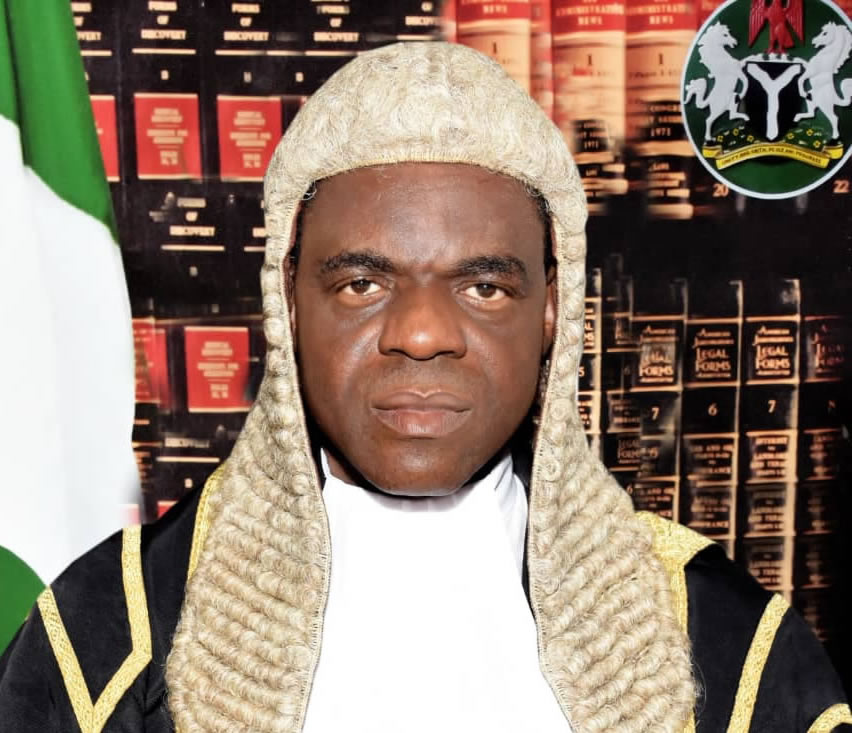
The Chief Judge of the Federal High Court, John Tsoho, has released new rules for handling pre-election cases. These rules include tighter deadlines for filing and hearing cases. Court registries all over Nigeria must also stay open on weekends and public holidays to accept pre-election filings.
The new Federal High Court (Pre-Election) Practice Directions were seen by PREMIUM TIMES on Wednesday. Mr Tsoho signed these rules on June 26, and they took effect on June 29.
Mr Tsoho canceled the previous Federal High Court (Pre-Election) Practice Directions from 2022. He issued the new rules based on Sections 254 and 285 of the 1999 Constitution (as amended) and Sections 29(5) and 88(2) of the Electoral Act, 2026.
One important part of the new guidelines is that all Federal High Court registries in the country must remain open on Saturdays, Sundays, and public holidays from 10 a.m. to 2 p.m. for filing pre-election matters.
"In cognizance of Pre-Election cases being time-sensitive in nature, the Registry of this Honourable Court in all the Judicial Divisions in the Federation shall be open on Saturdays, Sundays and Public Holidays, between the hours of 10 AM and 2 PM exclusively for the filing of Pre-Election matters," the Practice Directions stated.
This move shows the court's commitment to making sure that the timelines for resolving pre-election disputes are not delayed by filing issues.
The new Practice Directions also require that all pre-election cases start with an originating summons. This type of suit uses affidavit evidence rather than calling witnesses to testify in court.
Originating summonses are usually used when the facts are mostly agreed upon, and the court only needs to decide if the rules and laws were followed.
"Every pre-election matter shall be commenced by an Originating Summons," Mr Tsoho emphasized.
But if a case involves claims of fraud, forgery, or other serious issues, the parties must provide detailed information about those claims. In such cases, the court may hear oral evidence from witnesses or look at documents to sort out the disputed points.
Applicants must file an affidavit with the originating summons. This affidavit should include the facts they depend on, copies of all exhibits, a written address, and a note confirming that no similar case has been filed on the same issue.
Respondents have seven days to respond after being served. They must file their counter-affidavit and written address within 10 days. If needed, an applicant can reply within three days after receiving the respondent's documents.
To make advocacy clearer, the Practice Directions state that written addresses must be typed in double spacing, use a 12-point font, and not go beyond 15 pages.
The guidelines also tell courts to pay close attention to relevant parts of the Electoral Act, 2026, and the Constitution when settling pre-election disputes.
They require anyone challenging the outcome of a party primary to include all necessary parties in the suit.
"A party challenging the conduct or outcome of a Primary Election shall join as Respondents in the Suit, all the relevant parties to enable the court to effectively determine the dispute," the Practice Directions stated.
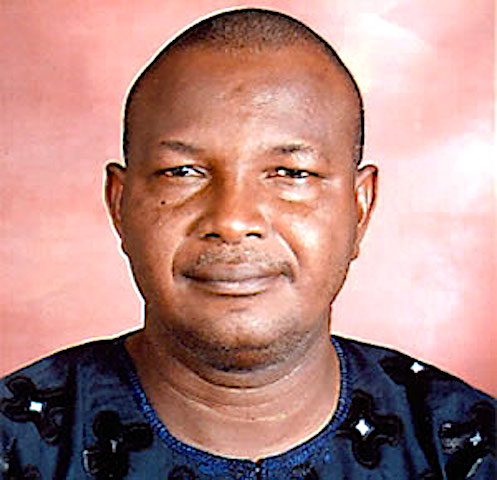


The Chief Judge still has the power to assign judges to handle pre-election matters in any judicial division. He can also transfer cases between divisions if needed.
Now, courts must set hearing dates within seven days after parties finish exchanging documents. They will give priority to pre-election matters until a judgment is made.
The practice directions also encourage more use of technology in managing pre-election cases.
Judges can hold virtual proceedings when suitable. Courts can notify lawyers about urgent hearings through email and other electronic means, as long as they send the notice at least 48 hours before the hearing.
To support electronic communication, parties and their lawyers must provide working phone numbers and email addresses to court registrars.
The new rules aim to reduce delays by limiting adjournments. No party can have more than two adjournments, and requests for adjournment will not be accepted on hearing days.
If a party changes their lawyer during the proceedings, they can only get two adjournments for that reason.
If a lawyer cannot attend court due to illness or other unavoidable reasons, another lawyer familiar with the case should appear. Alternatively, an application can be made for the matter to proceed virtually, if possible and agreed upon by the parties.
The practice directions also confirm that preliminary objections and other applications related to the court's jurisdiction will normally be settled along with the main case, except if it concerns serving originating processes.
Proceedings that started before the new Practice Directions will continue on as usual. However, courts may give suitable directions to ensure they follow the new rules.
The Federal High Court often updates its practice directions for pre-election cases every election cycle. Before the 2023 general elections, Mr Tsoho released the Federal High Court (Pre-Election) Practice Directions, 2022, which sped up procedures for cases from party primaries and candidate nominations.
The 2026 Practice Directions replace the 2022 rules and align the court's procedures with the Electoral Act, 2026, which was passed ahead of the 2027 general elections.
The Electoral Act brought changes like mandatory digital membership lists for political parties, ending indirect primaries in favor of direct primaries or consensus, recognizing the Bimodal Voter Accreditation System (BVAS), and setting new limits on campaign spending for candidates.
Some of the Act's parts, especially those about court involvement in party matters, have sparked debate among lawyers. Some believe their constitutionality may be challenged in court.




Drop your comment
No comments yet — be the first to drop the gist 👇