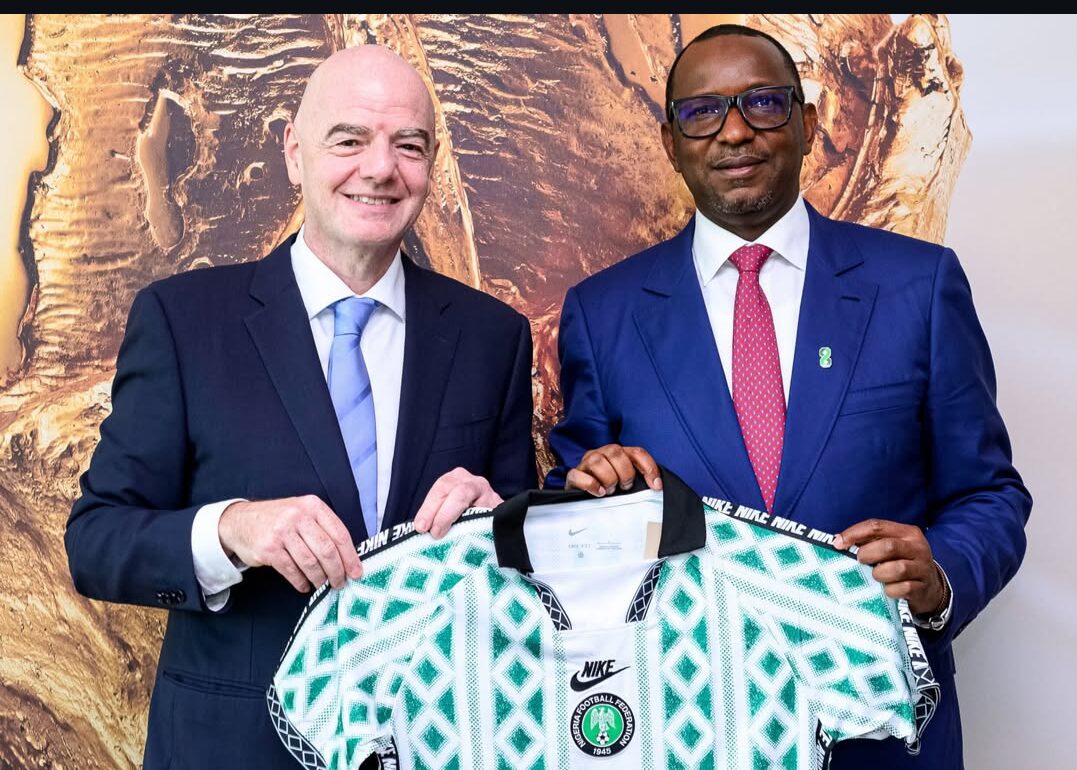
FIFA President Gianni Infantino says FIFA is working with Nigerian officials to improve the country’s football structures. This aims to create more chances for young players in Nigeria.
Infantino made this known on Tuesday after meeting with a Nigerian team led by Shehu Dikko, the National Sports Commission (NSC) Chairman, at FIFA House in Zurich, Switzerland. This meeting happened just days after several leaders of the Nigeria Football Federation (NFF) resigned. This includes President Ibrahim Gusau and General Secretary Mohammed Sanusi.
Mr Infantino explained that they talked about the problems facing Nigerian football, including governance and development. He also mentioned FIFA’s ongoing partnership with Nigeria.
“I was pleased to sit down with a delegation from 🇳🇬 Nigeria, led by National Sports Commission (NSC) Chairman Shehu Dikko, at the Home of FIFA in 🇨🇭 Zürich to hold important discussions and align on our vision for football in the country,” Infantino shared on social media.
“We had a detailed talk on institutional, governance and developmental topics, as well as our ongoing collaborations.” He added that they looked at ways to improve Nigeria’s football structures and create more pathways for young players.
“While stressing the need to create stronger structures and pathways to provide even more opportunities for the youth, we explored areas where FIFA can further support the growth of our beautiful game in this football-passionate country,” the FIFA president said.
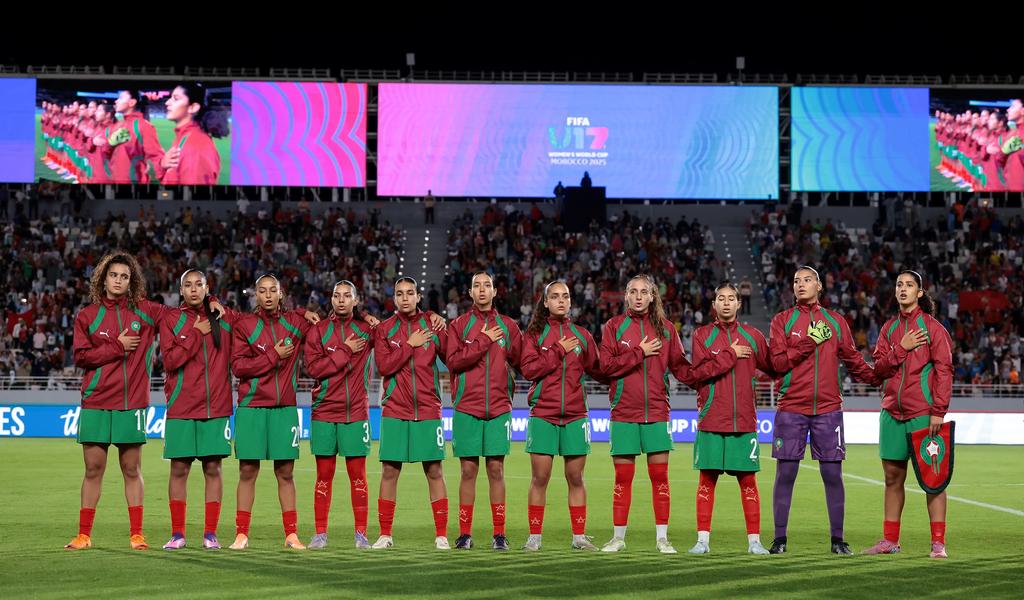
Infantino also wished the best for Nigeria’s women’s youth teams at the upcoming FIFA U-20 and U-17 Women’s World Cups. “I also wished luck to @ng_superfalcons for the upcoming FIFA U-20 Women’s World Cup and the FIFA U-17 Women’s World Cup and thanked the entire team for their time, ideas and positive intent to work together in taking Nigerian football forward,” he added.
The meeting in Zurich also allowed FIFA to connect formally with Nigerian football officials after the leadership crisis that led to the mass resignations at the NFF. The NFF later released a statement saying FIFA accepted the resignations and promised to keep working with the Nigerian government and other football bodies on a plan for reforms.
The NFF stated that they agreed to continue discussions to create a roadmap that covers short, medium, and long-term goals. This aims to build a more inclusive NFF and ensure a stable environment for Nigerian football.
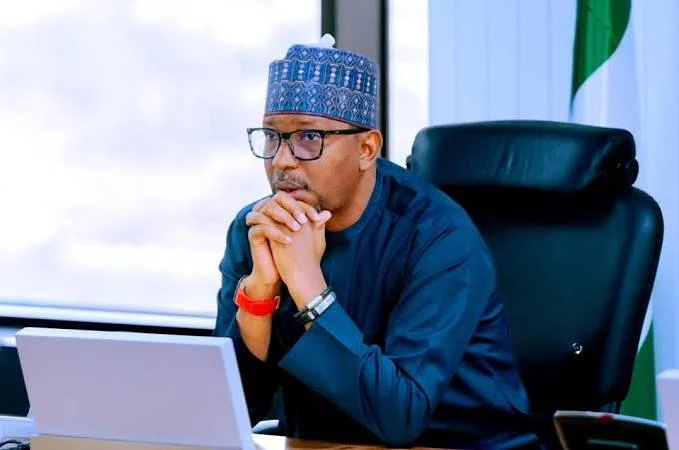
Mr Dikko led the Nigerian team, which included NSC Director-General Bukola Olopade, former NFF President Amaju Pinnick, Acting NFF General Secretary Emmanuel Ikpeme, and NFF Director of Legal Services Okey Obi. Mr Pinnick attended as Special Adviser to the CAF President and Deputy Chairman of the FIFA Men’s National Teams’ Competitions Committee.
CAF 2nd Vice President Kurt-Okraku and FIFA Director of Member Associations for Africa Gelson Fernandes also joined the meeting. Mr Dikko called the meeting an important step for restructuring Nigerian football.
“Mutual engagement among the National Sports Commission, the NFF administration, and the Confederation of African Football is ongoing with FIFA on the comprehensive reforms of Nigeria football, including agreeing on a roadmap going forward in accordance with the relevant rules, regulations and Statutes,” he said. “There is no doubt Nigeria Football will emerge much better and properly-structured after the conclusion of this process.”
This meeting in Zurich followed President Bola Tinubu’s order for thorough reforms in Nigerian football. This came after a tough time for Nigeria’s national teams and football management.
The president directed that the reforms should address issues like governance, administration, stakeholder representation, development pathways, domestic competitions, and accountability. The NFF then paused the electoral process for its congress, which was set for September 27 in Lafia, Nasarawa State.
Mr Ikpeme was named Acting General Secretary to oversee the NFF Secretariat, while Ademola Olajire was appointed Acting Deputy General Secretary. The leadership crisis arose after Nigeria did not qualify for the 2026 FIFA World Cup, and the Super Falcons failed to qualify for the 2027 Women’s World Cup, breaking their record of attending every edition since 1991.
With FIFA now involved in the reform process, everyone will be watching for the roadmap to rebuild the NFF and how a new leadership will emerge through an electoral process agreed upon by the relevant football authorities.

Drop your comment
No comments yet — be the first to drop the gist 👇