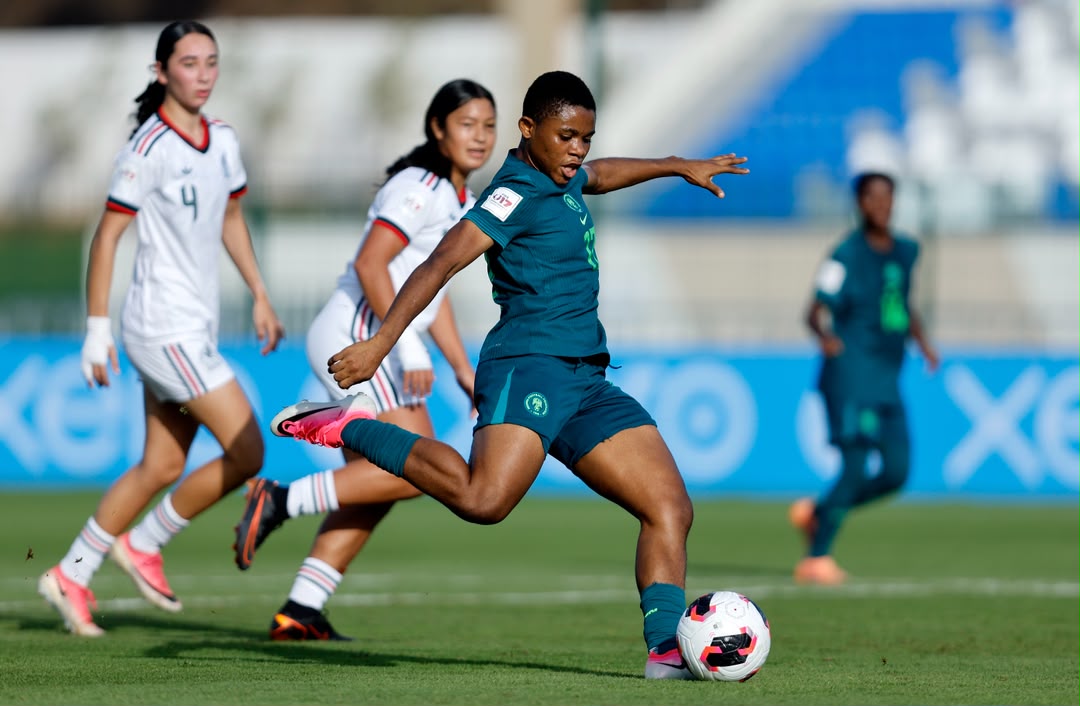
One win is all that stands between Nigeria’s Flamingos and a historic place in African football. Akeem Busari’s team is set to face former champions Japan in the final of the 2026 FIFA U-17 Women’s World Cup.
After losing their first match to Poland, the Nigerians bounced back to win five straight games. They are now just 90 minutes away from making history as the first African nation to win this tournament. This is a chance to celebrate and end Africa’s long wait for a title at the FIFA U-17 Women’s World Cup. It also gives another generation of Nigerian female footballers a chance to shine on the world stage.
The Flamingos made it to Saturday’s final through their determination, attacking style, and ability to handle tough situations. They had a notable win against defending champions DPR Korea, a challenging knockout win against Venezuela, and a strong semi-final victory over Brazil.
But they will face a Japanese team with a much richer history in this competition. Japan has been in three previous finals, winning in 2014 and finishing as runners-up in 2010 and 2016. They are back in the final after a ten-year break and are eager to reclaim their title.
Flamingos' Amazing Comeback: From Poland Loss to World Final
Nigeria’s journey to the final didn’t start as strongly as many expected from a team carrying Africa’s hopes.
The Flamingos lost 2-1 to Poland in their first Group B match, putting them under pressure right away.
Instead of letting that loss derail their campaign, Busari’s team fought back with five straight wins, gaining confidence and improving their performances.
Their first win came against Puerto Rico, where goals from Oluwakemi Adegbuyi and Precious Oscar led to a 2-0 victory. This win helped restore belief in the squad and kept their hopes alive.
However, their match against defending champions DPR Korea really showcased Nigeria as serious contenders. Goals from Adegbuyi, Oluebube Umejiaku, and Kanyinsola Yusuf led to a convincing 3-1 win over the four-time champions. Nigeria proved they could compete with technically skilled teams.
In the knockout rounds, Nigeria faced Mexico in the Round of 16 and won 2-1, thanks to goals from Umejiaku and Mary Dunstan. This was another strong display of their attacking strength and ability to overcome tough opponents.
Their quarter-final match against Venezuela was much tougher. As the game headed to extra time, the Flamingos found their breakthrough in the 89th minute when Umejiaku was fouled in the box.
Captain Azeezat Oduntan took the penalty and scored, sending Nigeria into the semi-finals.
Brazil was the next challenge, and the Flamingos delivered their best performance of the tournament.
After a scoreless first half, Queen Joseph broke the deadlock in the 56th minute. Substitute Awawu Bashiru then scored two goals in the 71st and 80th minutes. Greise Kelly scored a late goal for Brazil, but Nigeria had already secured a 3-1 win.
Statistically, it was impressive. Nigeria had 35 attempts on goal compared to Brazil’s seven, with only one of Brazil’s shots on target.
With 11 goals scored and only three conceded during their five-match winning streak, the Flamingos head into the final full of confidence.
Japan's Return to the Big Stage: Shirai's Team Aiming for a Second Title
While Nigeria has focused on recovery and momentum, Japan’s journey to the final is marked by technical skill, organization, and efficient attacking.
Under coach Sadayoshi Shirai, Japan started their Morocco 2026 campaign with a dominant 5-0 win over Zambia. They followed up with two 2-0 wins against France and Venezuela.
Japan finished the group stage with maximum points and a perfect defensive record, not conceding any goals.
Their knockout stage continued with a 3-1 win over Kenya, and they also narrowly beat Ghana 1-0.
However, their semi-final against DPR Korea was their biggest challenge yet. Japan had faced tough defeats from their Asian rivals in the past, including a 5-1 loss in the 2025 U-17 Women’s World Cup quarter-finals.
In the semi-final, Japan seemed set to lose again when Ri Ui-gyong scored in the 52nd minute.
Despite struggling to create chances, Japan kept searching for an equalizer. Their persistence paid off deep in stoppage time when an own goal by Won Sol-gyong sent the match to penalties.
Japan scored all four of their penalty kicks, while goalkeeper Kou Kadowaki made a crucial save and another DPR Korea shot hit the post.
Asuka Tanaka scored the decisive penalty to secure Japan’s place in the final.
Though it wasn’t their best performance, it showed their ability to fight through tough situations. That resilience is something Nigeria will need to be ready for.
First Meeting, No Historical Advantage
Saturday's match will be the first time Nigeria and Japan meet at the FIFA U-17 Women’s World Cup.
So, there’s no previous record to guide them ahead of the final.
Each team has its own footballing history, but this generation’s situation is unique.
Japan has clear experience at this level. Meanwhile, Nigeria’s journey in Morocco 2026 shows that established teams can be challenged by emerging ones through preparation and teamwork.
The final will depend on the players on the field, their tactics, and how well they handle the pressure of playing for a world title.
Tactical Battle: Can Busari's Flamingos Disrupt Japan's Passing Game?
The midfield battle could be key in deciding who wins the trophy.
Nigeria has shown they can attack in different ways and create chances. Their semi-final against Brazil, with 35 attempts, showed their ability to put teams under pressure.
Japan, however, brings a different style. They focus on technical play, smart movement, possession, and coordinated attacks. They are good at building from the back and using short passes to create space.
Busari has shared his views on Japan.
After Nigeria’s semi-final win over Brazil, he noted similarities between Japan and DPR Korea, especially in how they build attacks and use their full-backs.
He believes his team can take confidence from their 3-1 group-stage win over DPR Korea. But Japan has its unique strengths and should not be seen as just like their Asian neighbors.
For Nigeria, the task is to disrupt Japan’s rhythm without losing their defensive shape.
They need to know when to press, block passing options, and force Japan into mistakes. Poorly organized pressure could create space for Japan to exploit.
Nigeria must also be ready to defend without the ball. Japan’s ability to control possession means Nigeria will need focus, discipline, and patience to avoid being caught out of position.

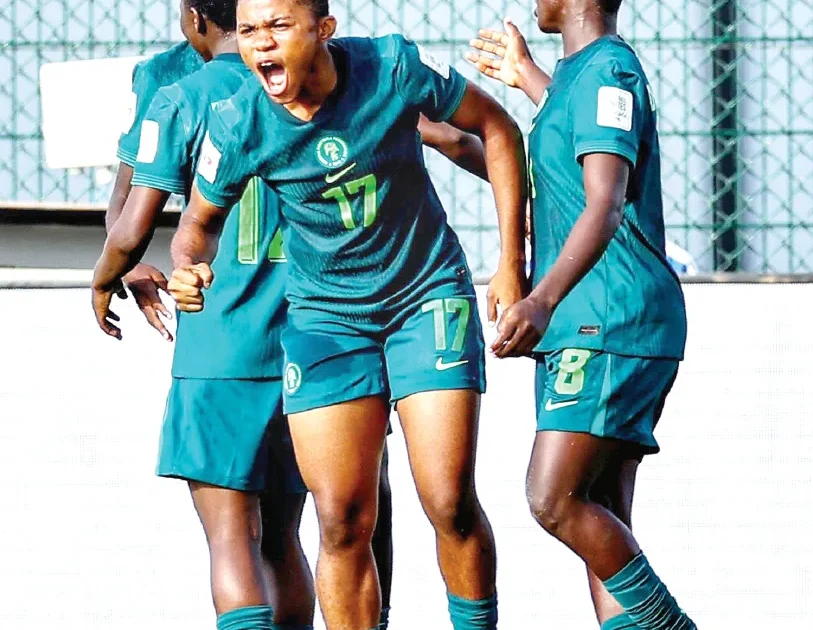
On the attack, the Flamingos should use their strengths. Their speed, ability to find space, and teamwork in scoring positions could trouble Japan.
For Japan, managing the game’s tempo and stopping Nigeria from turning it into an open contest will be crucial.
The midfield battle, transition management, and effectiveness in the attacking third could ultimately decide who lifts the trophy.
History Versus Opportunity: Comparing Nigeria and Japan's U-17 World Cup Records
This is Nigeria's first final appearance, but the country has been strong in this competition since it began in 2008.
Japan has been one of the most consistent teams, appearing in every edition and often making it to the later stages.
Japan has reached the final three times before Morocco 2026, winning their only title in 2014 after beating Spain 2-0 in San Jose, Costa Rica.
They were runners-up in 2010 and 2016, becoming one of the tournament's strong teams.
Nigeria's best previous result was third place in 2022. They reached the quarter-finals in 2024 and exited in the Round of 16 in 2025.
Their progress to the 2026 final is the best achievement in Nigeria’s history in this tournament.
The difference is clear. Japan wants to reclaim a title they last won 12 years ago, while Nigeria seeks an achievement that has never been done by any African nation.
For the Flamingos, a win would be a breakthrough not just for Nigeria but for all of Africa.
Goals, Clean Sheets, and Attacking Threats: What the Numbers Show
Both finalists have been strong in attack during Morocco 2026, but their defense shows a clear difference.
After six matches, Japan has scored 14 goals and conceded just two. Nigeria has scored 12 goals but allowed five. Japan also has four clean sheets compared to Nigeria’s two, showing their defensive strength.
A major strength for Nigeria is that many players have contributed to their 12 goals. Eight different players have scored, giving Busari multiple options before the final.
Seven of their goals have come in the second half, showing their ability to keep attacking as games go on.
Japan’s stats reflect a team that combines attacking power with defensive discipline.
They have scored two more goals than Nigeria while conceding three fewer. Their strong defense is notable, with only DPR Korea in 2024 and Japan itself in 2014 allowing fewer goals at this stage of the tournament.
But stats alone won’t decide Saturday’s final. Nigeria has shown they can break down strong teams, while Japan's semi-final against DPR Korea showed even the best teams can struggle under pressure.
Busari and Shirai: Two Coaches, One Defining Moment
For Busari, this final is the biggest test of his time with the Flamingos.
His team has shown they can bounce back from setbacks, adjust tactics, and compete against different styles.
Now, he must prepare his players for a Japanese side that demands full focus.
Busari also faces key selection decisions, especially after Bashiru’s standout semi-final performance.
Her two goals against Brazil make a strong case for her to start, but Busari must balance the team and tactical needs for the final.
For Shirai, the goal is straightforward: lead Japan to a second world title after a decade without a win.
His experience in the competition could be vital, but Japan needs to improve their attacking play after struggling to create chances against DPR Korea.
Both coaches have shown they can make vital decisions during the tournament. Their strategies and adjustments may be key when the pressure is highest.
What is at Stake: Nigeria's Chance to Make History in African Football
For Japan, a win would mean a second FIFA U-17 Women’s World Cup title, 12 years after their last victory in Costa Rica.
For Nigeria, the chance is much bigger. No African nation has ever won the FIFA U-17 Women’s World Cup. The Flamingos are already the first African team to reach the final, and a win would take Nigerian and African women’s football to new heights.
This would be another significant moment in Nigeria’s long history with women’s football, especially at youth level.
The country has consistently produced talented female players who have represented Nigeria across various age groups. A world title would further highlight that talent.
More than just the trophy, it would inspire another generation of young African girls to believe that they can reach the highest levels of international football.
Flamingos captain Queen Joseph summed up the importance of the occasion after the semi-final. She said Nigeria was not just representing the country but all of Africa.
This responsibility is shared among all players, but they must also realize they have earned their place in this final.
They have come back from an opening loss, defeated defending champions DPR Korea, handled tough knockout matches against Mexico and Venezuela, and delivered a strong performance to beat Brazil.
They have earned the right to compete for the trophy.
Now they face the final challenge. Japan has the experience, skill, and history of finals. Nigeria brings momentum, depth in attack, and the confidence that has carried them through this remarkable campaign.
For Busari and his Flamingos, the goal is clear: one match, one trophy, one chance to make history for Nigeria and Africa.
Will they succeed? We can only hope for the best.



Drop your comment
No comments yet — be the first to drop the gist 👇