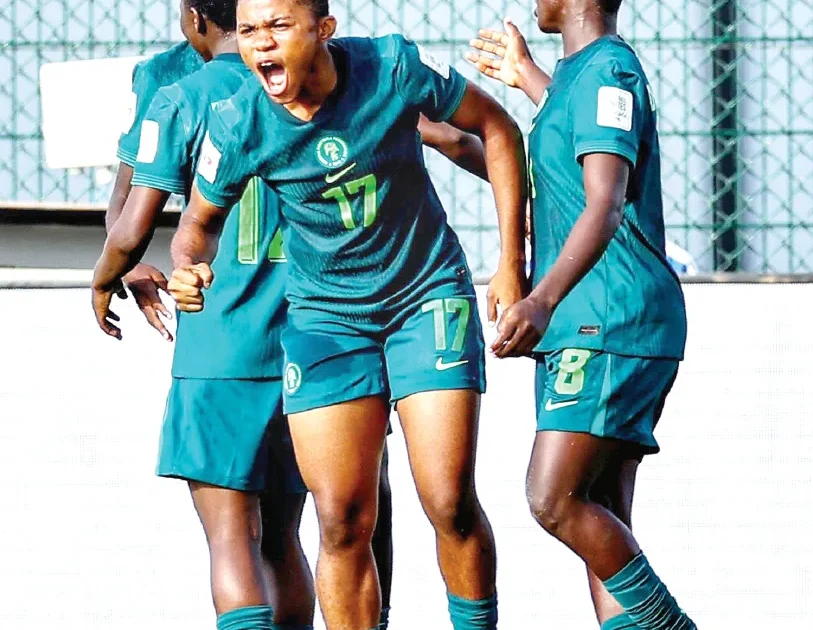
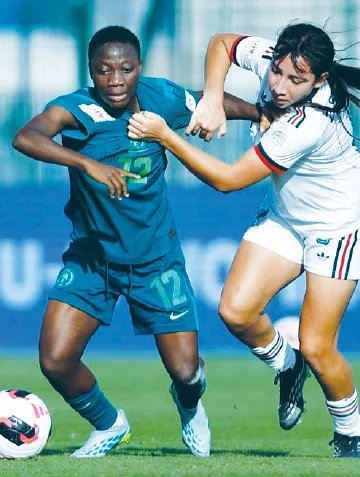
Nigeria's Flamingos have made it to the final of the 2026 FIFA U-17 Women’s World Cup after five wins, 113 shots on goal, and eight different players scoring. They also pulled off a historic win against defending champions DPR Korea.
Akeem Busari’s team is just 90 minutes away from making history as the first African nation to win this trophy.
Nigeria’s Flamingos have changed their story in the FIFA U-17 Women’s World Cup in Morocco. They faced disappointment after losing to Poland in their first match. But they bounced back with a strong performance against Brazil, showing they have what it takes to compete for the biggest prize in youth women's football.
Their journey has been about bouncing back, working together, and believing they belong among the best.
As Nigeria gets ready to face Japan in the final, the statistics show a stronger story.
The numbers reveal a Nigerian team that has been aggressive on attack and able to recover from setbacks. They have also shown they can hold their own against experienced international teams.
Japan comes with its own impressive history. They are preparing for their fourth final, having become one of the most successful teams in this competition.
The numbers leading up to Saturday's match show the stakes are high, with records, personal achievements, and national pride all on the line.
Japan’s 150-Goal Record vs. Nigeria’s Attack
Japan’s attacking history at the U-17 Women’s World Cup reached a new high in their semi-final against DPR Korea. Their last-minute equalizer, an own goal by Won Sol-gyong, brought their total goals in the competition to 150.
This puts Japan ahead of all other teams, with a 26-goal lead over DPR Korea.
Japan’s ability to produce skilled players has kept them strong on the global stage.
But Nigeria has also built its own attacking style in Morocco. Their stats suggest that Japan will face a tough challenge in the final. The Flamingos have made 113 attempts on goal, the second-highest in the tournament, following DPR Korea’s 186.
Notably, they had 35 attempts against Brazil in their semi-final win, showing how hard they pushed in a key match. This performance was not just about scoring; it showed Nigeria’s readiness to attack and keep pressure on their opponents.
Against a Japanese team that has only conceded two goals in the tournament, Nigeria must turn its chances into goals.
Awawu Bashiru: A Game-Changer
One of the standout stories from Nigeria’s journey is Awawu Bashiru. Before the semi-final against Brazil, she had only played 73 minutes, all as a substitute.
When she got her chance against Brazil, Bashiru gave a top performance, scoring two goals to take Nigeria to the final. She was named Player of the Match.
Her rise shows that this Flamingos team has match-winners beyond the regular starters. In a tournament where fatigue and squad depth matter, Bashiru’s role could be key.
Her performance also highlights the value of patience and being ready. After waiting for her moment, she made it count when it mattered most.
The semi-final may be remembered as her breakthrough on the international stage.
Eight Scorers, One Goal
Nigeria's attack does not rely on just one player. The tournament's stats show a strong team effort. Eight different players have scored in Morocco. Oluwakemi Adegbuyi, Awawu Bashiru, Oluebube Umejiaku, and Kanyinsola Yusuf have each scored twice. Mary Dunstan, Queen Joseph, Azeezat Oduntan, and Precious Oscar have each found the net once.
This spread of goals is encouraging as they head into the final. Japan will need to be ready for multiple threats, not just one key player.
This shows the depth of Nigeria's attacking options and the readiness of players from all positions to help achieve the team's goals.
For an African team trying for its first world title, having several players who can score could be a big advantage against Japan.
Five Wins After a Tough Start
Nigeria’s journey from a disappointing start to the finals is remarkable. The Flamingos lost 2-1 to Poland in their first match. This put pressure on the team and made their path in the group tougher.
Instead of letting that loss define them, Busari’s players bounced back with five straight wins.
Their comeback is impressive because it took more than just collecting points. They had to regain confidence, improve their game, and face tougher opponents.
Their wins over teams like defending champions DPR Korea and Brazil showed how much they have grown since that first defeat. Japan has also won its last five matches, so both teams come into the final with the same winning streak.
These five wins make up the fourth-longest winning streak in the tournament’s history. Only Japan's 11-match run from 2014 to 2016, Spain's nine wins from 2022 to 2024, and DPR Korea's nine-match streak from 2025 to 2026 are longer.
Nigeria’s achievement is unique because they are chasing a title after losing their first match, something no past champion has done.
A win over Japan would add another milestone to the tournament.
The Landmark Win Against DPR Korea
Before their semi-final win over Brazil, a key moment for Nigeria was their group-stage victory over defending champions DPR Korea. Beating them in regular time made Nigeria the first team to do so at a U-17 Women’s World Cup.
This win was significant for more than just three points. DPR Korea came to Morocco as champions and a team used to winning.
Nigeria proved they were not intimidated by their reputation. The victory showed that Busari’s team had the skill and mindset to take on the best, boosting their confidence for the knockout rounds.
It was also a strong message for African football, showing the continent can produce teams that challenge established powers.
Japan’s Experience: 50 Matches, Four Finals
While Nigeria's story is about a strong comeback, Japan has shown consistency and a tradition of success. The final will be Japan’s 50th match in the competition, showing their long history.
Only DPR Korea will have played more matches, reaching 51 when they face Brazil in the third-place match.
Japan is getting ready for their fourth final. They reached the last match in 2010, 2014, and 2016. Their only win came in 2014 in Costa Rica, where they beat Spain 2-0.
Their presence in every edition of the tournament underlines their consistency. Alongside New Zealand, Japan is the only team to compete in all 10 editions.
Their experience shows in their technical skills and game organization in Morocco. For Nigeria, beating such a well-established team would make their achievement even more meaningful.
Coach Shirai vs. Coach Busari
Japan’s coach, Sadayoshi Shirai, will also reach a personal milestone in the final. This will be his 16th match as a coach at the U-17 Women’s World Cup, making him the most experienced coach in history.
Having led Japan in the last two editions, Shirai has now taken his team to another final, boosting his reputation.
His experience may give Japan an edge, especially in a match where tactical choices and handling pressure can change the game.
Busari, on the other hand, has a chance to create a new history. He has guided the Flamingos through tough times, a challenging group stage, and two big knockout matches to bring them close to the trophy.
For him, the final is a chance to achieve something historic for Nigeria and African women’s football.
Japan's Defense: Nigeria's Biggest Challenge
If Nigeria's attacking stats are impressive, Japan's defense is equally strong. The Asian team has only given away two goals in their journey to the final, from Kenya and DPR Korea.
Only two teams have had better defensive stats at this stage: DPR Korea in 2024 and Japan in 2014.
These teams conceded fewer goals, though they played one match less than the current finalists.
Japan’s strong defense contrasts with Nigeria’s attacking style. The Flamingos can create many chances, but Japan knows how to limit opponents and protect their goal.
The final could be a battle between Nigeria’s attack and Japan’s defense. For Busari’s team, finishing chances will be key. Making 35 attempts against Brazil was great, but the final needs them to be more efficient against a team that has conceded so little.
Nigeria One Win Away from Making History
Beyond the eye-catching stats and milestones, the main story is Nigeria's chance to bring the U-17 Women’s World Cup trophy to Africa for the first time.
The Flamingos have represented the continent well, showing that African women’s football has the talent to challenge the best.
Nigeria is known for producing elite female football talent, but winning a world title would mark another important step for youth development in the country.
It would also inspire young African girls who dream of playing at the top level.
Japan has history, experience, and a strong defense. Nigeria has momentum, depth in attack, and confidence from beating DPR Korea and Brazil.
The Flamingos have bounced back from their first defeat, made 113 attempts on goal, found key players from the bench, and shown they can compete with the best.
The Final Test Awaits
Five straight wins have brought Nigeria close to history. A sixth win would not only give the country its first U-17 Women’s World Cup title but also set a new record for African women’s football.
For Busari and his players, Morocco 2026 is more than just a tournament. It is a chance to turn their remarkable journey into a memorable chapter in Nigerian and African football history.


Drop your comment
No comments yet — be the first to drop the gist 👇