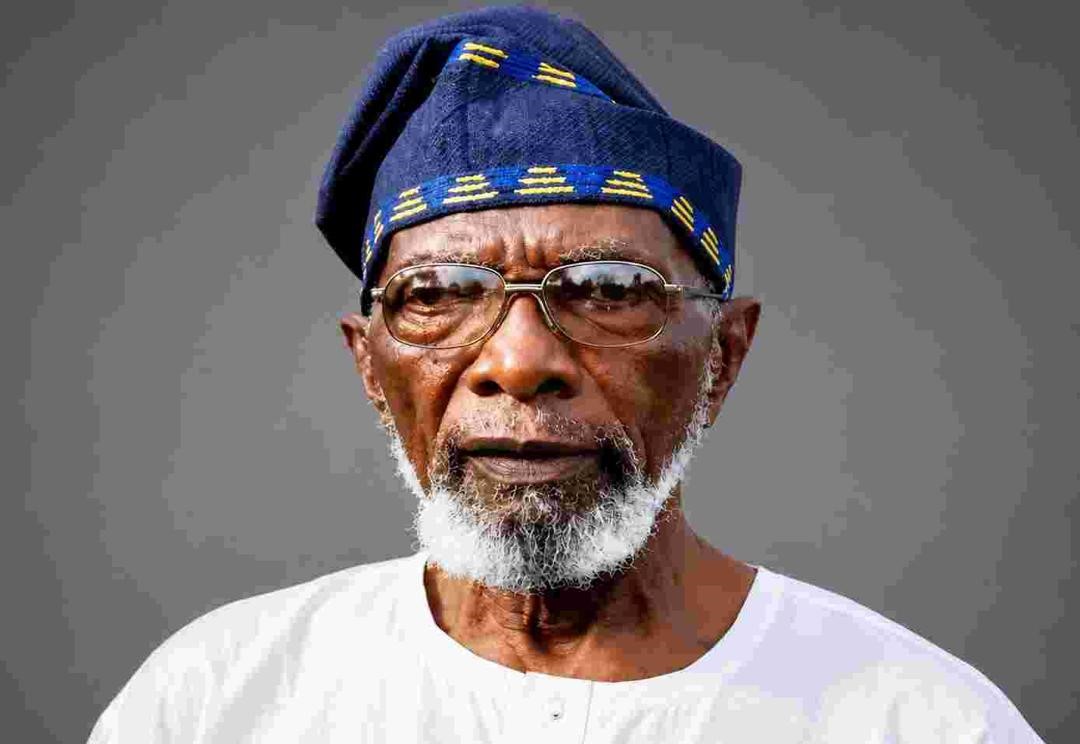
On the morning of 14 May, in his quiet bedroom in Ijebu Ode, Ogun State, an old man’s breathing simply stopped. The final breath left the modest bedroom of a man who spent ninety-two years fighting to ensure that power does not write its own history.
Samuel Olusegun Osoba, one of Nigeria’s best-known social historians, closed his eyes. In that simple moment, Nigeria lost one of its last true links to a radical intellectual tradition.
He was not a kingmaker or a court historian but an academic rebel. For many Nigerian scholars who learned from him, his death was not just the end of a career. It felt like the slow, heavy shutter of a library door closing on a whole body of subversive thought.
Those who attended his classes remember a teacher who had no time for “great men” history, the kind told through statues and portraits. To Mr Osoba, history was about the ongoing fight between the workers and those who took the profits. This included farmers, traders, schoolteachers, and the political class that took over from the British in 1960, which he believed just put on new clothes over the old system.
Toye Olorode, a professor of plant genetics and one of Mr Osoba’s closest friends from their days as socialists at the University of Ife, now Obafemi Awolowo University, expressed his sadness. He said Osoba was “a foremost patriot, social historian, committed socialist, exemplary teacher, and humanist.”
This tribute could be seen as standard, but nearly fifty years earlier, those same beliefs had already led to something the Nigerian establishment wanted to erase from memory.
Political scientist Jibrin Ibrahim remembered Mr Osoba as a brilliant historian and a rare scholar. He combined learning, principle, mentorship, and public purpose. Mr Ibrahim said Mr Osoba's generation was measured by their convictions, not by what they had. He worried that Nigeria lacks young intellectuals like him. He mentioned three essays that anyone wanting to understand Nigeria’s political economy should read: “Ideological Trends in the Nigerian National Liberation Movement,” “The Nigerian Power Elite, 1952, 65,” and “The Deepening Crisis of the Nigerian National Bourgeoisie.” Mr Ibrahim argued these essays clearly explain why Nigeria’s ruling class failed to build the nation it promised after independence.
Mr Osoba’s refusal to chase status ran through his career. He was fully qualified for a professorship and even approved for it. But under a vice-chancellor in the 1980s, he was denied the promotion. Instead of resuming the process, he simply never applied again. For the rest of his working life, he remained “Dr Segun Osoba,” a quiet protest that lasted longer than those who tried to hold him back.
A younger generation of Mr Osoba’s strongest followers, Ibrahim Abdullah, a professor of history at the University of Sierra Leone, argued that “Osoba’s unbundling of the contradictory tendencies within what he calls the national liberation movement; the centrality of ethnicity and regionalism in contouring these movements; and the perennial factionalism from the 1930s to the era of decolonization, became foundational.” He said this was important in a time when writing history became linked with making history.
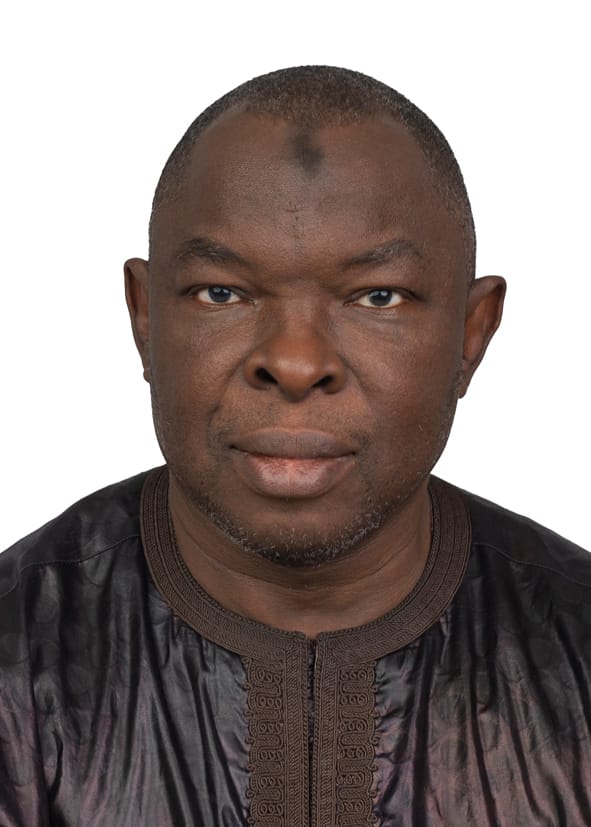
On a more positive note, the now-famous historian Toyin Falola, a student of Mr Osoba and currently a professor at the University of Texas, called him his “most consequential university teacher.” He said “Dr Osoba lived simply, taught fiercely and conscientiously, and remembered every student who passed through his class.” Mr Falola remarked that to sit in Mr Osoba’s lectures was to see Nigeria differently. The kings and generals moved to the back, while farmers, workers, women, minorities, and ordinary people moved to the front.
That same stubbornness shaped his most defiant work. In 1976 and 1977, when the military government set up a Constituent Assembly to write the 1979 constitution, Mr Osoba and fellow Marxist historian Yusufu Bala Usman refused to sign the version everyone else accepted. Instead, they wrote sixty-five pages of open dissent: the “Minority Report and Draft Constitution for the Federal Republic of Nigeria, 1976.”
Their argument was clear: the document on the table was not for the nation; it was for the elite. Where the majority draft protected presidents and governors, Mr Osoba and Mr Bala Usman wanted that protection removed. They sought a justiciable “Fundamental Objectives and Directive Principles of State Policy” language, which would allow ordinary Nigerians to sue the government if it failed to provide free education, healthcare, and jobs.
The report was rejected, and Nigeria ended up with an elite pact. But it never fully disappeared. Scholars and activists keep revisiting it whenever Nigeria's governance failures make its warnings feel more relevant than ever.
Now, more than two months after his death, the community of scholars and activists he helped build is coming together again, not to mourn, but to continue his work.
On Tuesday morning, 28 July, the Second Symposium in Honour of Dr Segun Osoba will take place at the BON Elvis Hotel, 2 Monrovia Street, Wuse 2, Abuja. The theme is “Segun Osoba, Radical Historiography and the Defence of the Common People.” Human rights lawyer Femi Falana, whose career aligns with Mr Osoba’s beliefs, will chair the event. The speakers include Toye Olorode, Jibrin Ibrahim, Hauwa Mustapha, a radical trade unionist, and Olutayo Adesina, a history professor.
The symposium is organized by the Yusufu Bala Usman Institute, which Mr Osoba chaired until his death. The institute keeps the minority report in print, now reissued with a new introduction featuring both his name and his late co-author’s. The Centre for Information Technology and Development (CITAD), a civic organization based in Kano, is handling the logistics for Tuesday’s event.
For a man who spent his life insisting that history belongs to ordinary people, this may be the kind of tribute he would have wanted. Not a statue, not a renamed street. Just a gathering of people willing to argue his case. As the organizers state, all are cordially invited.

Drop your comment
No comments yet — be the first to drop the gist 👇