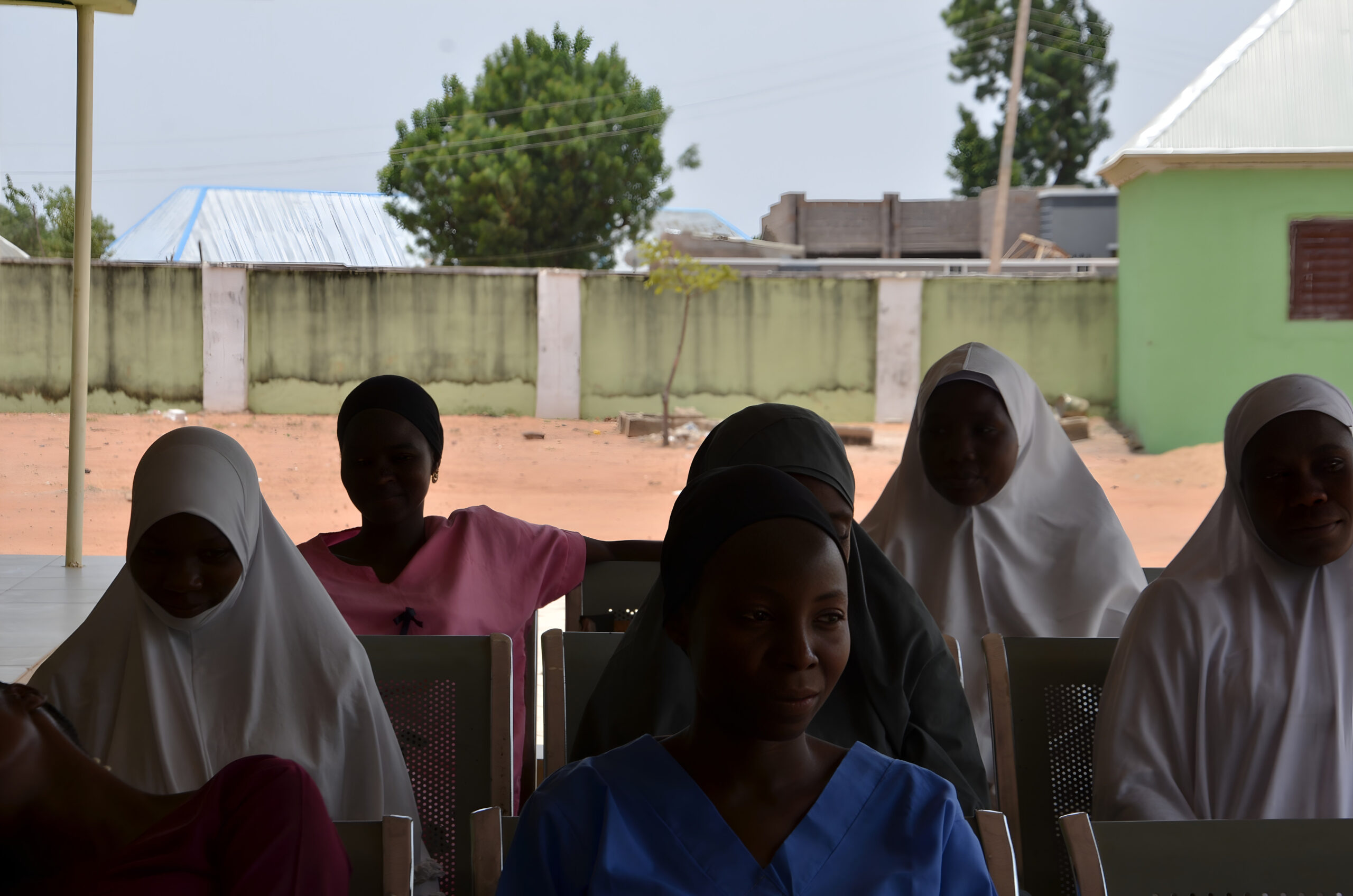
At Damare Primary Health Centre (PHC) in Girei LGA, Adamawa State, volunteer health worker Godiya Deborah Umaru was on duty with just one permanent staff member when several patients came in. They included a woman in labour and an accident victim. Outpatients filled the waiting area, while admitted patients also needed care.
"We could not attend to all of them," Ms Umaru remembered.
This situation is common across rural PHCs in Adamawa State, where a shortage of health workers has left facilities struggling to meet the rising demand for services.
In Girei LGA, health workers say they often juggle multiple tasks, moving between antenatal care, deliveries, outpatient consultations, immunisation services, and emergency response, sometimes all in one shift.
Reports show that PHCs in this LGA rely heavily on volunteers to fill critical gaps. In some facilities visited, volunteers help with immunisation, antenatal care, labour and delivery, wound dressing, and other key services alongside permanent staff.
Interviews with facility managers, volunteers, health workers, and government officials, plus a review of state health documents, show a primary healthcare system under pressure from ongoing staffing shortages, poor equipment, and uneven distribution of health workers.
While the Adamawa State Government claims it has hired more personnel and is improving service delivery, evidence from rural facilities suggests many still depend on volunteers to operate and provide basic healthcare for thousands of residents.
A system stretched beyond capacity
In Nigeria's rural areas, PHCs are the first point of contact for medical care. Residents rely on them for immunisation, antenatal services, childbirth, treatment of common illnesses, and emergency care.
But visits to health facilities in Girei LGA reveal a system under immense strain, supported by a small workforce and an increasing reliance on volunteers.
At Njobbore PHC, facility manager Pafinus Linus said staff shortages have long been one of the clinic's biggest challenges.
The facility offers immunisation, antenatal care, family planning, outpatient services, and delivery care for nearby communities. Yet, the number of health workers often falls short of the workload.
According to Mrs Linus, the facility currently operates with a mix of permanent staff and volunteers across different units. However, this staffing arrangement is fragile because workers often must leave their assigned duties to respond to emergencies elsewhere in the clinic.
She explained that a staff member assigned to antenatal care may need to go to the labour ward. "During night shifts, a single health worker may function as a nurse, midwife, records officer, and emergency responder," she said.
"As a staff, you cannot depend only on your unit," Mrs Linus said. "You have to do everything."
This leads to a system built around constant task-shifting.
At Damare PHC, health workers described similar conditions.
The facility serves about 6,596 people. Its officer-in-charge, Aishat Musa, said the clinic operates with a mix of permanent staff, hired workers, and volunteers on a 24-hour duty roster to ensure services are always available.
"The facility serves a population of 6,596, and the staffing structure includes 10 permanent staff, eight hired staff, and 15 volunteers," she said.
On paper, this seems like a full workforce, but in reality, it relies on a delicate balance of permanent workers, contract staff, and volunteers to keep the clinic open.
"We mix the permanent staff and the hired staff in the roster," Mrs Musa said.
While this helps keep the facility running, it also reflects a reality for many rural clinics: keeping services going often depends on workers stretching beyond their formal duties and volunteers filling critical workforce gaps.
Nigeria's PHC system is guided by minimum staffing standards set by the National Primary Health Care Development Agency (NPHCDA). These standards outline the basic human resource needs for functional facilities.
A standard PHC should have a mix of skilled personnel, including at least one Community Health Extension Worker (CHEW) or Junior CHEW, a midwife or nurse, a pharmacy technician, and a laboratory assistant, along with environmental and support staff. Larger facilities are expected to have more staff based on population size and service needs.
These benchmarks aim to ensure that even the most basic rural clinic can provide essential services like antenatal care, safe delivery, immunisation, disease surveillance, and emergency response without over-relying on one type of worker.
But reports from these PHCs show that many rural facilities do not meet these minimum requirements.
The volunteers holding clinics together
Ms Umaru, the volunteer at Damare PHC, represents a growing group of health workers who now play an informal but essential role in Adamawa's rural healthcare system.
After graduating in 2024, she could not find a job and began volunteering at Damare PHC in April 2025 after submitting her application and credentials.
Since then, she has become part of the facility's daily operations, working under supervision in immunisation, antenatal care, labour and delivery support, and wound dressing.
Her role goes beyond just watching or helping out. Many days, she works with a single permanent staff member to manage many incoming patients.
"There was a day only myself and a permanent staff were on duty, and we had a labour case, an accident case, and many outpatients and inpatients to attend to," she said. "We could not attend to all of them. Some of them left because they felt the delay was too much."
The officer-in-charge at Damare PHC, Ms Musa, said many graduates in nursing and health-related fields apply to volunteer while waiting for government jobs.
"They come with their certificates and apply," she said. "Most of them have completed their training but have not been employed, so they come here to practice and use their skills."
But the waiting period for formal employment remains unclear. According to her, only a few volunteers at the facility have been hired into the government workforce in recent years.
"In the last two years, just two volunteers were employed permanently, one after three years of service, and another after two," she said.
While facility managers say volunteers are key to keeping services running, this situation shows a growing reliance on unpaid work in essential healthcare delivery.
"The work that my permanent staff can do, volunteer staff can also do it," said Mrs Linus, facility manager at Njobbore PHC. "Sometimes volunteer staff can even do better than permanent staff if you train them well."
But public health experts warn that while volunteers help fill immediate gaps, they are not a replacement for a properly staffed health system. They caution that depending on unpaid workers for too long can weaken service quality and add more pressure on already stretched facilities.
"One person can actually work in other units"
Beyond staff shortages, health workers say the problem also lies in distribution and task overload.
At Njobbore PHC, the facility works with about two staff members per shift, but workers must cover multiple units when needed.
"You have to consult. If you consult, maybe there is delivery. Maybe there is an accident. You still go and watch the accident," said Mrs Linus. "One person can actually work in other units."
The system relies heavily on improvisation. Volunteers are part of daily operations because facilities cannot run without them.


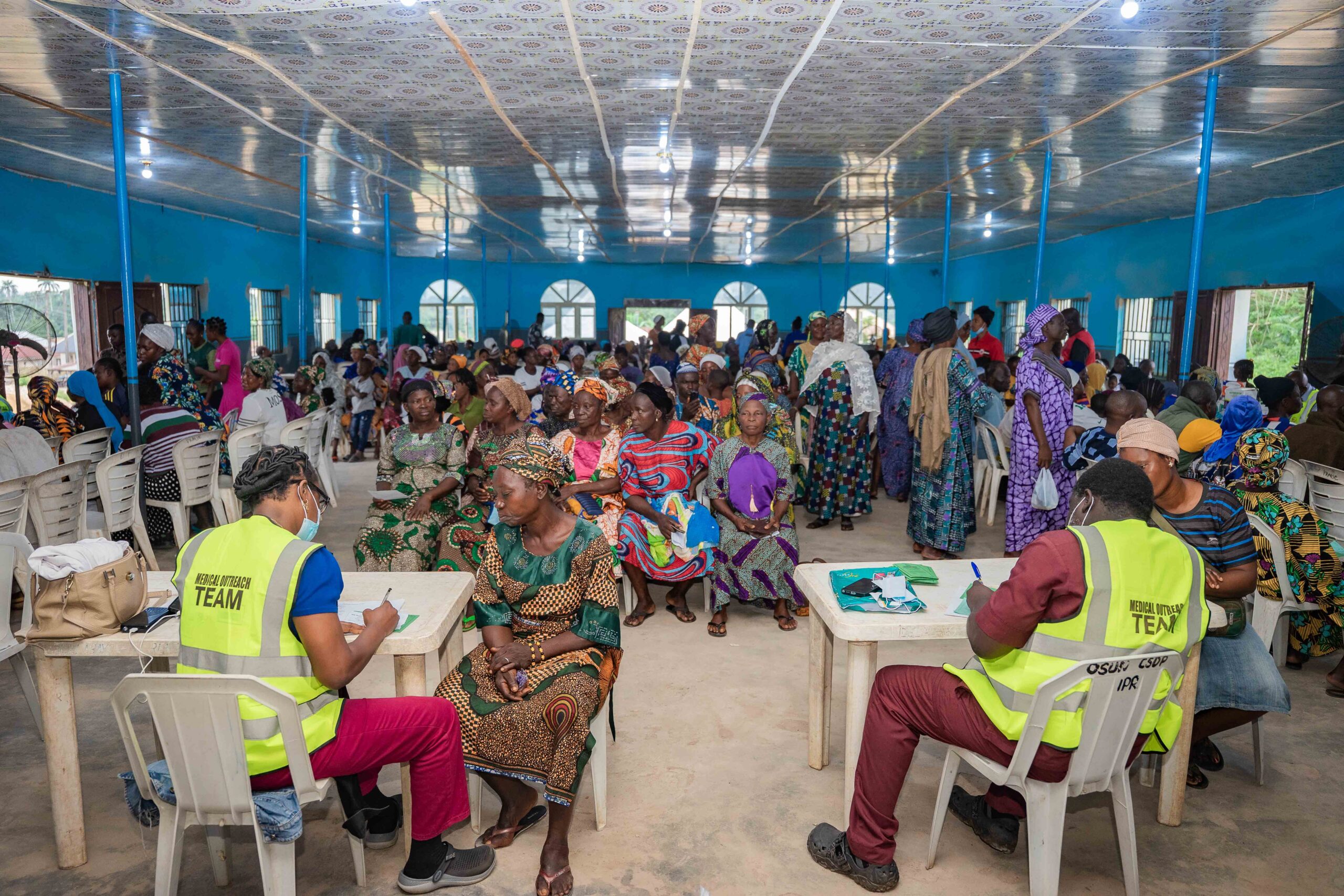
But even this setup is strained by poor infrastructure.
Njobbore PHC has only one delivery bed, which limits its ability to manage multiple births. Sometimes, deliveries happen under lantern light due to a lack of power.
"If we have enough delivery beds, one will be here, one will be here," she said.
At Damare PHC, the same shortages exist.
"At the moment, we have one delivery bed," said Ms Musa. "It is not enough with the number of deliveries. The labour room needs proper sterilisation tools, instruments, flashlights, and tables."
Volunteers are also expected to attend training with permanent staff, but facility managers sometimes pay for transportation themselves.
"I’m helping that person with transport to go there because they are volunteers," Ms Musa said.
Progress on paper, shortages in practice
Adamawa State's health planning documents note both progress and ongoing gaps in the primary healthcare system.
The State Health Sector Medium Term Sector Strategy (2023, 2025) shows a total of 957 health facilities in the state, including 403 PHCs meant to provide frontline services in rural areas.
It also highlights a major weakness in the health workforce, especially the lack of skilled personnel like nurses, midwives, doctors, pharmacists, laboratory scientists, CHEWs, and JCHEWs.
To address these gaps, the document states the government hired about 1,200 personnel into the PHC system. However, it admits that staffing levels are still not enough for effective service delivery.
Overall, the health sector has about 6,789 staff, but less than 30 percent are professional health workers, while most are support staff. The state also has only 55 doctors in the public health system.
On paper, these numbers suggest ongoing investment in health resources. In practice, they reveal the scale of the shortage compared to the population and service needs.
The average number of health workers in PHC facilities is about 15 per facility, including all types of staff. In many rural centres, this means a few workers must provide antenatal care, deliver babies, manage outpatient services, handle records, and respond to emergencies all at once.
At Damare and Njobbore PHCs, this imbalance shows in daily operations, where staff and volunteers must constantly switch roles to keep services running, often without enough equipment or support.
When delays become dangerous
For many patients in Adamawa's rural communities, the effects of understaffed health facilities are not just numbers, they are real experiences filled with delay, frustration, and risk.
One such patient is Dozie Kasundi, a nursing student who had severe abdominal and back pain while in class in early 2025.
She had left home feeling fine that morning, but her condition changed quickly. What started as mild discomfort turned into severe pain that left her unable to sit or stand.
Worried about her condition, her husband rushed her to the accident and emergency unit of the Federal Medical Centre, Yola (now Modibbo Adama University Teaching Hospital).
But according to her, her case was not treated as an emergency due to limited staff availability.
"One of the nurses on duty said it’s not an emergency. So they left me standing there," she said.
She waited at the facility for more than an hour, standing in pain and waiting for attention. Eventually, her husband took her to another hospital where she received prompt treatment.
While her experience happened in a tertiary health facility in the state capital, it reflects a wider reality across the health system, where delays in response, whether in rural clinics or urban hospitals, can have serious consequences for patients needing urgent care.
In rural PHCs, health workers say such delays often link directly to staffing shortages and the need to manage many responsibilities at once.
With too few workers on duty, emergencies can conflict with routine services, forcing staff to make tough choices about which cases to deal with first.
Public health experts warn that in cases like postpartum haemorrhage, eclampsia, or obstructed labour, even short delays can significantly raise the risk of serious complications or death.
A public health doctor, Owen Omo-Ojo, said the impact of these shortages is serious, especially for maternal and emergency care.
Mr Omo-Ojo noted that in many PHCs, one health worker is often expected to act as nurse, midwife, records officer, and emergency responder at the same time.
"That often leads to fatigue, burnout, delayed and suboptimal care, and avoidable medical mistakes," he said.
He warned that delays in recognising or handling complications like postpartum haemorrhage can quickly become life-threatening in understaffed facilities.
"In emergencies, every second counts," he added. "When facilities are understaffed, patients are likely unable to receive timely lifesaving interventions."
Government response and the distribution gap
Officials at the Adamawa State Primary Health Care Development Agency described improvements in the health system but agreed that challenges remain, especially in distributing health workers.
James Wasson, director of Disease Control and Immunisation at the agency, said the state has done recruitment and facility upgrades in recent years to strengthen PHC delivery.
He stated that the government has held two rounds of employment, with another recruitment exercise coming. He also noted that some health facilities have been renovated, and service use across PHCs has increased.
But he stressed that the issue is not just about numbers; it's also about how health workers are spread across facilities.
"When you talk about human resource gaps, sometimes we don’t just talk about numbers, we talk about the fairness in how human resources are distributed," he said.
He added that community-based volunteers also help with health education, immunisation, and referrals, especially in underserved areas.
Yet, findings from rural health facilities show that reliance on volunteers goes beyond extra support, with many clinics depending on them to run daily operations.
Health workers and facility managers in Girei Local Government Area describe a system where staffing shortages lead to constant task-shifting, with one worker often covering multiple units during a single shift.




Drop your comment
No comments yet — be the first to drop the gist 👇