
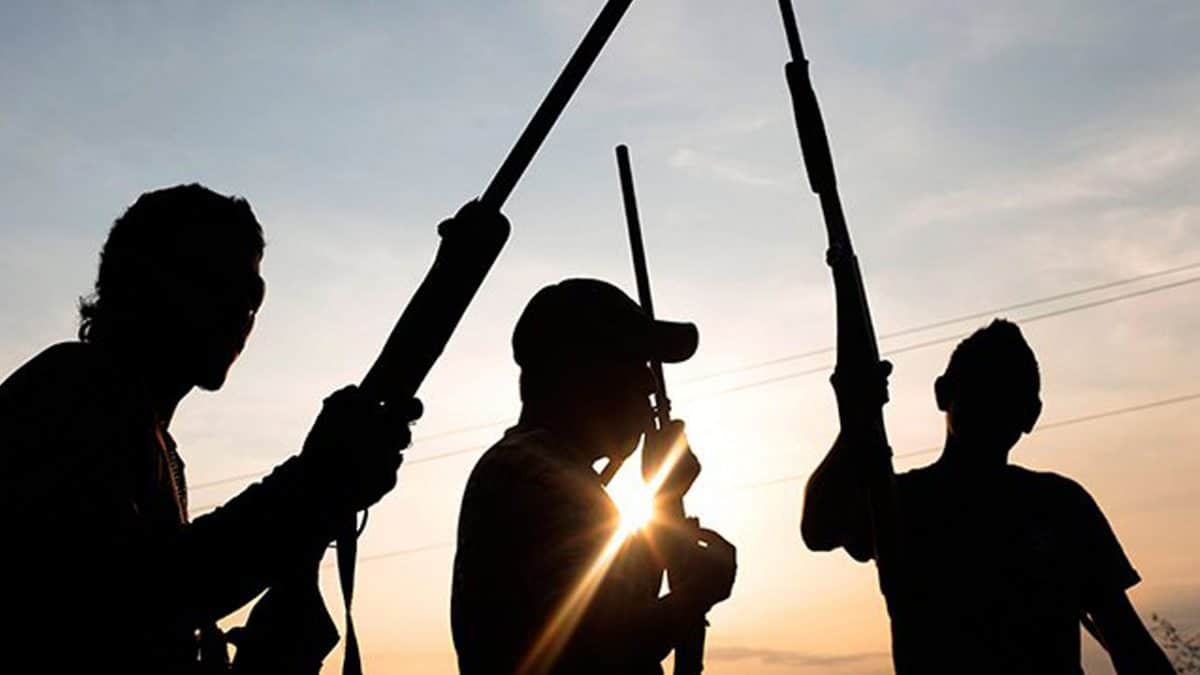
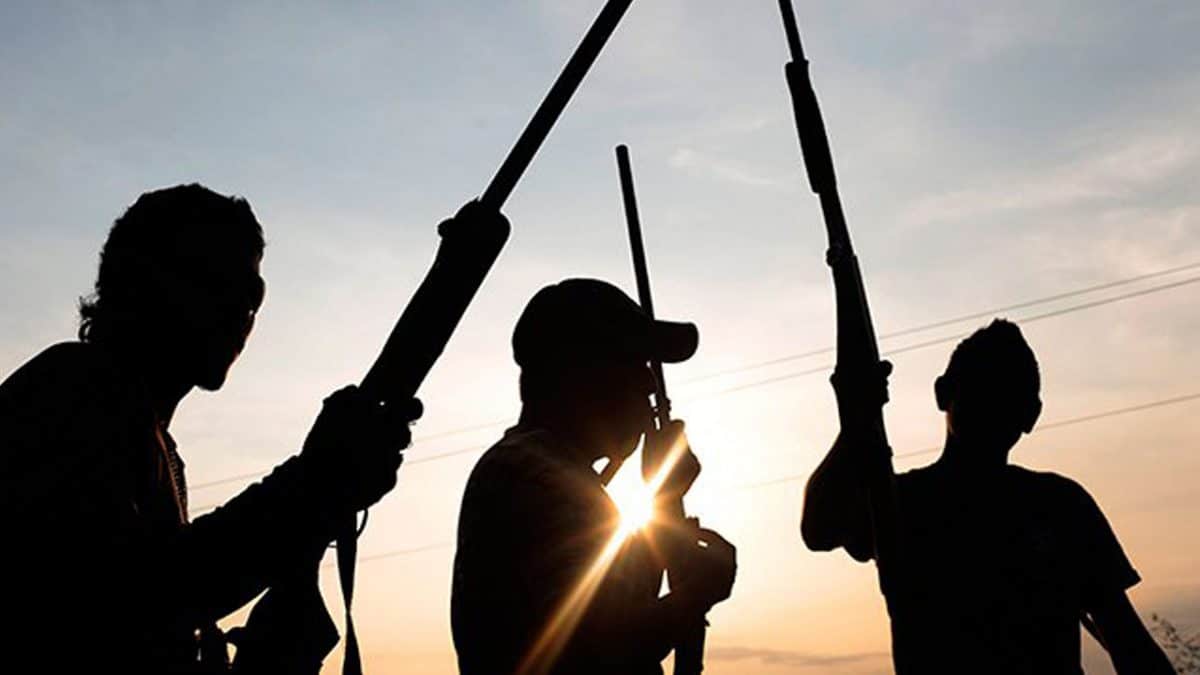
Attacks and killings linked to the banned Indigenous People of Biafra (IPOB) and other pro-Biafra groups in Nigeria's South-east dropped sharply in 2025. This change came about a year after Simon Ekpa, a controversial Biafra activist, was jailed in Finland, checks by PREMIUM TIMES showed.
This newspaper compared the attacks and killings that occurred in 2024 and 2025 across the five states in the South-east to see how much they had decreased.
The drop in violence after Mr Ekpa's arrest suggests that he may have played a part in the violence in the region.
Arrest and Imprisonment
Mr Ekpa, who started a faction of IPOB called Auto Pilot, was sentenced to six years in prison in Finland in September 2025. A court found him guilty of terrorism-related charges.
The court said Mr Ekpa, a Nigerian-Finnish citizen, was involved in a terrorist group and had publicly encouraged crimes for terrorist purposes in Nigeria's South-east. The court also claimed he supplied weapons, explosives, and ammunition to terror groups through his contacts in the South-east. It said he urged his followers on his X handle to commit crimes in Nigeria.
The court ruled that Mr Ekpa committed these crimes from Lahti, a city in Finland, which justified its jurisdiction over the case. Before his imprisonment, he was arrested with four others on November 21, 2024, on suspicion of terrorism.
However, the other four suspects were released during the preliminary investigation.
Deadly Attacks and Simon Ekpa's Role: Connecting the Dots
Founded by Nnamdi Kanu in 2012, IPOB is pushing for an independent Biafra state from the South-east and parts of the South-south. The group has been blamed for deadly attacks in these regions but has often denied any involvement.
Hours after Mr Ekpa's arrest, the main IPOB faction loyal to Mr Kanu disowned him, stating that he was never part of the group. Before his arrest, Mr Ekpa often claimed responsibility for several deadly attacks in Nigeria's South-east.
He also enforced an illegal sit-at-home order on Mondays in the region, which was initially imposed by Mr Kanu's IPOB in August 2021 but was later called off due to public backlash. On sit-at-home days, streets were empty, and many businesses remained closed across the South-east, including banks and petrol stations. Schools were also shut.
The sit-at-home order aimed to pressure the Nigerian government to release Mr Kanu, who was facing terrorism charges in Abuja. Gunmen linked to Mr Ekpa's group punished residents who disobeyed the order. IPOB distanced itself from this enforcement, claiming the real culprits were criminals using its name.
In July 2023, Mr Kanu, through his then-lawyer, directed Mr Ekpa to end the sit-at-home order. This was not the first time he made such a request, but Mr Ekpa dismissed it as fake, insisting he would continue unless Mr Kanu spoke to him directly in Finland.
Since Mr Ekpa's imprisonment, the illegal sit-at-home order has largely faded in the South-east, even before Mr Kanu's IPOB and Mr Ekpa's armed group announced a total cancellation in February 2026.
PREMIUM TIMES showed how the sit-at-home order harmed businesses, blocked residents from accessing healthcare, and worsened food security in the region. Mr Kanu was sentenced to life imprisonment for terrorism in November 2025.
Methodology
PREMIUM TIMES tracked and counted all reported attacks and abductions in Nigerian newspapers and news websites from January 1 to November 21 for both 2024 and 2025. Each period lasted 11 months, making a total of 22 months.
The first period represented the time before Mr Ekpa's arrest, while the second was after. The findings showed that attacks dropped by 50 percent.
To do this, the newspaper created a code sheet to record attacks and abductions during these times. They searched online and used key terms like gunmen, attack, IPOB, and more.
To avoid double counting, the reporter took screenshots with specific dates for each recorded incident. This meant that other reports of the same incident were not repeated.
The newspaper did not include security raids on criminal camps by the military or police. Also, attacks outside the five South-east states were not counted.
Most documented attacks and abductions were confirmed by police or security personnel who wished to remain anonymous.
How Attacks and Abductions Declined in 2025
PREMIUM TIMES found that attacks and killings in the South-east in 2025 fell by 50 percent compared to 2024.
From January 1 to November 21, 2024, there were 100 attacks in the South-east, including abductions. During these attacks, 206 people were killed, and 66 were abducted.
For the same period in 2025, there were 50 attacks reported in the South-east, also including abductions. In these attacks, 162 people were killed, while 59 were abducted.
Most of those killed in these attacks were security personnel, mainly police and soldiers.
Attacks and Killings in Each State
In 2024, Anambra had the highest number of attacks in the South-east, recording 30 attacks. A total of 48 people died in these attacks across the state's 21 local government areas, and 25 were abducted.
Imo and Ebonyi states both had 22 attacks, with 64 deaths and 10 abductions each. Enugu State was next with 18 attacks, resulting in 17 deaths and 20 abductions.
Abia State had the fewest attacks in 2024, with just eight, resulting in 13 deaths, and one abduction.
In 2025, attacks and killings dropped notably across the South-east. In Anambra, attacks fell by 40 percent, from 30 in 2024 to 18 in 2025. The number of deaths also dropped by 43.7 percent from 64 to 36, and abductions decreased by 68 percent from 25 to eight.
Imo recorded 18 attacks in 2025, an 18.1 percent decrease from 22 in 2024. Yet, it had the highest number of killings in 2025, with 92 deaths, a 69.5 percent increase from 64. The number of abductions in Imo fell by 50 percent from 10 in 2024 to five in 2025.
Enugu saw only six attacks in 2025, a 66.6 percent drop from 18 in 2024. In this state, five people were killed, which was a 70 percent decrease from 17 in 2024. However, 45 people were abducted in 2025, a 55.5 percent increase from 20 in 2024.
Ebonyi State had five attacks in 2025, a 77.2 percent drop from 22 in 2024. Nineteen people died in the attacks, a 70.3 percent drop from 64 the previous year. In 2024, 10 people were abducted, but there were no abductions reported in 2025.
Abia State also recorded five attacks in 2025, down 62.5 percent from eight the previous year. Ten people died in Abia in 2025, a 76.9 percent decrease from 13 in 2024. Like before, only one person was abducted in 2025.
These figures may not reflect the exact number of attacks in the South-east, as some might have gone unreported. Still, they give an idea of the frequency of attacks during the reviewed periods.
Herders’ Attacks, Cult, and Communal Clashes
PREMIUM TIMES noted that while most attacks were linked to IPOB and pro-Biafra fighters, some killings and abductions in the South-east were connected to herders, cults, and community disputes.
Of the 100 attacks in 2024, only two were communal disputes, occurring in May 2024 in Ohaukwu Local Government Area of Ebonyi State, killing 12 people.
Three attacks carried out by suspected herders in April and November 2024 in Uzo-Uwani and Isi-Uzo local government areas resulted in eight deaths.
Only two attacks in Anambra were linked to cult clashes, meaning at least 93 percent of the attacks were tied to pro-Biafra gunmen.
In 2025, out of 50 attacks, two (four percent) were attributed to herders, leading to one death and 43 abductions in Enugu State.
Another two (four percent) were cult-related, causing eight deaths and one abduction in Anambra. Thus, 46 (92 percent) of the attacks were tied to pro-Biafra gunmen, while four (eight percent) were linked to herders and cult clashes.
Records of Attacks and Killings, According to Local Government Areas
Findings show that Anambra and Imo faced the most violence in the South-east in 2024 and 2025.
In 2024, Owerri West LGA in Imo had the most attacks, with five recorded. Comparatively, Okigwe LGA in Imo had more attacks than any other LGA in 2025, with eight reported.
In 2024, Ohaukwu LGA had the highest attacks in Ebonyi State, with seven due to rising communal clashes. However, it had zero attacks in 2025. Ishielu LGA had two attacks, the most in Ebonyi in 2025.
Ihiala LGA in Anambra had seven attacks in 2024, making it the most attacked LGA that year, but it only had one attack in 2025. Orumba North and Orumba South LGAs had three attacks each in 2025, becoming the most attacked LGAs in Anambra that year.
This means Ohaukwu LGA in Ebonyi and Ihiala LGA in Anambra were the most attacked LGAs in 2024, while Okigwe LGA had the highest attacks in 2025, accounting for 16 percent of total attacks that year.
Human, Financial Costs of IPOB-linked Violence in the South-east
A total of 776 people died, and over N7.6 trillion was lost between 2021 and 2025 due to the illegal sit-at-home enforced by a faction of IPOB, according to a report by SBM Intelligence released in May 2025.
The report, titled ‘Four Years of Disruption,’ detailed how the sit-at-home order, which aimed to demand the release of IPOB leader Mr Kanu, turned into a long-lasting economic and humanitarian crisis marked by violence and fear.
A similar report from Amnesty International in August last year stated that IPOB-related violence in the South-east has led to widespread human rights violations and the deaths of at least 1,844 people from January 2021 to June 2023.
The 56-page report titled, “A Decade of Impunity: Attacks and Unlawful Killings in South-east Nigeria,” highlighted a troubling trend of unlawful killings, torture, forced disappearances, and destruction of property carried out by armed groups, state-backed militias, cults, and security forces in the region.
Amnesty reported that pro-Biafra gunmen, often called “unknown gunmen,” killed over 400 people in Imo State from 2019 to 2021, attacking villages without masks and targeting residents, police stations, and vigilante posts.
What the Decline Means for South-east
Patrick Agbambu, a security analyst, told PREMIUM TIMES that the drop in attacks in the South-east was expected after Mr Ekpa’s harmful actions before his arrest.
Mr Agbambu is the president and CEO of Africa Security Watch Initiative, an organization focused on monitoring and promoting security solutions across Africa.
He argued that it is unlikely Mr Ekpa would return to terrorism after serving his time in Finland. However, he emphasized that South-east leaders must unite and work to educate youths against terrorism and crime.
“This period that Ekpa is not around, they should try to work on the psyche of youths who had been following him so that if he comes back and wants to continue his activities, he will not find those foot soldiers to carry out his orders again,” he said.
The analyst warned that if South-east leaders do not educate their followers against terrorism now, they might become tools for Mr Ekpa when he returns.
Kabiru Adamu, founder and managing director of Beacon Security and Intelligence Limited, said the decline in violence and the return to peace in the South-east offers a chance for government at all levels to promote development in the region, considering the impact of the violence on the people's livelihoods.
“This reduction or de-escalation is a positive development. It will now allow livelihoods to pick up where they were left; it will allow the government to focus its attention on development and not necessarily on security,” he said.
Mr Adamu cautioned that it is likely Mr Ekpa or another separatist leader might continue the violence in the near future because the root causes of the agitation have not been addressed.
“The root causes of secessionist activities, the perception and reality of marginalization that an average South-easterner feels, are still present.
“Unless those root causes are dealt with, the possibility of either Simon Ekpa or other separatist leaders appearing will remain,” he said.
The security expert argued that simply stopping the violence is not the way forward for Nigeria's authorities.
“I think addressing the root causes of marginalization must go hand in hand with enforcement action. Local and federal governments must meet the basic needs of the average South-easterner. This will lessen the recruitment drive that people like Simon Ekpa use,” Mr Adamu said.
“Simon Ekpa is just one person. Even if the government succeeds in stopping him, a new Simon Ekpa will emerge because the root causes, the drivers of the unrest, are still there in the South-east; that grievance, perception, and reality of marginalization remain.



Drop your comment
No comments yet — be the first to drop the gist 👇