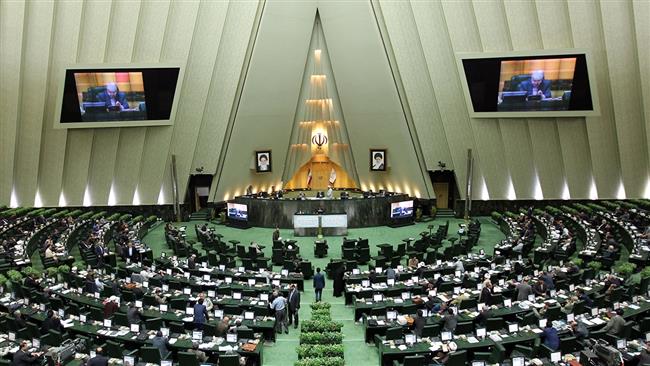
Iran is now looking at the possibility of leaving the Nuclear Non-Proliferation Treaty. This treaty is something Iran joined way back in 1974.
On Sunday, some lawmakers in Iran brought forward a bill to pull the country out of the treaty. They want to speed up the process because many believe that staying in the NPT will only lead to more losses for Tehran.
This talk comes amid rising tensions after renewed US attacks on Iran and the ongoing conflict between Houthi fighters supported by Iran and Saudi Arabia.
Iran’s state media, Tasnim News Agency, noted that the bill has been submitted to the parliament’s presiding board.
The NPT aims to stop the spread of nuclear weapons and support the peaceful use of nuclear energy. It is a key agreement in global efforts to keep nuclear weapons from spreading.
The treaty requires countries without nuclear weapons to agree not to get them. Those that have nuclear weapons must work towards disarmament.
But Iranian lawmakers believe that the current situation calls for a withdrawal from the treaty. "Given the circumstances facing the country and the aggression that the enemy has launched against us on two occasions, remaining in the NPT brings us nothing but losses," said Haji Deligani, an Iranian lawmaker.
The treaty only recognizes five countries as nuclear states. These are the US, Russia, the UK, France, and China.
Iran signed the treaty in 1974 and did not leave it even amid crises and sanctions related to its secret uranium-enrichment activities at the Natanz Nuclear Facility and the heavy-water reactor in Arak.
In 2015, Iran signed the Joint Comprehensive Plan of Action (JCPOA). Before the US pulled out in 2018, Iran reduced its enriched uranium stockpile by 98 percent to 300kg (660lb). It also limited enrichment to 3.67 percent, cut its centrifuges by two-thirds, and allowed inspections by the International Atomic Energy Agency (IAEA).
The US has tied its actions against Iran to the country’s uranium enrichment and nuclear program, claiming it poses a threat to both regional and global security. But Iran insists that its uranium enrichment is only for peaceful purposes.
A year after the US pulled out of the JCPOA, Iran raised its uranium enrichment purity to 60 percent in response to new US sanctions.
But in February 2026, just a day before a US strike that sparked ongoing conflict in the Middle East, the IAEA reported that Iran agreed to “zero accumulation,” “zero stockpiling,” and full checks on its existing stockpile.
Oman, which helped with talks between Tehran and Washington, said it would reduce Iran’s stockpiles to natural uranium levels and turn them into fuel.
However, shortly after that, the US and Israel attacked Iran.
Top Iranian officials have confirmed that they are thinking about leaving the NPT. Mohsen Rezaei, the secretary of Iran’s Supreme National Security Council, stated that whether Iran stays in the treaty depends mainly on the actions of the US.
“This depends on America’s conduct,” he said.
He also told Al Jazeera that Iran’s nuclear policy, claiming it does not seek nuclear weapons, has not changed.
At the same time, Iran’s Revolutionary Guards warned the US against more attacks on the country. They said, “the world will be astonished” by new weapons and targets if the US strikes Iran again.
Iran has promised to unveil weapons with new capabilities and hit targets that have not been attacked before.
Drop your comment
No comments yet — be the first to drop the gist 👇