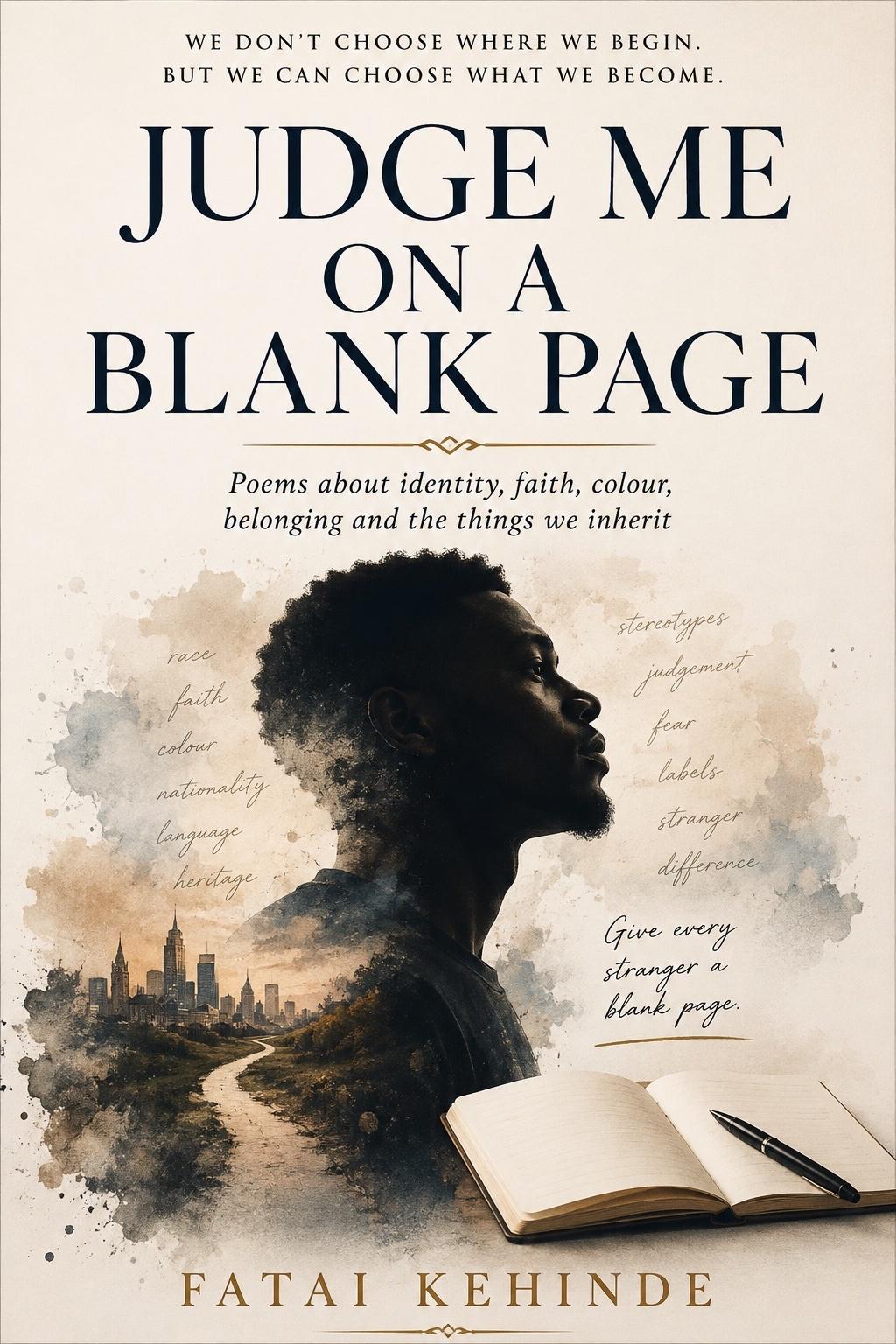
Fatai Kehinde’s Judge Me on a Blank Page asks a big question about poetry: does a poem need to follow a specific style, or can it reflect the voices in the author's mind, even if those voices break the usual rules? Kehinde’s poetry takes the second path, and this choice shapes the book from start to finish.
Each poem feels more like a statement than a song. The sentences are short and to the point. The images are few but stick with the reader. Kehinde prefers clear declarations over fancy descriptions. He uses short lines to share his message through repetition instead of metaphor. In “Hate Is an Inheritance,” he talks about prejudice passed down like furniture, polished and put on display. This image works because it feels normal and relatable.
This straightforward style is both a strength and a weakness. When Kehinde looks at guilt by resemblance, the simple style feels like a closing argument, clear and hard to argue against. “One Person Is Not a People” sounds like a mind trying to break free from prejudice, and it hits home. But when the same style touches on tenderness in “Learning to Love My Reflection,” the simplicity feels more like caution than carefulness. There is real skill in the repeated phrases of “I never chose” and “before I”, which give the collection its flow, acting like a unique poetic tool and a strong statement that feels like a lawyer’s closing words.
But form is just part of the book. What Kehinde truly argues for is seeing people for who they are, beyond our own prejudices. He writes as someone who has held three passports from three countries, and that experience has taught him that identity comes with many layers that can be misunderstood. The belief that nobody picks their birthplace or skin color is the base for all his poems, and this idea sets the stage for his poems about resemblance and migration.


This book feels relevant to today’s world rather than just personal because society often judges people by labels before truly knowing them. This happens through profiling, algorithms, or social media, where one clip can represent an entire group. Kehinde’s focus on individual identity instead of collective identity goes against the tide. It is not a simple call for kindness; it is a demand that judgment be based on proof, not on the mistakes of others.
Kehinde does not focus on the fancy structure of poetry. Readers looking for that may be disappointed. But those who want poetry that challenges and inspires change will find plenty in this book.




Drop your comment
No comments yet — be the first to drop the gist 👇